In This Section
- Home
- About the College
- Governance
- College Committees & Steering Groups
- College Assembly
- College Council
- College Executive Management Committee
- College Academic Programmes and Curriculum Development Committee
- College Graduate Studies Committee
- College Research & Innovation Committee
- College Teaching Learning and Student Experience Committee
- College Sabbatical Research Leave Committee
- College of SEFS Adjunct Appointments Committee
- College Postgraduate Student Committee
- Athena SWAN Steering Group
- College Committees & Steering Groups
- Human Resources
- UCC STEM Awards
- Scholarships and Prizes
- Women in STEM Panel Talks
- Inaugural Professorial Lectures
- Athena SWAN in SEFS
- Proposal Calls
- Contact Us
- Science in Society Public Lecture Series
- Governance
- News
- Staff
- Schools and Departments
- Current Students
- Undergraduate Courses
- Postgraduate Courses
- International Students
- Research and Innovation
- Employability and Careers
- Outreach and Public Engagement
- Science Week
- Transition Year Programmes and STEM Events
New UCC study maps the hidden chemistry of Irish milk
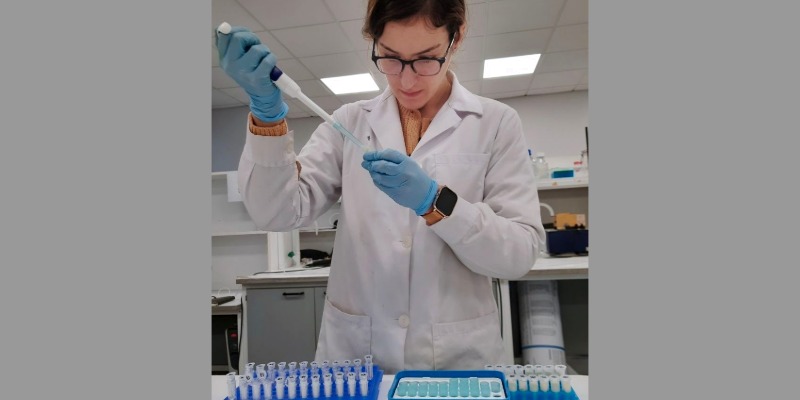
Researchers at University College Cork, in collaboration with Teagasc and University College Dublin, have published one of the largest and most detailed longitudinal studies to date of the milk metabolome in a seasonal pasture-based dairy system.
The milk metabolome refers to the complete set of small molecules naturally present in milk, each a product of metabolic processes. As molecules that are produced, consumed, or modified during metabolism they can reflect the physiological status, nutrition, metabolic activity, and health of the dairy cow. As such, understanding factors affecting and affected by these compounds can provide valuable insight into how cows respond to feeding systems, lactation demands, and environmental conditions.
The project involved researchers from UCC's School of Food and Nutritional Sciences, School of Chemistry, and School of Pharmacy along with colleagues in Teagasc and University College Dublin.
Over 41 weeks spanning the full Irish lactation year, from early lactation in February through to late autumn, the team tracked 38 metabolites in milk from ten commercial farms and three retail brands, revealing how the biochemical composition of milk evolves across the seasons in response to intrinsic and extrinsic factors. The research, published in the journal Food Chemistry, used proton nuclear magnetic resonance (¹H-NMR) spectroscopy to precisely quantify metabolites in 533 milk samples.
The findings show that 30 out of 38 metabolites changed significantly with season—many of them linked to the physiological state of the cow, her energy balance, and her efficiency in using dietary components such as nitrogen.
Multivariate and biomarker analyses identified several metabolites, including urea, GlcNAc, glutamate, choline, acetoacetate, creatinine, citrate, O-phosphocholine, and glucose-1-phosphate, offering insight into nitrogen use efficiency, and compounds linked to energy balance and cellular metabolism that were associated with seasonal shifts in milk composition. Pathway analysis further revealed that early lactation milk, contained elevated ketone bodies, suggesting increased metabolic stress and negative energy balance.
This study provides one of the first large-scale longitudinal assessments of the milk metabolome across both Farm and Shop milks, offering insight into metabolomic variation under pasture-based production conditions and identifying a series of candidate biomarker compounds for further validation in future studies.
The findings could help researchers better understand how dairy cows adapt metabolically to changes in lactation stage, diet, and seasonal pasture conditions. Identifying metabolites linked to energy balance, metabolic stress, and nitrogen use efficiency, may support the development of improved feeding and herd management strategies aimed at enhancing animal health, productivity, and resource efficiency on farms.
Open-access database now live
The work is part of the larger MetaBó-Bainne project funded by the Irish Department of Agriculture, Food and the Marine, which has established an open-access database at www.metabobainne.ie exploring factors that influence the milk metabolome in pasture-based dairy systems.
Publication details
Funding
The work was funded by the Irish Government Department of Agriculture, Food and the Marine (DAFM) through the MetaBó-Bainne project (ref. 2021R568) and supported by Science Foundation Ireland (grants 15/RI/3221 and 21/RI/9705), and Research Ireland (VistaMilk, grant 21/RC/10303_P2).
For more on this story contact:
Information on the Metabobainne project and the latest release of the MetaBo-Bainne database
College of Science, Engineering and Food Science
Coláiste na hEolaíochta, na hInnealtóireachta agus na hEolaíochta Bia
Contact us
Block E, Level 3, Food Science Building, UCC, Cork, T12 YN60.