In This Section
- Home
- About Us
- Study with Us
- FMT Doctoral Studies
- Research
- CARPE
- Collaborations
- EDI
- People
- Film
- Music
- Theatre
Danijela Kulezic-Wilson Postgraduate Symposium - 16th October
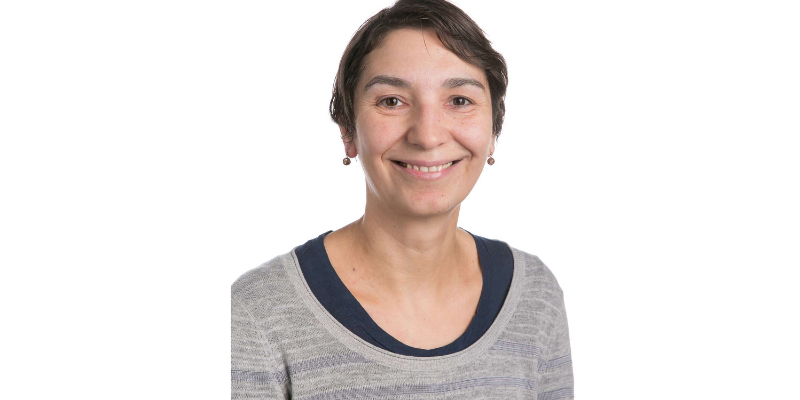
Dr. Danijela Kulezic-Wilson was a member of staff at the University College Cork Music Department until her passing in 2021. Her innovative research on film music and sound is respected worldwide and is an outstanding exemplar of interdisciplinary thought.
Innovative creative practice and arts–science interdisciplinary research will take centre stage at University College Cork (UCC) during the second Danijela Kulezic-Wilson Postgraduate Symposium.
Taking place on Friday, 16 October, the programme features presentations, performances, and screenings from postgraduate researchers across Ireland, highlighting exciting new research and creative practice inspired by Dr Danijela Kulezic-Wilson’s legacy.
All welcome to join us for the full day or sessions across the day.
Register to attend here.
Venue: University College Cork
Ó Riada Hall, Sunday’s Well (morning session)
The Film and Screen Media Auditorium, Kane Building Basement, UCC Campus (afternoon session)
Morning Session – Ó Riada Hall
9:00 – Welcome
9:20 – Yvon Bonenfant
Your PhD as Voice: Building a career as an Artist-Academic who crosses disciplines
In this 30 minute presentation, Yvon will explore a range of options that artistic researchers might explore when seeking to build their careers subsequent to obtaining their PhDs. How do you build a financial model for yourself that gratifies your deepest research desires while negotiating often seemingly fixed national and international academic, and arts-funding, systems? What perspectives are opened up by the PhD that you have perhaps not previously considered? How do you look for academic opportunities in the arts given restrictions on passports? How much is interdisciplinarity valued inside hiring systems and where might you look for this value? Yvon takes a particular perspective on these challenges, using the metaphor of voice and singing to consider how you let your interests, passions and achievements ’sing out’ toward sustaining a career.
10:00 – Ili Chrysikou
Whose senses count? Towards a disability informed methodology in Ethnomusicology
This paper proposes a disability-informed and sensory-oriented methodological approach to Ethnomusicology, asking how ethnographic practice might change when sight is no longer assumed to be the primary mode of perception, participation, and documentation. Drawing on Disability Studies, Sensory Anthropology, and Ethnomusicology, it examines how ocularcentric assumptions shape fieldwork and the production of ethnographic knowledge, particularly in research on music, ritual, and embodied experience. Focusing on Neo-Pagan ritual practices and sonic experience, the paper considers listening and sound not only as objects of study but as methodological tools through which alternative forms of attention and participation may emerge. It further reflects on the methodological implications of conducting ethnography as a visually impaired researcher, arguing that impairment can generate situated forms of sensory knowledge rather than simply constitute an obstacle to research.
10:30 – Brian Sheehan
Tacet Knowledge
This piece for bodhrán and electronics attempts to sonify (i.e. make audible) the underlying round/part structure of Irish traditional music, in the absence of the melodies that are usually the focal point of performance. The title is a play on the concept of ‘tacit knowledge’, and the musical direction ‘tacet’.
Tacit (i.e. unspoken or silent) knowledge is often used to describe the kind of knowledge developed by practitioners of embodied, oral traditions such as Irish traditional music. This embodied knowledge may have no satisfactory written or verbal form and is only represented through the performance of the music itself. ‘Tacet’ is a common musical direction found in Western Art Music scores that tells performers to remain silent. In this piece the performance is structured by the silent lilting of traditional tunes by the performers; the tunes are embodied, but fully ‘submerged’, to use Micheál Ó Súilleabáin’s terminology.
11:00 – Shayan Chakraborty
Algorithmic composition, orchestration, and sound design in one - A dream
A dream explores the relationship between an unsolvable problem and an incomplete dream, drawing a bridge between the two. The work is built from five main layers, apart from the SFX: sustained pads, a bass drone, a lead voice, a texture layer, and an orchestral layer. Over time, the piece shifts between sparsity and fullness. Following a full playback of the piece, I moderately deconstruct these layers alongside the supporting SFX, tracing how each was shaped through Csound synthesis, filtering, envelopes, and spatial processing. The talk centers on the artistic processes. Rather than treating the Collatz conjecture as a mathematical demonstration, the discussion frames it as generative material for musical form - surfacing the compositional decisions behind a piece built as a homage to a chaotic, bittersweet, incomplete dream.
11:30 – Olga Krashenko
Stepping Through the Traces of Absence: Improvisatory Method, Synaesthesia, and Musical Holes in Practice-Based Research
This presentation examines the compositional process behind my recent piano work Stepping Through the Traces of Absence, developed within a practice-based PhD in Music Composition at Maynooth University. The work functions as a meeting point between three interconnected strands of research: an improvisatory method of composition, an artistic theory of synaesthesia, and the philosophical framework of Musical Holes.
12:00 – Marco Varvello
Cosmic Musical Atlas: Sonifying Astronomical Data as a Creative Process
This practice-based PhD in Musical Composition investigates astronomical data sonification as a generative tool for artistic creation. The research employs a dual-processing model: hard data processing utilizes the original Interkosmos software for systematic parameter mapping, while the primary focus remains on soft data processing. This latter stage involves artistically shaping raw sonic material into expressive forms, navigating data coherence to achieve specific narrative, tuning, and spatialization goals. Currently, the project explores constellation-based sonification to develop preliminary works for piano and electronics, examining melodic, harmonic, and rhythmic correlations. Future phases will involve mastering Max/MSP to construct an integrated compositional system capable of rendering universal macrostructures, specifically the Milky Way, through collaboration with INAF/ESA and the Gaia mission. Furthermore, the research aims to enhance inclusivity by making portions of the stellar catalog accessible to visually impaired individuals, thereby transforming abstract astronomical data into shared sonic experiences.
12:30 – Rishin Singh
Negating representation and identity in my chamber opera, ‘The White Man’s Burden’
This presentation is an exploration of the dialectics, gestus, Verfremdungseffekt, and détournement used in my chamber opera, ‘The White Man’s Burden’, that negate Orientalist representation with Occidentalist representational methods to undermine concepts of musical identity. ‘The White Man’s Burden’ is the chamber opera that I’m composing as part of my practice-based PhD in music composition at University College Cork, ‘Composing Unspectacular Occidentalist Opera’.
13:00–14:30 Lunch and relocating to the Film and Screen Media Auditorium, Kane Building Basement, B10.B
Afternoon Session – Film and Screen Media Auditorium
14:30 – Deirdre Molloy
Lindy Hop, Bollo, Boloye: dancing social synchrony (remote)
Dr. Deirdre C. Molloy defended her thesis -- "From Blues Dance to Black Atlantic Identity: decolonial praxes" -- on 21 September 2026. Her dance and design practice centers Africana music and dance as intangible heritage in 25 short films, embedded in a unique digital map. Molloy will present ancestral dance filmed in Ivory Coast for the Unity Atlantic Rhythm Map, co-curated with local dancers Andrienne Zokou and Clément Assemian. Follow the research on Linktree:
15:00 – Maedea Farrell
Ritual ecologies: watery transmissions of poetic restoration
This experimental film explores the body as a site of ritual transmission. Drawing from the Irish concept of imbas, the work grew through experiments in heightened perception and altered states. Water became both collaborator and medium: erotic, queer, and fluid; reflecting, refracting, carrying and transforming. Methods included voice, movement, film, and land-led listening.
The project asks how poetic utterance might open ways of sensing ancestral knowledge and sporic forms of ritual transmission, tracing how these forms of knowledge might persist across changing and ruptured relations to land.
15:30 – Rupert MacCarthy-Morrogh
Shooting to Sound: Cinematography, Music, and the Silent Film Methodology of Stupid August (Trehy, 2025)
In conventional filmmaking practice, the musical score is typically composed in post-production, functioning as a retrospective interpretive layer. During the principal photography of Pádraig Trehy's Stupid August (Trehy, 2025), this orthodoxy was inverted, with John O'Brien's score performed live on set, positioning music as a generative force rather than a responsive element within the image-making process. As the film's cinematographer, my practice was directly informed by these evolving live iterations, wherein the rhythm, texture, and melodic content of the score helped to shape pictorial composition. This praxis-focused video essay's central thesis holds that this symbiotic relationship between sound and image fostered a heightened state of narrative intuition, enabling visual language to harmonise with musical structure, while facilitating the director’s hermeneutic intention. It further explores the film's broader cinematographic strategies for a narrative created without colour or dialogue, which drew its inspiration from early cinema, classical painting, and film noir.
16:00 – Maxine Acton-Carey
Why Medical Students Want Drama: a student perspective.
This project is developing a module for third year medical students using applied drama techniques to teach communication, collaboration and self-management skills. This presentation is discussing the preliminary data from year 2 of this Design Based Research which involved volunteer student participants and will concentrate on the needs analysis student survey results and feedback on the module.
16:30 – Closing comments