
In This Section
New paper on the importance of micro-refugia across latitudes
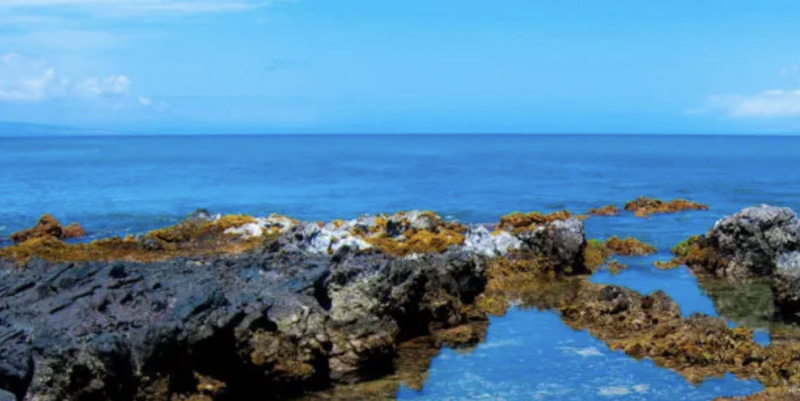
Global study shows the Jekyll and Hyde role of rock pools across latitudes.
A new global study shows that rock pools can act as either biodiversity refuges or ecological traps, depending on location.
The research, led by Louise Firth involving 64 co-authors (including Tony Knights and Amanda Hsiung from the School of BEES) across 26 sites on six continents, examined how microhabitats shape life on rocky shores, one of the most physically stressful environments on Earth. In temperate regions, rock pools buffered thermal extremes and supported higher biodiversity than surrounding rock. In the tropics, however, extreme heat limited biodiversity across habitats, and pools could intensify stress.
The study also challenges the classic Latitudinal Diversity Gradient: instead of peaking at the equator, species richness was lowest there and higher at mid-latitudes, showing that rocky shore biodiversity bucks the traditional global pattern.
The paper is available to read here: https://onlinelibrary.wiley.com/doi/10.1111/geb.70208
Firth et al. 2026. Micro-refuges or ecological traps: Evaluating the role of rock pools in sustaining intertidal biodiversity across latitudes. Global Ecology and Biogeography. 35:e70208
School of Biological, Earth and Environmental Sciences
An Scoil Eolaíochtaí Bitheolaíocha, Domhain agus Comhshaoil
Contact us
Distillery Fields, North Mall, University College Cork, Ireland , T23 TK30