| Code | CK118 |
|---|---|
| Duration | 3 Years or 4 Years with placement option |
| Teaching Mode | Full-time |
| Qualifications | BA (Hons) |
| NFQ Level | Level 8 |
| CAO Points | 2025: 300 |
| CAO Points Range | 2025: 300-464 |
Course Outline
The BA (Hons) in Digital Humanities and Information Technology is a future-focused degree for students who want to combine creativity with technology. You will explore how digital technologies are shaping culture, media, communication, and society while developing practical skills in digital media, web technologies, and programming.
Designed for digital innovation, this course combines hands-on technology training with creativity, communication, and problem-solving, preparing graduates for careers across global technology companies, digital media, creative industries, cultural organisations, and fast-growing digital sectors.
Digital Humanities explores the relationship between people and technology. You will examine how digital tools are changing the way we communicate, create, learn, research, understand, and shape the world around us. You will explore emerging technologies including Generative AI, virtual reality, digital storytelling and multimedia.
This course is designed for students who are interested in both technology and the arts. You will learn coding, databases, digital media, web systems, and data analysis alongside subjects such as English, Philosophy, Politics, and languages.
The programme combines practical digital skills with creative and critical thinking, preparing graduates for a rapidly changing digital world.
Jointly led by UCC School of English and Digital Humanities and UCC School of Computer Science and Information Technology, students benefit from collaboration across Arts, Humanities, and Computer Science, allowing students to experience an exciting mix of creative, technical, and research-based learning.
Programme Outline
The BA in Digital Humanities and Information Technology is available as both a three-year degree and a four-year pathway with opportunities for work placement or international study.
Degree Options
- 3 Years: BA (Hons) Digital Humanities and Information Technology
- 4 Years: BA (Hons) Digital Humanities and Information Technology - International Pathway
- 4 Years: BA (Hons) Digital Humanities and Information Technology - Work Experience Pathway
Students on the International Pathway spend Year 3 studying at a partner university abroad through Erasmus and other international partnerships.
Students on the Work Experience Pathway complete an extended industry placement, gaining valuable professional experience and building practical workplace skills before graduation.
Throughout the programme, students develop:
- programming and digital skills
- creative and analytical thinking
- project management experience
- research and communication skills
- collaborative teamwork abilities
- critical understanding of technology and society
The course combines hands-on practical learning with academic studies, helping students build a strong foundation for careers in both creative and technical industries.
Modules
In Year 1 all students take Computer Science (CS) modules and Arts & Humanities (DH) modules to the value of 45 credits together with one other subject from Year 1 arts subjects (15 credits).
- CS1201 Introduction to Computer Systems (15 credits)
- CS1205 Programming Fundamentals I (5 credits)
- CS1206 Programming Fundamentals II (5 credits)
- CS1204 Databases for Digital Humanities (5 credits)
- DH1001 Digital Humanities: Theories & Concepts I (5 credits)
- DH1002 Digital Tools & Methods I (5 credits)
- DH1003 Research Methods & Practice (5 credits)
Plus 15 credits from one Arts (minor) field:
- Archaeology, Béaloideas, Celtic Civilisation, Chinese Studies, English, Geography, German, Greek, Italian, Latin, Philosophy, Politics, Religions & Global Diversity, Sociology, Spanish.
These modules explore how technology influences culture, communication, creativity, and society while introducing students to digital tools and research methods used across the arts and humanities.
As students progress through the course, they study areas such as:
- web systems
- web development
- data ethics
- critical AI studies
- artificial intelligence (AI) and digital culture
- multimedia and digital content creation
- data analysis and visualisation
- digital storytelling
- project management
- digital curation
- online communication and media
The programme evolves to reflect new technologies and developments in the digital world, ensuring students graduate with relevant and adaptable skills.
Academic Programme Catalogue
The Academic Programme Catalogue contains the most up-to-date information on course content and module offerings.
Modules may change from year to year in response to developments in technology, digital culture, and industry trends.
For detailed module descriptions and current course information, students should consult the Book of Modules.
Course Practicalities
Lectures
Students attend lectures across Digital Humanities, Arts, and Computer Science topics. Lectures introduce key ideas, technologies, and real-world applications connected to the digital world.
Tutorials and small-group sessions support students throughout the course and provide opportunities for discussion, collaboration, and project work.
Lab Sessions
Practical workshops and lab sessions are a major part of the course experience.
Students develop hands-on skills using:
- coding and programming tools
- databases, networking, communication and web technologies
- multimedia tools
- digital research methods
- virtual reality technologies
- 3D scanners and printers
- digital media equipment
Learning is project-based and interactive, helping students build confidence in applying digital skills to real-world challenges.
Online Learning
The course involves some group and online learning. Students and teachers on the BA in Digital Humanities and Information Technology create an engaged learning community in person and online.
Connected Curriculum
Our teaching approach combines practical learning, research, creativity, and real-world experience. Students work across technology, media, and arts while developing practical digital skills through collaborative projects, workshops, and hands-on learning.
Why Choose This Course
Why study Digital Humanities and Information Technology BA at UCC? | Student Story
Misha Metlitski
In this video, final-year BA Digital Humanities and Information Technology student Misha reflects on his journey through one of UCC's most innovative undergraduate programmes. He shares what first attracted him to Digital Humanities and Information Technology (CK118), the modules that shaped his interests, and how the degree helped him develop a unique combination of technical, creative and analytical skills.
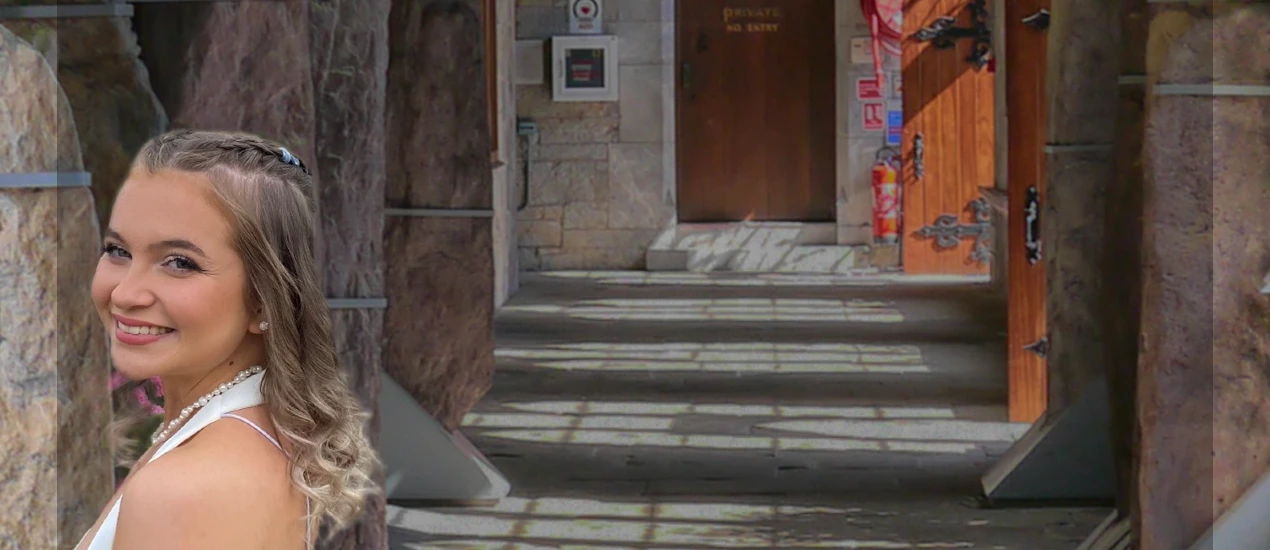
Find Out MoreA course that allowed me to explore my creative interests alongside tech
Brayden Spencer
Find Out More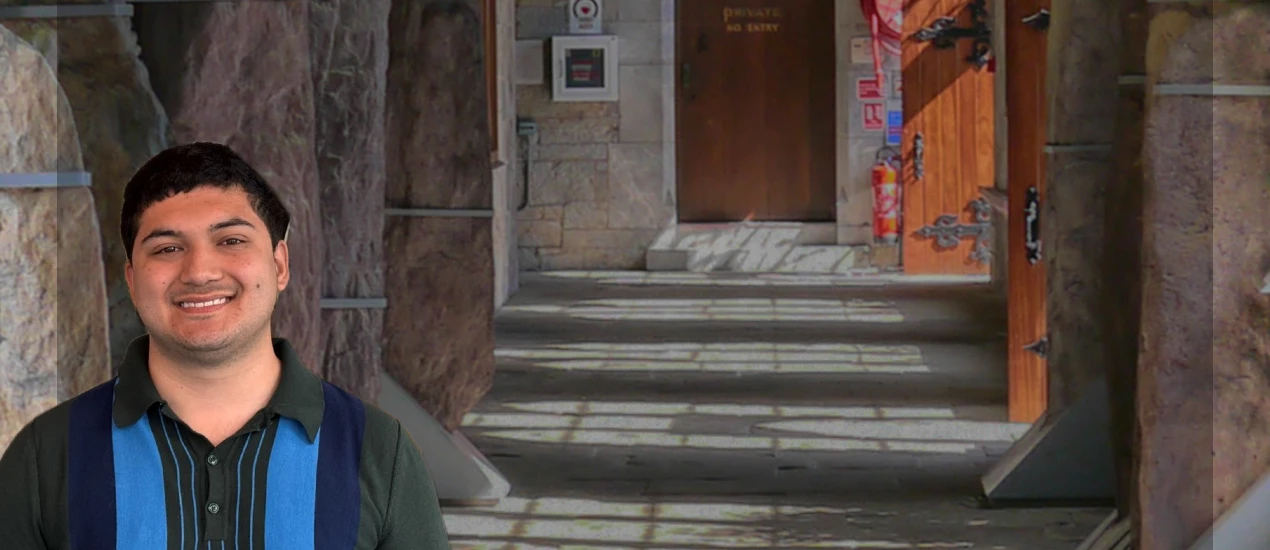
This course offers a unique combination of creativity and technology.
It is ideal for students who want:
- practical digital skills
- creative project work
- strong career flexibility
- a future-focused degree
- experience with emerging technologies
- a course that combines arts and computing
Unlike a traditional Computer Science degree, this programme combines technical learning with creativity, communication, culture, and critical thinking.
Students benefit from:
- hands-on digital learning
- access to specialist facilities
- small-group collaboration
- opportunities for placement and study abroad
- a supportive and creative learning environment
The programme also provides access to UCC’s dedicated Digital Humanities learning space, featuring virtual reality equipment, gaming technologies, 3D printing and scanning, multimedia and photography equipment and collaborative project spaces
Students have opportunities to learn by doing, working on practical digital projects throughout the programme.
Placement or Study Abroad Information
Work Placement
Students can choose to complete a work placement pathway during Year 3, gaining professional experience in industry settings.
Students complete placements with industry partners including:
- Dell
- Pfizer
- Stryker
- Johnson&Johnson
- Oracle
- ESB
- NetApp
- Uisce Éireann
- Pepsico
- RedHat
- Horner Automation
- Johnson Controls
- Musgrave
Work placement allows students to:
- build professional experience
- develop workplace skills
- apply classroom learning in real projects
- make industry connections before graduation
Study Abroad
Students on the International Pathway spend Year 3 studying abroad at one of UCC’s partner universities, including Universität Leipzig in Germany, Universiteit Groningen in Netherlands, Umea University in Sweden, or Mondragon University in Bilbao in Spain.
This provides opportunities to:
- experience different cultures and learning environments
- develop international perspectives
- build confidence and independence
- expand global networks and connections
Study abroad takes place through Erasmus and other international partnerships.
Skills and Careers Information
Skills and Careers Information
Graduates of the BA in Digital Humanities & Information Technology have gone on to secure careers across a wide range of industries where digital skills, creativity, communication, and analytical thinking are increasingly important.
Because the course combines technology, media, research, and humanities, graduates are well prepared for roles in both creative and technology-driven sectors.
Our graduates have pursued careers in diverse industries:
- global technology companies, including Dell and VM Ware
- technology security companies, including Blancco and Trellix
- enterprise software and AI technology firms, including ServiceNow and Workday
- pharmaceutical companies, including Eli Lilly
- banking and financial technology firms, including AIB
- organisational communications companies, including Poppulo and Workvivo
- media organisations, including The Irish Times and RTÉ
- cultural institutions
- educational organisations
Our graduates are employed in roles including:
- Artificial Intelligence Engineer
- AI Architect
- Cloud Cybersecurity Engineer
- Tech Strategy and Transformation Analyst / Consultant
- UX designer
- Data Engineer
- Digital Communications Officer
- Web Content Specialist
- IT Support Engineer
- Multimedia Producer
- Data Analyst
- Technology Transformation Consultant
- Software Engineer
- Software Developer
- Cloud Developer
Our students receive a strong foundation that fully equips them with the confidence, the critical abilities, and the practical know how to succeed in an ever-evolving world of work.
Requirements
Leaving Certificate Entry Requirements
At least six subjects must be presented. Minimum grade H5 in two subjects and minimum grade O6/H7 in four other subjects. English and Irish are requirements for all programmes unless the applicant is exempt from Irish.
Applicants will need to meet the following minimum entry requirements:
| English | Irish | Other Language |
|---|---|---|
| O6/H7 | O6/H7 | O6/H7 |
EU/EFTA/UK Qualifications
EU/EFTA/UK applicants presenting an equivalent school-leaving qualification should review the EU/EFTA/UK Applicants page for information on equivalent grades and how to prove their level of English.
Mature Students
To compete through the mature entry route, applicants must be 23 years of age on or before 1 January of the application year and apply online via the CAO by 1 February. The application should include a statement of interest.
Further information on applying as a mature student is available on the Mature Applicants and Mature Student Entry support pages.
QQI FET Entry
Applicants who meet the required level of distinctions in required subjects can apply for entry to this course using specific QQI FET qualifications. Please review the Programme Requirements on our Information for QQI FET Applicants page for information on related QQI courses, and visit Access UCC’s QQI/FET Entry section for further support.
Non-EU Applicants
Non-EU applicants are expected to have educational qualifications of a standard equivalent to the Irish Leaving Certificate. In addition, where such applicants are non-native speakers of the English language they must satisfy the university of their competency in the English language.
To verify if you meet the minimum academic and language requirements visit our qualification comparison page and refer to our International Office page for more information.
Fees and Costs
- Whether you are an EU or Non-EU student will affect the course fees applicable to you. See more information on EU Fees, Non-EU Fees, or Free Fees Status.
- The State will pay the tuition fees for EU students who are eligible under the Free Fees Scheme. The annual student contribution and capitation fees are payable by the student.
- See the Fee Schedule to find out the course fee.
- Check out scholarships that may be available to you.
- Explore our Nurturing Bright Futures free online course (Module 5) to learn about managing your money as a student and budgeting for university life.
How To Apply
Irish and European (EU/EFTA/UK) Applicants
Apply via the CAO. See the CAO Handbook for useful information on applying through the CAO.
Mature Applicants
Apply via the CAO by 1 February. To apply for a place as a mature student, you must be 23 years of age on or before 1 January of the year of entry.
QQI/FET Applicants
Apply via the CAO. See our QQI/FET Applicants page for information on the Quality and Qualifications Ireland (QQI) Further Education and Training (FET) application process and whether there are routes available to this course.
Non-EU Applicants
If you are from outside the EU/EFTA/UK, apply online via the UCC Apply portal. See our International Office page for more information.