The TARA Project hosts initiatives showcase event
- The collaboration strengthens the development of practical, trauma-informed supports for children, families, and practitioners within Tusla’s child protection and welfare services.
- Project embeds trauma-informed practices into everyday work through participatory initiatives.
- Showcase event demonstrated clear, workable ways to support practitioner resilience, improve transitions for children, and strengthen everyday practice.
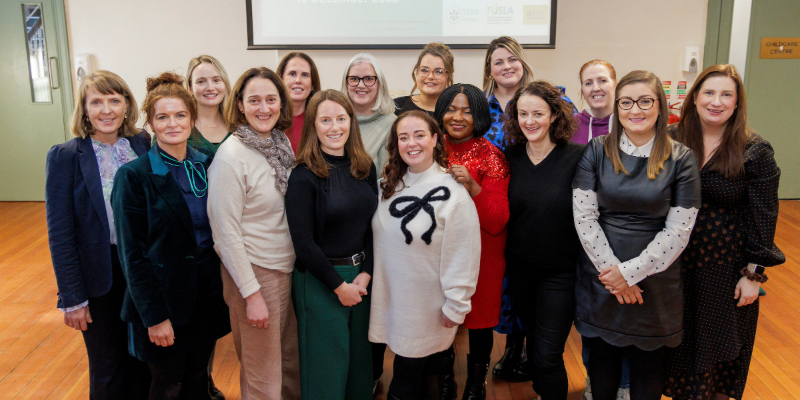
New trauma-informed practices aimed at strengthening how services respond to the needs of children and families were the focus of a showcase event hosted by the TARA (Trauma, Attachment, Resilience into Action) Project.
The TARA project aims to explore how trauma-informed principles can be translated into practical, meaningful initiatives that support children, families and practitioners and improve outcomes across Dublin South Central (DSC). It is a research partnership between University College Cork (UCC), Tusla - Child and Family Agency, and Dublin South Central.
Dr Maria Lotty, Principal Investigator of the TARA Project and Lecturer in UCC School of Applied Social Studies, said: “Many of the children and families engaging with Tusla have experienced trauma, while practitioners are working in increasingly complex and demanding environments. Without trauma-informed approaches, there is a risk of retraumatisation and practitioner burnout. Embedding trauma-informed practice supports safer, more consistent responses and improves outcomes for both families and staff.”
“We are proud to showcase the trauma-informed practice initiatives developed by our project participants. The event marks how far we have come, celebrates strong collaboration, and reflects a shared commitment to supporting practitioner resilience during a period of significant change within Tusla. We are also delighted to launch the TARA Project website, which provides accessible resources for anyone interested in trauma-informed practice,” Dr Lotty said.
Maria Hayes, TUSLA lead on the TARA Project and Principal Social Worker in Dublin South, said: “The TARA Project has inspired us to continue to do our best for local families — to always work towards improving children's outcomes keeping them always in mind.”
From training to practice: embedding trauma-informed approaches
The Initiatives Showcase Event highlighted learning and practice developments from Phase 2 of the project, which focused on embedding trauma-informed practices into existing DSC processes and understanding their impact on practice and service users.
Building on Phase 1, which centred on staff training through a UCC programme and the development of practice champions, Phase 2 used a participatory research approach, with Tusla practitioners working collaboratively through facilitated workshops to design practical, frontline-led initiatives informed by the TARA model.
At the showcase event, a number of initiatives were presented including:
Practitioner Resilience
The Practitioner Resilience cluster viewed practitioner resilience as a shared organisational responsibility, emphasising the role of high-quality reflective supervision that balances operational demands with attention to emotional impact and wellbeing.
Effective supervision maintains a balance between organisational tasks and reflective space, allowing time not only to review workload and performance, but also to consider the emotional impact of the work and the practitioner’s own wellbeing.
A reflective supervision resource has been developed to support meaningful supervisor–supervisee conversations and will be published on the TARA Project website following external review.
The Ripple Effect
The Ripple Effect initiative was developed in response to a critical shortage of foster homes, which has led to frequent moves for children in care. These transitions create instability and stress for children and increase vicarious trauma exposure for practitioners.
Outputs include six animated videos, a learning resource, comfort packs for children, and improvements to spaces used by young people, alongside recommendations to strengthen trauma-informed transitions and practitioner resilience. The work demonstrates how trauma-informed principles can be translated into practical supports for children and staff across the DSC area.
Additional presentations highlighted practical, frontline-led tools to support trauma-informed practice, including ‘Communications Cogs’ a communication glance card to promote meaningful engagement, and ‘The Time Bandits’, suite of initiatives focused on sensory regulation, reflection, and strengthening sibling connections. Together, these initiatives demonstrated simple, adaptable ways to embed trauma-informed principles into everyday practice.
Learn more about the initiatives on the TARA Project website.
Institute for Social Science in the 21st Century
The TARA Project forms part of the ISS21 Children and Young People research cluster at University College Cork, an interdisciplinary network of academics, researchers, graduate students, and practitioners.
The cluster brings together expertise from a wide range of disciplines to collaborate, promote awareness, and share research that supports and improves outcomes for children and young people.
College of Arts, Celtic Studies & Social Sciences
Coláiste na nEalaíon, an Léinn Cheiltigh agus na nEolaíochtaí Sóisialta
Contact us
College Office, Room G31 ,Ground Floor, Block B, O'Rahilly Building, UCC