In This Section
New insights into Indian pangolin conservation
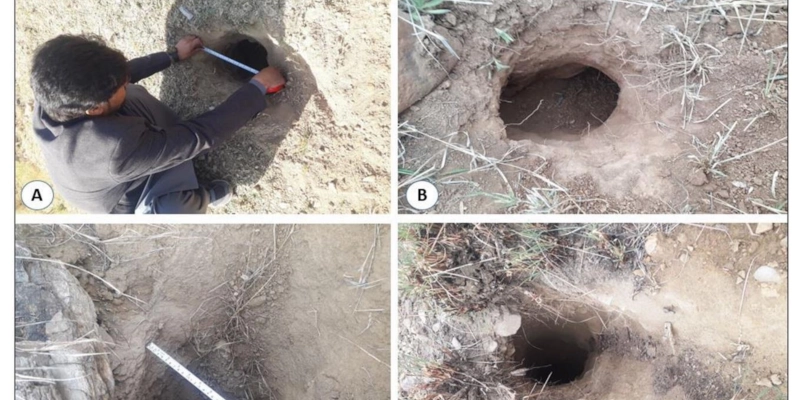
New research identifies key habitats and illegal trade routes threatening endangered Indian pangolins in western Pakistan.
A new study published in Ecology and Evolution provides important insights into the habitat preferences, suitability, and illegal trade routes affecting the endangered Indian pangolin (Manis crassicaudata) in western Pakistan.
The research combined extensive field surveys with advanced species distribution modelling to identify the environmental factors shaping pangolin occurrence across the region. Using a range of modelling approaches, including MaxEnt, Random Forest, and Support Vector Machines, the authors identified elevation, vegetation cover, and land-use patterns as key predictors of suitable pangolin habitat.
In addition to ecological analyses, the study documented illegal trade routes through interviews with local communities, hunters, and traders. These findings reveal persistent trafficking pathways that continue to place significant pressure on pangolin populations, despite national and international protections.
The authors highlight the urgent need for integrated conservation strategies that combine habitat protection, stronger law enforcement, and community-based awareness programmes. By linking ecological data with socio-economic information on wildlife trade, the study provides a more comprehensive framework for conserving one of the world’s most heavily trafficked mammals.
Dr. Sayantani M Basak, Postdoctoral Researcher in the School of Biological, Earth and Environmental Sciences (BEES) at University College Cork and co-corresponding author of the study, said: “Our research highlights how combining field-based ecological data with spatial modelling can improve our understanding of Indian pangolin habitat requirements while also revealing the scale and persistence of illegal trade networks. By identifying priority habitats alongside trafficking routes, this study provides critical evidence to support more targeted and effective conservation actions for one of the world’s most threatened mammals.”
The full paper is available open access in Ecology and Evolution:
School of Biological, Earth and Environmental Sciences
An Scoil Eolaíochtaí Bitheolaíocha, Domhain agus Comhshaoil
Contact us
Distillery Fields, North Mall, University College Cork, Ireland , T23 TK30