UCC researchers receive €4.1m to lead transformative scientific discoveries
Creating industry-ready simulation tools for the semiconductor industry and advancing the understanding of how ageing increases an individual’s risk of Parkinson’s disease are amongst the five University College Cork (UCC) projects to receive a collective €4.1m funding under the Research Ireland Frontiers for the Future Programme.
The Research Ireland Frontiers for the Future Programme plays an important role in supporting ambitious, curiosity-driven scientific research with the potential to deliver transformative societal and economic impact. Research initiatives funded under the Frontiers for the Future programme enable independent investigators to pursue bold ideas and innovative research over a four- to five-year period.
Minister for Further and Higher Education, Research, Innovation and Science, James Lawless TD, today announced a total €20 million investment to support twenty-two cutting-edge research projects nationwide through the Programme, with UCC and UCC’s research flagship, the Tyndall National Institute, accounting for five of the twenty-two projects awarded.
Minister Lawless said: "The projects announced today under Research Ireland’s Frontiers for the Future Programme are ambitious in both scope and scale, spanning areas from pioneering cancer therapies to advancing a more sustainable and circular economy, and much more besides. The breadth of research being funded reflects the exceptional depth and diversity of talent across our research and innovation ecosystem. I congratulate all the awardees and wish them every success as they push the boundaries of knowledge and deliver meaningful innovation."
Professor John F. Cryan, UCC Vice President for Research and Innovation said: "We are immensely proud of our researchers at UCC and in our flagship Tyndall National Institute who will lead these Research Ireland Frontiers for the Future Programme awards. Aligning with several of our UCC Futures thematic areas, these projects will further strengthen UCC’s national and global leadership in the semi-conductor industry, sustainability and brain science, delivering impactful research and innovative solutions to major scientific, societal and healthcare challenges."
Among the new research projects totalling €4.1m that will be funded at University College Cork and Tyndall National Institute are:
Comprehensive Accurate and Fast, Experimentally Calibrated Modelling Platform for Transition-Metal Dichalcogenides in Nanoelectronics (CALIBRATE-TMD)
Funding Amount: €1,314,275
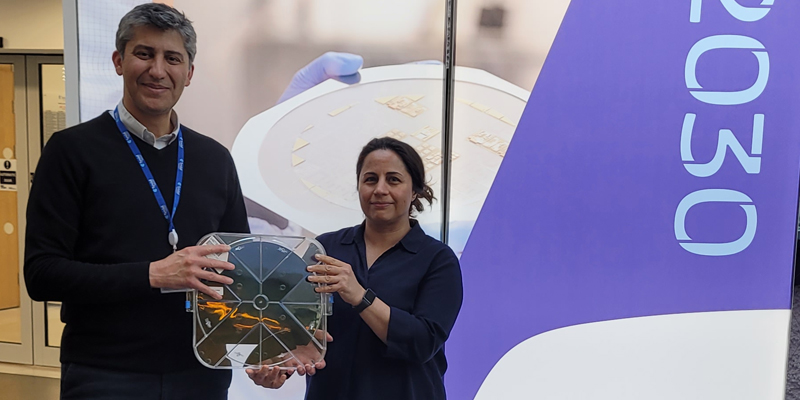
Leads: Dr. Farzan Gity and Dr. Lida Ansari, Tyndall National Institute
Transition-Metal Dichalcogenides (TMDs) show potential for low-power electronics. To realise this potential, the semiconductor industry needs accurate and fast modelling tools for TMDs. CALIBRATE-TMD aims to create - for the first time - an advanced industry-ready, science-enabled simulation tool using realistic TMD parameters from experimental data to design TMD-based devices. Intel will provide expertise in large-scale TMD growth, device fabrication, and integration. [FG1] Synopsys will support integration of the calibrated parameters into the multi-scale design tool. The resulting tool, validated with experimental data, will leverage advanced machine-learning algorithms to enhance fast, accurate, and scalable TMD device modelling and design.
-----------------------------------------
How does age influence dopaminergic neuron susceptibility to degeneration: is there a central role for SKOR1?
Funding Amount: €559,087
Lead: Professor Gerard O’Keeffe, School of Medicine
Parkinson’s disease is a degenerative brain disorder that affects 1% of people over 65 years of age. Ageing is the biggest risk factor for Parkinson’s disease, yet how ageing increases a person’s risk of developing Parkinson’s disease is unclear. This project proposes that ageing results in increases levels of a protein call SKOR1 which affects energy production in nerve cells in the parts of the brain that die in Parkinson’s disease. The project will investigate this proposal in order to gather the necessary data to further the understanding of how ageing increases an individual’s risk of Parkinson’s disease.
-----------------------------------------
Intelligent Reflecting Surface for Enhanced Integrated Sensing and Communication to Protect Vulnerable Road Users (SHIELD)
Funding Amount: €731,184
Lead: MD Noor-A-Rahim, School of Computer Science & Information Technology
The SHIELD project aims to enhance the safety of Vulnerable Road Users (VRUs) like cyclists and pedestrians in busy urban areas. By leveraging advanced communication technologies, SHIELD seeks to revolutionize how vehicles and infrastructure interact to protect VRUs. Traditional methods, like camera-based solutions have limitations, but SHIELD's innovative approach promises to overcome these challenges. Through five key objectives, SHIELD will explore the fundamental limits of these technologies, design new communication strategies, develop intelligent algorithms, and validate solutions through simulations and real-world tests.
-----------------------------------------
Innovative RF Energy Harvesting to Develop Battery-less Supply Chain Monitoring System (GREEN-MONITORING)
Funding Amount: €794,779
Lead: Dr. Brendan O’Flynn, Tyndall National Institute
The Green-Monitoring project aims to develop a supply chain monitoring IoT wireless sensing system that does not require batteries, using innovative technology to harvest energy from ambient 4G/5G signals. This approach relies on advanced circuits that efficiently convert low levels of wireless energy into usable power. To develop this battery-free system, the project uses sustainable materials and affordable manufacturing techniques like 3D printing and inkjet printing. The project supports a greener future and reduces the need for disposable batteries, aligning with broader sustainability goals.
-----------------------------------------
Understanding the origins and vulnerability of diversity within Atlantic salmon to safeguard our national evolutionary heritage (LEGACY)
Funding Amount: €754,128
Lead: Dr. Thomas Reed, School of Biological, Earth & Environmental Sciences
LEGACY will exploit cutting-edge tools from molecular biology to shed light on a neglected aspect underpinning healthy ecosystems – variation within species. Erosion of this diversity jeopardises nature’s contributions to people, e.g. food, clean water, medicine, and cultural value/inspiration. Atlantic salmon, the chosen study species, hold a special place in our culture and are an important source of economic revenue (fishing, tourism, aquaculture), yet face an increasingly uncertain future. LEGACY will examine archived and new samples from across Ireland to elucidate the current state and future vulnerability of this precious natural resource.
UCC Research
Aistriú Taighde
Contact us
Office of Vice President for Research & Innovation, 4th Floor, Block E, Food Science Building University College Cork, T12 K8AF