
Gut Microbes Play a Role in Early Brain Development
A new international research study has uncovered a previously unknown role that our gut plays in regulating early brain development.
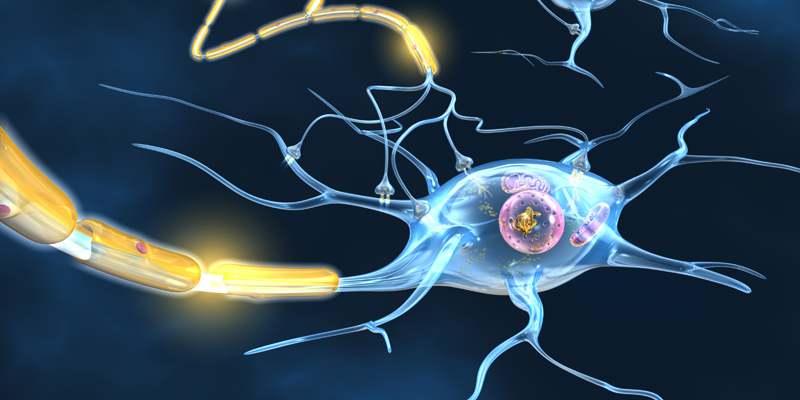
The research shows that signals from the microbiome – the community of organisms that live in our gut - influence the development of myelin, the insulating layer that surrounds nerve fibres and enables efficient communication within the brain.
The researchers also identified changes in brain metabolic pathways linked to neurotransmission and cellular energy use, reinforcing the idea that gut microbes influence brain development through multiple, interconnected routes.
The study, led by researchers from APC Microbiome Ireland at University College Cork (UCC), is published today in the prestigious international journal Advanced Science.
Using a cross-species approach in mice and zebrafish, the researchers found that the absence of a gut microbiota during early life alters the timing, growth, and regulation of the development of myelin. These changes occur alongside shifts in neuronal activity, brain metabolism, and microglial maturation, highlighting how multiple biological systems interact during sensitive periods of brain development.
While previous studies have shown that gut microbes can affect myelination in adulthood, this work provides new insight into how microbial signals influence myelin-related processes much earlier in life, when the brain is especially responsive to biological and environmental inputs.
Microbial signals and early brain maturation
The study found that animals raised without gut microbes displayed age- and sex-dependent differences in myelin-related gene expression and myelin structure. In mice, the most pronounced effects emerged around the time of weaning - a key developmental window marked by rapid changes in both the gut microbiota and the brain.
In zebrafish, advanced live imaging revealed that the absence of microbes led to increased myelin thickness without altering axon size, alongside changes in how microglia - the brain’s resident immune cells - interact with myelinating cells. These findings suggest that microbial signals help regulate the pace and pattern of brain maturation rather than determining brain structure outright.
Professor John F. Cryan, senior author of the study and Vice President for Research and Innovation at University College Cork, said: "Our findings show that the gut microbiota contributes to the regulation of myelin development during early life. This work highlights how interactions between biological systems during sensitive developmental windows can influence key processes involved in brain maturation."
Conserved effects across species
By integrating molecular, metabolic, ultrastructural, and live-imaging approaches across two species, the study demonstrates that microbiota–brain interactions related to myelin development are conserved across evolutionary distance. This cross-species consistency strengthens confidence that the observed effects reflect fundamental biological processes rather than species-specific phenomena.
Dr Caoimhe M. K. Lynch, PhD student and first author of the study, said: "Seeing comparable effects in both mice and zebrafish suggests that microbial influences on myelin-related processes are a conserved feature of early development. This provides a strong framework for future mechanistic studies."
Implications for brain health
Myelination is a dynamic and prolonged process that continues well beyond early life, and its regulation is essential for healthy brain function. By identifying how early-life microbial signals intersect with myelin development, this research establishes a platform for future studies examining how gut–brain interactions may contribute to long-term brain health.
The authors note that further research is required to define the underlying microbial signals involved and to assess how these cross-species findings may relate to human brain development.
Professor Paul Ross, Director of APC Microbiome Ireland, said: "This study reflects APC’s commitment to high-quality, interdisciplinary research that advances fundamental understanding of microbiome–host interactions. By integrating microbiome science with developmental neuroscience across species, it provides an excellent foundation for future discovery in this area."
About the study
The research study The Microbiota Shapes Central Nervous System Myelination in Early Life was published in Advanced Science and led by scientists at APC Microbiome Ireland at University College Cork, in collaboration with colleagues at the University of Edinburgh and the University of Helsinki.
UCC Research
Aistriú Taighde
Contact us
Office of Vice President for Research & Innovation, 4th Floor, Block E, Food Science Building University College Cork, T12 K8AF