International Webinar on Indigenous ontologies and relational ecologies in India and Latin America
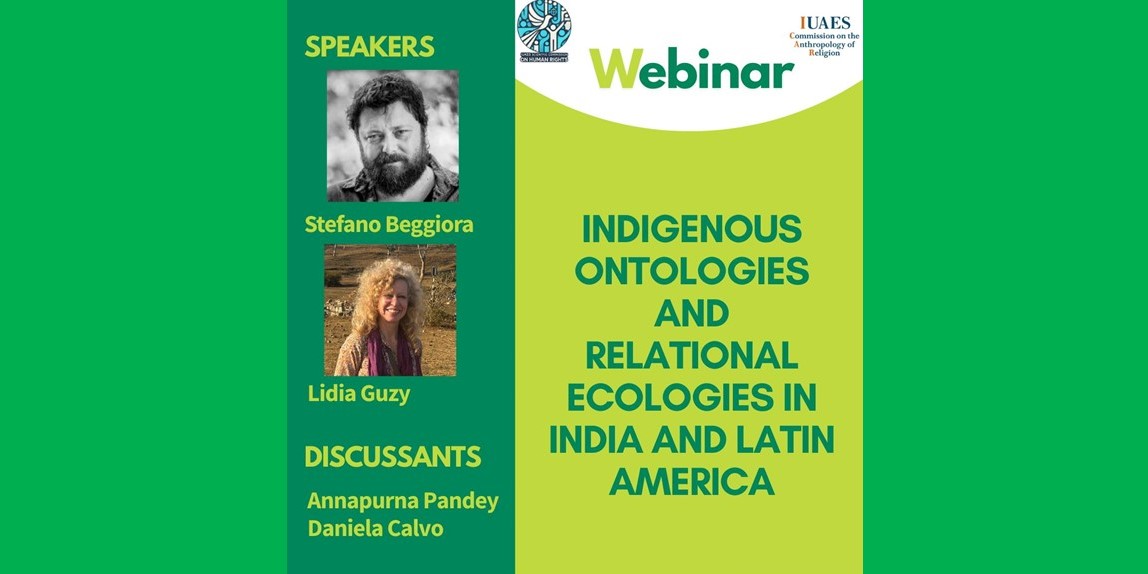
Join the IUAES Commission on the Anthropology of Religion and the IUAES
Commission on Human Rights on March 19, at 2:00 PM UTC

🧑🔬 Talks:
Dancing with the Forest: Indigenous Ontologies and Relational Ecology in Odisha
(Stefano Beggiora – Associate professor, University Ca'Foscari of Venice, Italy)
In the wake of the widely discussed ontological turn in anthropology, relational ecology has emerged as an interdisciplinary approach that understands humans, societies, and environments as an interconnected web, moving beyond the long-standing nature/culture divide. Centered on the quality of relationships, it foregrounds respect, empathy, active listening, and sustainability as ethical orientations aimed at preventing suffering and violence in relations between people and the environment. Drawing on the findings of a multi-year ethnographic study conducted among Indigenous communities in Odisha (Saora and Kond), this presentation examines key dimensions of relational ecology, including interspecific interdependence and ecological communication, as well as renewed foundations for anthropological inquiry and possible practical applications for the ethical management of exchanges between humans and the environments. The study further argues that many of these emerging conceptual directions are, to a significant extent, already implicit within the Indigenous cosmologies under consideration.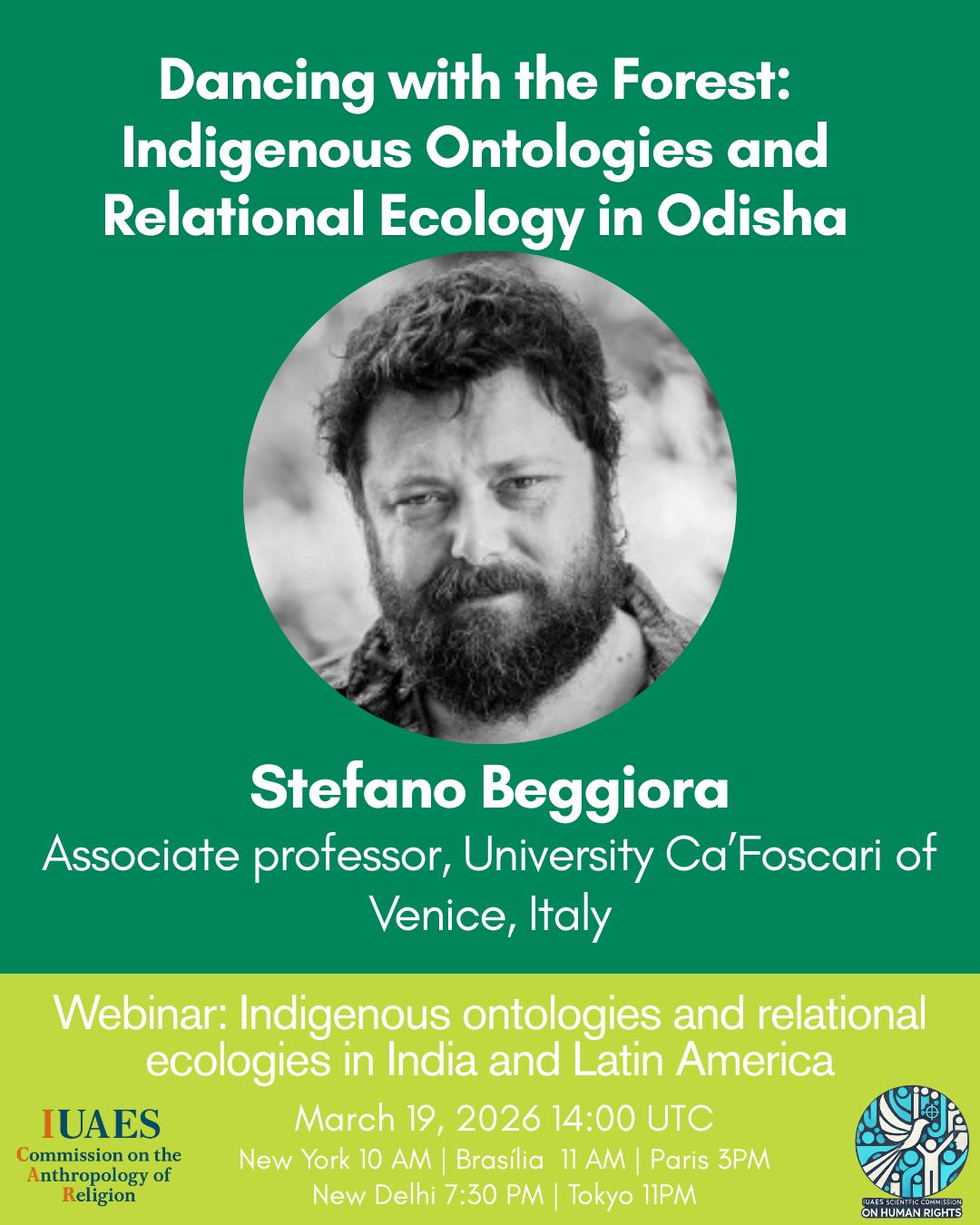
Bio: Stefano Beggiora is Associate Professor at Ca' Foscari University of Venice (Italy), at the Department of Asian and North African Studies, where he currently serves as Departmental Delegate for Internationalization. He is also director of the scientific book series STRADE and of the Venice Journal of Environmental Humanities. His recent research focuses on the ethnology and anthropology of India — especially the study of South-Asian shamanism and the religions, societies, and rights of indigenous (ādivāsī) communities — as well as environmental history of South Asia, socio-economic development in India, and the legal and constitutional frameworks protecting marginalized castes and ethnic minorities.
Sacred groves and sacred landscapes in indigenous ontologies of Adivasi India and Latin America
(Lidia Guzy,University College Cork, Cork, Ireland)
This presentation introduces into selected indigenous concepts of eco-cosmology of sacred groves in Adivasi (India) and comparatively into the indigenous Andean concept of Pacha Mama (Mother Earth) in Latin America. The presentation portrays worldviews not founded on a separation between the human and non-human, but on an ontological eco-cosmology as a relatedness between humans, non-humans and the other more than human world. In indigenous Adivasi India "sacred groves" is used as an umbrella term for floral, fluvial, arboreal natural sanctuaries. The socio-ritual institution of sacred groves dates to pre-historical and pre-agrarian societies and is thriving in most parts of rural and tribal Adivasi India. Sacred groves depict a continuous ancient and contemporary tradition of a patch of forest or water body which is either dedicated to local deities or itself represent other than human sacred entities. Sacred groves are always covered by taboos. Nor they can be allowed to be destroyed, nor it is morally allowed to cut plants or to kill animals or any form of life in these sacred abodes. In tribal Odisha the indigenous Rona consider divine and semi-divine spirits like Mauli, Peten, Mahulgachhien, Amgachhien to be residing patches of indigenous forests. In Madhya Pradesh the indigenous Baiga consider every big tree encorporating a potentially malevolent non-human entity, called pret, or bhut if cut. The physical disrespect of sacred forest always results in ontological explanations for disaster, disease or epidemics. In Latin America, the emergence of the indigenous Andean context of Pachamama represents a new political and environmental ontology of sacred Rights of Nature marking a landmark of alternative sustainability and wellbeing models. The Americas in this context are a leading example of accrediting legal protection status to Pachamama, Mother Nature/ Mother Earth with Ecuador becoming the first country in 2008 to include the Rights of Nature in its constitution. In 2010, also Bolivia introduced Ley de Derechos de la Madre Tierra (the Law of Rights of Mother Earth) based on a created “The Universal Declaration of the Rights of Mother Earth" agreed by 30,000 people from over 100 countries who came together in April 2010 in Tiquipaya/Cochabamba.
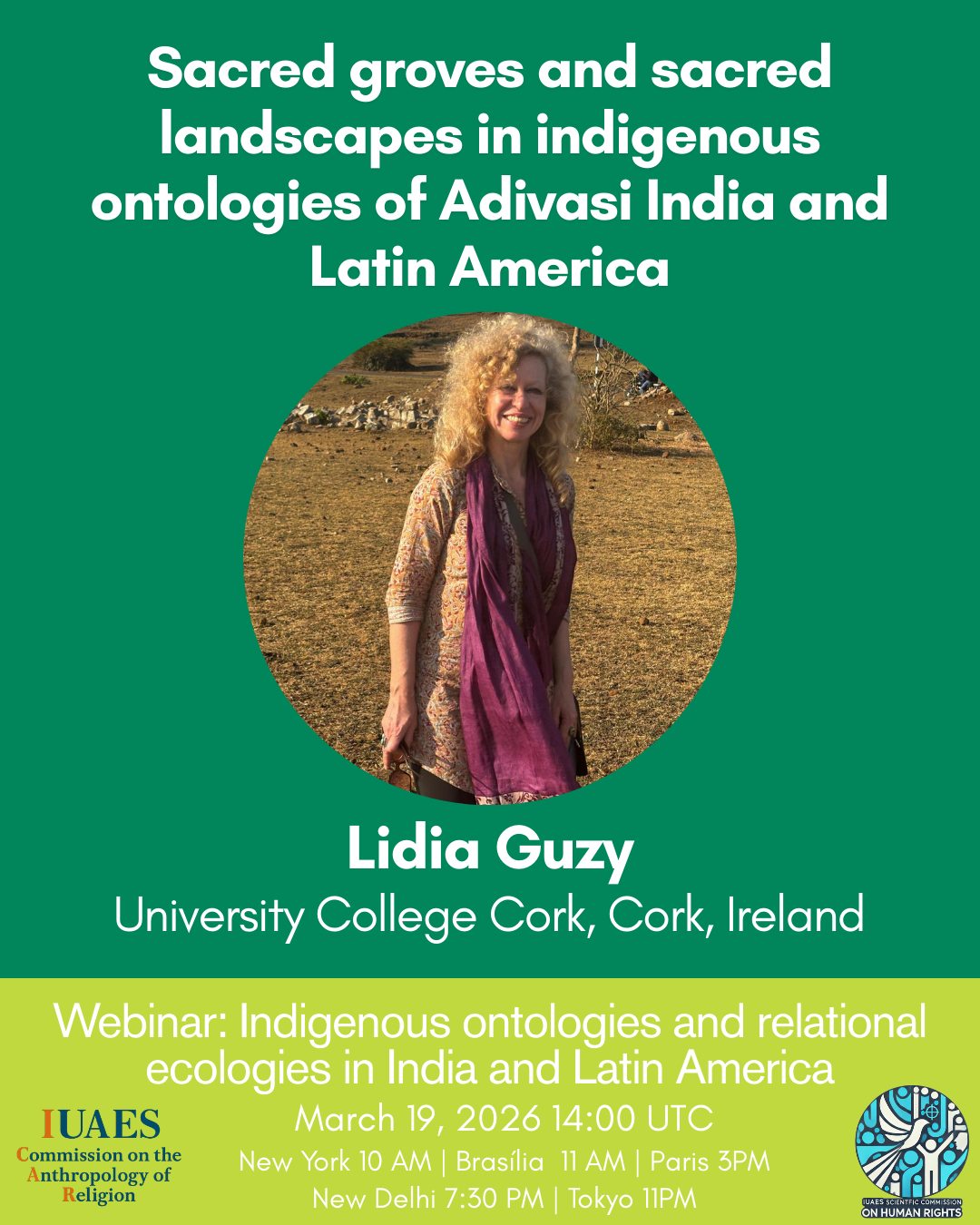
Bio: Dr hab Lidia Guzy is MA Anthropology Programme Director, Former Head Study of Religions Department, Associate Professor in South Asian Religions, Director of Marginalised and Endangered Worldviews Study Centre (MEWSC), Director India Study Centre Cork (ISCC) and Member of Latin American Strategy Group at University College Cork (UCC), National University of Ireland. As a social anthropologist, scientist of religions, and ethnomusicologist, Dr Guzy specialises in thea nthropology of music and religions and global indigenous studies and Indian Adivasi studies in India and South America. Dr Guzy has dedicated her research to comparative anthropology with special interest in indigenous worldviews, eco-cosmologies, indigeneity, cultural heritage, the global new museum movement, cultural minorities, the politics of representation and the arts. Dr Guzy is involved in comparative research on marginalised and endangered worldviews, indigenous knowledge systems and eco-cosmologies. She investigates indigenous knowledge and questions of sustainability. Her recent research projects include comparative research on indigenous knowledge and spiritual systems in India and in Latin America.
💬 Discussants:
Dr. Daniela Calvo (Kyoto University, Kyoto, Japan)
Prof. Dr. Annapurna Pandey (University of California, Santa Cruz, California)
📅Date & Time:
March 19 – 2:00 PM UTC
New York — 10:00 AM | Brasília — 11:00 AM | Paris — 3:00 PM | New Delhi — 7:30 PM | Tokyo — 11:00 PM
🔗 Zoom link: https://us02web.zoom.us/j/88304838479?pwd=A0Gy0fnfRoZkKvJH610Y8lxBaOKG2y.1
Meeting ID: 883 0483 8479
Passcode: 072111
Study of Religions Department
Staidéar Reiligiún
Contact us
Room 2.22, O'Rahilly Building, University College Cork, College Road, Cork, T12 ND89