
The Ends of Albion: Apocalypse and the Folkloresque in Current Ethnonationalist Discourse
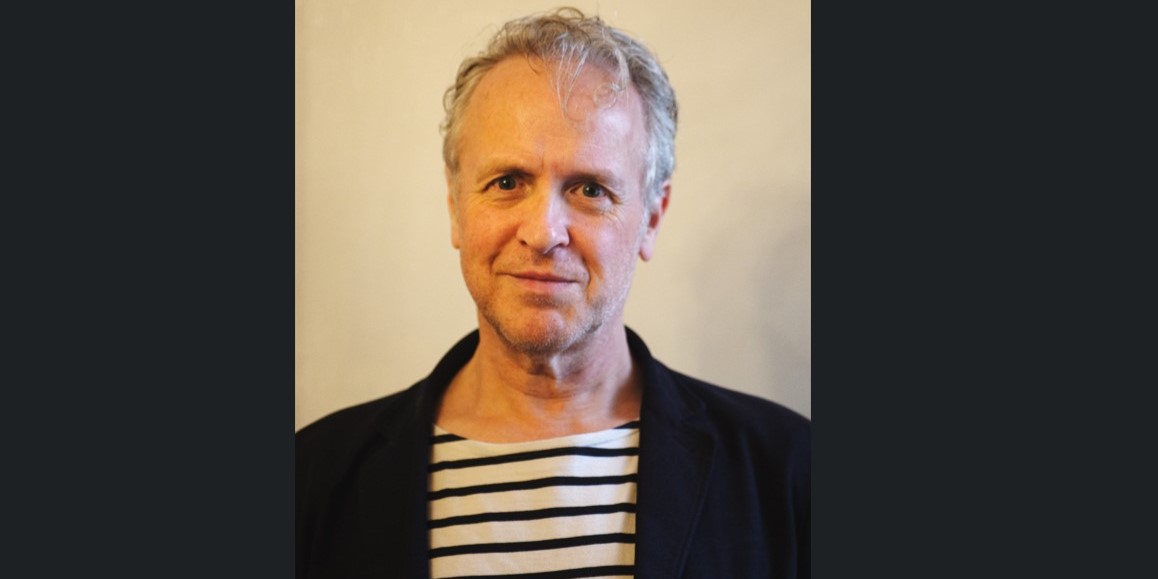
The next presentation in the Study of Religions Research Seminar Series is on Wednesday 1 April 2026 at 6-7pm on MS Teams with Dr Andrew Wilson
This presentation addresses two registers of current ethnonationalist political rhetoric that draw on religious motifs and structures. The first strand is the role of apocalyptic thinking as it is present in white supremacist terrorist manifestos. The second is the use of 'the folkloresque' in the construction of an idealised antiquity drawn on by ethnonationalist groups and across the radical and extreme right milieu more generally. Both strands converge around a temporally continuous imagined community that is evoked by these distinct but mutually supporting invocations of past and future. The commingling of an idealised past and a longed-for future provides a sense of purpose, destiny even, to the ethnonationalist formations and networks who draw on these narratives. This palingenetic tendency is a common feature of fascism (and forms the basis of Roger Griffin's 'fascist minimum'). What is less commonly recognised is the millenarian structure of these manifestos. Following Emilio Gentile's work on political religions, this paper will show the manifestos to be rooted in religious structures as well as political thought – as much apocalypses as manifestos. Both the neofascist apocalypses and the ethnonationalist folkloresque can be approached as politicised forms of vernacular religion. Their exclusionary imagined community is articulated as a sacred space that is to be purified and whose boundaries are to be policed. These boundaries may be territorial but they are also cultural and the contestation over the past - mythic and material - is currently unfolding on many fronts. Folk cultures, as part of the warp and weft of vernacular religious expression, are a crucial one because they provide a space in which 'the people', 'the folk', can be expressive of not only their hopes and fears but also who is to be included in the national community. For ethnonationalists this is part of the fundament of 'the nation', the exclusivist deep culture through which the link between land and people is sacralised. Thus, under the shadow of neofascist conspiracy theories about the eradication of 'the white race', folk cultures become drawn into the ethnonationalist apocalyptic imaginary.
Parts of this presentation have been published as 'Retreat to the Future: The Role of Apocalyptic Thought in Current Ethno-Nationalist Extremism'. 2021. In Giacomo Loperfido (ed.) Extremism, Society, and the State. New York & London: Berghahn and as '"Our Community Could Start Our Own Traditions": The Commingling of Religion, Politics and the Folkloresque in a Far-Right Groupuscule'. 2021. In Matthew Cheeseman & Carina Hart (eds.) Folklore and Nation in Britain and Ireland. London: Routledge
Andrew Wilson is a Senior Lecturer in Sociology and Criminology at the University of Derby with research interests in environment, extremism, and nationalism particularly where these overlap with different kinds of belief. These research interests inform his teaching across the programmes he work on, especially in the undergraduate modules Green Criminologies and Global Communities and Populism, Extremism, and Violence.
All Welcome To Join Us on Teams. Please contact Dr Jenny Butler for more information on j.butler@ucc.ie
Study of Religions Department
Staidéar Reiligiún
Contact us
Room 2.22, O'Rahilly Building, University College Cork, College Road, Cork, T12 ND89