In This Section
- Home
- About Us
- Research
- Research Clusters & Working Groups
- Ageing
- Children and Young People
- Research for Civil Society, Environment and Social Action (REACT)
- Genders, Sexualities and Families
- Disability and Mental Health
- SHAPE
- CARE21
- Migration and Integration
- Poverties, Social Justice and Inequalities
- Gender and the Academy Research Working Group
- Crime and Social Harm (CSH)
- Populism and the Rise of the Far-right
- Work, Organisations and Welfare
- TRANSS UCC Working Group
- Living Well with the Dead
- News and Events
- People
- Events
- Join Us
Creative Methodologies: New & Future Directions in Interdisciplinary Research
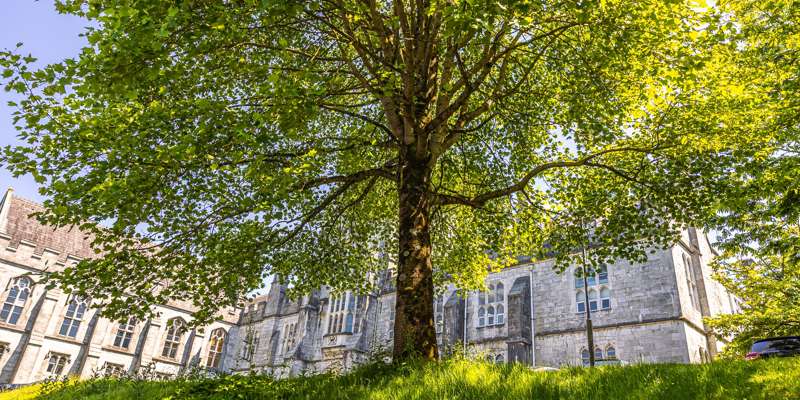
This symposium seeks to provide space for unpacking research experience in developing and using creative methodologies in research. Through two keynote presentations, the event presents a diversity of experience in applying creative methods to answer research questions across the interdisciplinary space of the social, public health and economic sciences. The symposium will also provide an opportunity for participants to share experiences and to pitch their ideas for using creative methodologies in their research.
|
|
Date: 8th October 2026, 10.00 - 15.35 Venue: Dora Allman Room, The Hub. Register at: https://forms.cloud.microsoft/e/0meV8fqm2k |
Time |
Activity |
| 10 - 10.10 | Event opened by Dr Shirley Martin, Head of School of Applied Social Studies and creative methods researcher. Welcome by Dr Monica O’Mullane |
| 10.10-11 | Keynote 1: Dr Kate Carruthers-Thomas (Birmingham City University): Keynote as Exhibition: An interactive presentation of creative research dissemination in interdisciplinary spaces Abstract: In her keynote, Kate invites you to get up close to a range of creative methods she’s used to disseminate research into gendered issues in higher education, living and working through COVID-19, and feminist family history. She will also use the opportunity of a captive audience to talk briefly on the tyranny of tidy in academia, on the joys of revisualising data and on matters of scale. Q&A facilitated by Dr Monica O’Mullane. |
| 11-11.10 | Tea & Coffee Break |
| 11.10-12.15 | Group discussion - Make your pitch! Participants are welcome to pitch their ideas on the research that they are doing, or would like to do, that they would like comments/ feedback on, in terms of creative methods (2-minute pitches). Pitches can be informed by the following questions: In what ways are you using creative methods in your current work? How would you like to use creative methods in your research? Have you heard something from this session’s keynote presentation that you could use in your research? If yes, what? |
| 12.15-13.15 | Break |
| 13.15-14.10 | Welcome by Dr Gema Kloppe-Santamaría Keynote 2: Dr Jelke Boesten (King’s College London) Visual and Embodied Methodologies: A VEMinist Framework for researching gender violence Abstract: How do we generate new and useful knowledge about persistent forms of gendered violence that, despite decades of research, continue to shape lives, institutions, and inequalities? This presentation reflects on a collaborative research project that employed Visual and Embodied Methodologies (VEM) to investigate experiences, understandings, and representations of gendered violence. In the process, the project developed a ‘VEMinist’ framework for qualitative research grounded in principles of social justice, reflexivity, care, and connection. Q&A facilitated by Gema Kloppe-Santamaría. |
| 14.10-14.20 | Tea & coffee break |
| 14.20-15.25 | Creative Methods Speed Dating Building on the earlier discussion and on the keynotes, participants will talk in pairs and discuss in 5-minute sessions if there are any new or previously unexplored creative methods they would like to use in their future research and are there any challenges they anticipate. |
| 15.25-15.35 | Closing remarks - Gema and Monica |
Speaker BiosJelke Boesten is Professor of Gender and Development in the School of Global Affairs at King's College London. She has published extensively on sexual violence in war and peace, gender-based violence, social policy, and political processes. She is currently working on two book manuscripts: ‘Intimacies of Violence: Veterans, Gender, and Memory in Postconflict Peru’, and ‘VEMinism: Feminist Visual and Embodied Methodologies to Address Gendered Violence’ (with McIlwaine, Kerr, Martin, Hall and Fairey; Bloomsbury 2027). Boesten founded the Gender Studies Network at King's College London and co-leads the Visual and Embodied Methodologies (VEM) Network. Through this collaboration, she led an ESRC-funded project exploring visual and embodied methodologies and intersectional gender-based violence (2023-2025). Kate Carruthers Thomas is Associate Professor of Higher Education and Gender at Birmingham City University. As an interdisciplinary social sciences researcher, she brings sociological, geographical and educational theories and concepts to bear on primarily qualitative research into issues of gender within contemporary UK higher education. Alongside conventional academic formats including journal articles and book chapters, Kate has developed a multimodal portfolio of creative methods of research dissemination, including graphic social science, research poetry, an illustrated digital archive and a board game. Kate is a member of the Governing Council of the Society for Research in Higher Education and of the Editorial Advisory Board for the Journal of Creative Methods. She is also a feminist family historian and presenter of the podcast series A Feminist Family History in Eight Lives and A Feminist Family History in Three Generations.
|
|
| Hosted by two ISS21 research clusters - Genders, Sexualities and Families, and SHAPE (Society, Health Equity and Political Economy) Co-organised and co-led by Dr Monica O’Mullane (School of Public Health) and Dr Gema Kloppe-Santamaría (Department of Sociology & Criminology) Supported through funding from the Marie Sklodowska-Curie project GendeResearchIreland |
For more on this story contact:
Dr Monica O’Mullane (m.omullane@ucc.ie) and Dr Gema Kloppe-Santamaría (GKloppe-Santamaria@ucc.ie)
Institute for Social Science in the 21st Century (ISS21)
Contact us
Top Floor, Carrigbawn/Safari Building, Donovan Road, Cork, T12 YE30