In This Section
MIGMOBS-LATAM : Mapping the changing migration-mobilities systems of South America
De- and re-centering migration studies calls for the development of new empirical studies that take seriously the changing contexts and forms of mobility in different world regions. The MIGMOBS project is well placed to address this task, in terms of its ambitious programme of work on South America, co-led by Ana Paula Penchaszadeh and Adrian Favell.
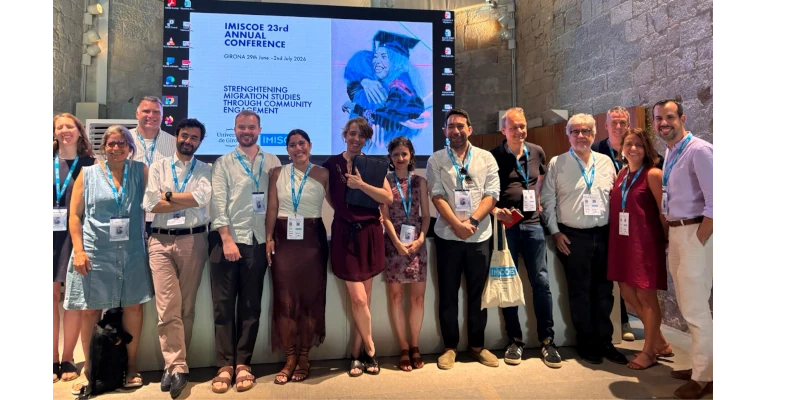
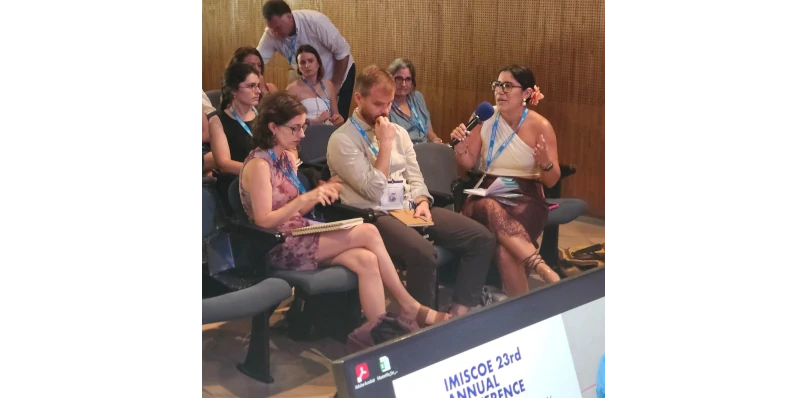
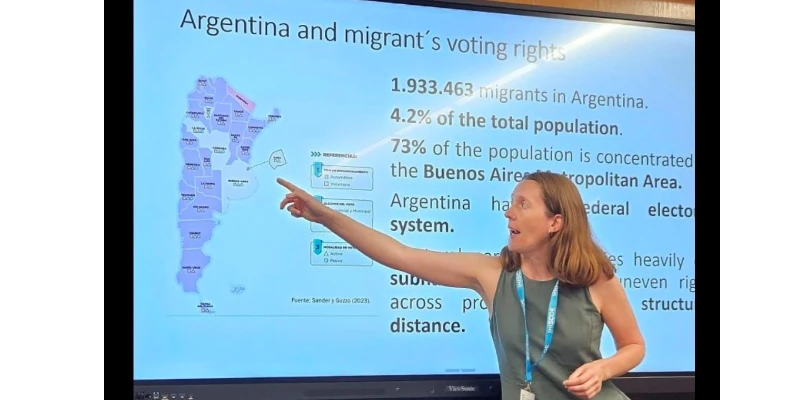
Since the inception of the MIGMOBS-LATAM sub-project, we have engaged in partnerships to enable new work on the region, joining forces with the FREE MOVE project led by Diego Acosta at Nebrija University and CAMINAR, a network of leading South American sociologists and demographers, also involving Penchaszadeh. A first workshop of papers was held at Nebrija University in Madrid in mid June. We then reconvened at the Annual Conference of IMISCOE in Girona in July 2026, where the MIGMOBS and FREE MOVE researchers (Joanna Sander, Natalia Debandi, Ettore Recchi, Tobias Grohmann, Paula Nimbriotis, Ana Penchaszadeh, Nieves Fernández-Rodríguez, Diego Acosta, Adrian Favell, Greta Spano and Sebastián Umpierrez de Reguero) were also joined in the presentations by a Brazilian-Portuguese team, including João Carlos Jarochinski Silva, Jorge Malheiros and Gisela Zapata, as well as the director of the Migration Policy Centre at the EUI and MIGMOBS advisory board member, Andrew Geddes as discussant.
The goal of the collective work is a special edition of the leading journal Comparative Migration Studies, edited by Favell, Penchaszadeh and Acosta, 'Governing Mobilities Beyond Europe: Free Movement Regimes, Categories and Mobilisations in South America '. We are in an unique position to bring together new demographic sources, institutional policy analysis, and critical ethnographic work, the challenging interdisciplinary mix that is the hallmark of all MIGMOBS' work. Building on Acosta's pioneering study of the evolution of multiple free movement regimes in South America, our work shows how new mobilities channels are enabling growing flows of people on the move, which in turn lead to new politics in sending and receiving countries. Taken together, the cases force us to rethink assumptions about the linearity of migration, how borders work, and state-centred notions of territory.
Our focus on a traditional, yet highly transnational migration system — the Bolivians in Argentina and Chile — demonstrates the impact of MERCOSUR and other regional accords on what Penchaszadeh refers to as the "subjectivation" of migrants, empowered in claims making and access to new rights of residence. This tendency towards regularisation is a well observed facet of the normality of informality and porousness historically in South America. At the same time, the massive crisis across the continent triggered by the exodus of around 5 million Venezuelans, threatens the historical openness of South American borders, with models of securitisation and restriction of rights influenced by trends in the North Atlantic West.
MIGMOBS ERC AdG Project 101097240
Contact us
Radical Humanities Laboratory, Wandesford Quay Research Facility, University College Cork, Republic of Ireland
- migmobs@ucc.ie
- Professor Adrian Favell, Project PI