In This Section
Migration in Contentious Times: IMISCOE, Spring 2026
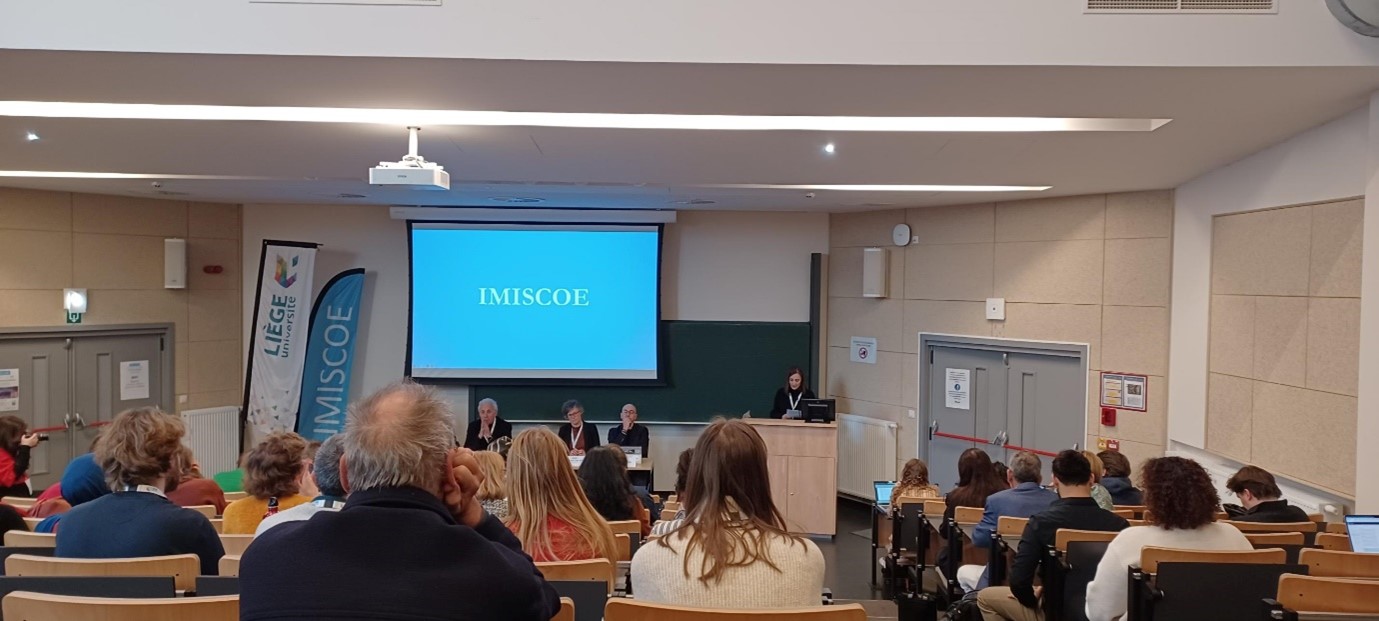
Attending the IMISCOE Spring Conference 2026, which took place from March 16 to 18, 2026, hosted by the Centre for Ethnic and Migration Studies (CEDEM) at the University of Liège, Belgium, offered a timely opportunity to reflect on how migration research itself is evolving in response to increasingly polarised political climates, restrictive migration regimes, and rising anti-immigrant discourses.
The conference theme, Governing and Experiencing Migration in Contentious Times, framed migration not only as a policy issue but also as a lived, contested, and temporally shaped experience.
This year’s conference theme explored how these developments shape both migration governance and migrants' lived experiences. The rich hybrid programme of the conference reflected the increasing politicisation of migration policies, restrictive immigration and integration policies, the role of knowledge production in public debates, changing public attitudes toward migration, the “Crisification” of migration across diverse European contexts, and the vital role of civil society and migrant activism. These discussions reflected broader concerns about how migration governance is shaped by political pressures and ideological divisions.
What stood out most to me was the strong emphasis on reflexivity, power, and knowledge production, particularly in the opening and concluding plenaries, which together framed migration research as both politically situated and ethically engaged. The opening plenary set the tone for the conference by focusing on the effects of political polarisation and democratic fragility on migration policies, highlighting how broader political shifts increasingly shape migrants’ journeys and lived experiences. The discussion examined current dynamics in U.S. migration policy and their impact on migration from Latin America, while also exploring the growing role of courts in shaping access to asylum across Europe. Overall, the plenary emphasized that migration governance is increasingly influenced by political contestation, legal uncertainty, and institutional fragility, with significant implications for migrants’ mobility, protection, and everyday experiences.
In the context of this conference, Kheira Arrouche contributed to the conference through a presentation on the Irish case, examining the rise of far-right narratives and shifting migration governance in Ireland. The presentations focused on how emerging anti-immigration discourses intersect with policy responses, local tensions, and migrants’ everyday experiences. This contribution connected closely to the conference theme of migration in contentious times, particularly the discussions around political polarisation, democratic fragility, and governance transformations. The Irish case illustrated how even countries historically framed as peripheral to European migration debates are now experiencing rapid political shifts, raising questions about inclusion, protection, and the future direction of migration governance. Presenting this work also opened valuable discussions on how local developments in Ireland resonate with broader comparative trends discussed throughout the conference.
The concluding plenary wrapped up the discussion from migration governance to migration scholarship itself. It was kicked off with an interesting reflection how researchers can study, communicate, and intervene in migration debates during politically contentious times. The discussion highlighted how a decolonial approach asks what local political language and concepts can reveal that imported analytical frameworks often overlook, particularly in the so called global south contexts. Rather than reproducing dominant migration categories, the presentation encouraged scholars to question how epistemological hierarchies shape migration knowledge. The political significance of this approach lies not only in expanding representation but in refusing imposed scripts and dominant narratives that simplify migration dynamics. The discussion also drew attention to the role of media in producing migration meanings, emphasising what remains absent, silenced, or under-represented in public discourse. Overall, the session encouraged researchers to critically reflect on how migration knowledge is produced, whose perspectives are prioritised, and how decolonial feminist approaches can open space for more grounded, context-sensitive, and politically aware migration research.
By Kheira Arrouche, Post-Doc at University College Cork on the MIGMOBS Sub-Project 'Africa-Ireland Migration-Mobilities Systems'. Kheira is the author of a recently published article in Ethnic and Racial Studies, 'Afterlives of decolonisation: the racialisation of West and Central African migrants in contemporary Algeria'
MIGMOBS ERC AdG Project 101097240
Contact us
Radical Humanities Laboratory, Wandesford Quay Research Facility, University College Cork, Republic of Ireland
- migmobs@ucc.ie
- Professor Adrian Favell, Project PI