
Alumni Spotlight: Cormac McGarry, Maritime Security & Intelligence Expert
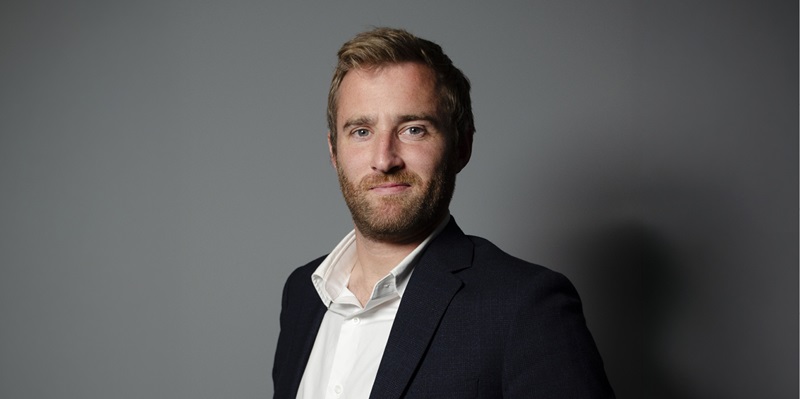
Cormac McGarry has built a career around understanding risk in some of the world’s most challenging maritime environments, with experience ranging from advising vessels navigating high-risk waters to serving as an expert witness in vessel-loss arbitrations involving the war in Ukraine, piracy in Nigeria and cocaine smuggling in the Americas. He has also carried out on-the-ground intelligence gathering in places like Dos Bocas and Ciudad del Carmen, Mexico, to improve and inform maritime security services for clients operating in the Bay of Campeche.
Before moving into risk advisory, Cormac managed applied maritime research projects with the National Maritime College of Ireland and the wider European maritime community, and worked in East Africa on close protection, crisis response and special investigations. He holds all four ISPS Code certifications, including Company Security Officer, and teaches maritime security as an adjunct professor at Sciences Po Paris. He also served in the Irish Reserve Defence Forces as an NCO and artillery Gun Commander.
Tell us about your time at UCC and your career journey. How did you get to where you are today?
I completed my Masters in International Public Policy and Diplomacy - a really practical programme that turned my passion for history and politics (my undergrad) and security toward some viable career paths. I have strong memories of visiting EU institutions in Brussels and doing my summer internship in Washington DC, getting to see how the issues we studied are actually worked on by career professionals from diplomacy to development. I remember the keynote speaker at my Masters grad ceremony saying something along the lines of "don't be afraid to let your career take you in unexpected directions". That philosophy stuck with me: I wanted to join the diplomatic corps.
Cue my first career failure: I had both the unfortunate luck of graduating three years into a public sector hiring freeze and, when recruitment opened, simply was not accepted through the first round. The internship in DC drained my cash and I was working in kitchens, cutting grass and pulling pints to stay afloat with nowhere near enough to move abroad or even anywhere else in Ireland. So, I went to the National Maritime College of Ireland where one of my classmates had already secured a PhD-funded position and pitched myself for a role in the fledgling research team there. What started as an internship became a full-time paid role that started my professional career, weirdly, in the maritime industry - I had not once considered that as a career path during my studies and I do not regret it for a second.
After a few years and savings, I decided it was time to get abroad and was keen to switch into a career in international development with either an institution like the UN or an NGO. Cue my second career failure: a year in Zanzibar of mostly unpaid work trying to break into this sector, kept afloat by a supportive partner and various odd jobs such as managing a friend's Airbnb to being a runner for the American reality TV show The Amazing Race. But what became a dear friend of mine introduced me to the whole security consulting sector and a company that would come to employ me in Dar es Salaam. I rediscovered my passion for security (I had served in the Irish Reserve Defence Forces) - it was an intense job that involved gathering intelligence on potential security threats to our clients, project managing armed protection operations and assessing the security of potential office sites for clients in East Africa.
Cue my third career failure: the company had to let me go with little warning, so I frantically started looking for new jobs. It just so happened a company called Control Risks, a big name in the security world, was hiring an analyst for their maritime team - and that is where I am nine years later.
For readers unfamiliar with maritime security and intelligence, how would you explain your work?
I help ship owners understand the security risk posed to their ships and come up with ways to reduce that risk. I also help the non-maritimers understand just what is going on in our quirky maritime world - it's a very hush-hush industry full of traditions and lingo; hence, outsiders often need someone like me to help them understand it. It is a globally focused role that allows me to explore my passion and curiosity for all things security and geopolitics. So, one day I might be helping a ship owner not get hit by Houthi missiles in the Red Sea and the next day I'm helping a coal trader not get cocaine smuggled aboard their cargo ship in South America. So, I am a specialist; there are only a handful of people in the world with this job, but my success here is really down to being a good generalist who can quickly understand and shift focus from one area of the world to another.
"One day, I might be helping a ship owner not get hit by Houthi missiles in the Red Sea and the next day, I'm helping a coal trader not get cocaine smuggled aboard their cargo ship in South America."
From undersea cables and disrupted shipping routes to geopolitical tensions making headlines, has maritime security become more important than ever?
"Maritime security" is nothing new - I joke that seafaring is one of the two oldest professions - it has defined much of history (think of the British Empire being built on its Navy). When I started this job, my only clients were the ship owners and the broader maritime community, and the issues were what I call "traditional" maritime security problems like piracy. Now, probably 50% of my work is for "non-maritimers" and about 90% is around geopolitics. That is because, yes, maritime security has become more important than any time in modern history to the broader commercial world. Modern shipping was built in the post-war rules-based order. When that order breaks down (which it has been for some years now), shipping is the first sector to feel it. My expertise in this space can provide a bit of a bellwether for broader geopolitical shifts and I can help companies understand what something like a Strait of Hormuz closure is going to mean for their critical supply chains.
Have you noticed any changes or emerging trends in your field in recent years?
Geopolitics. I started my current job focusing on the threat to commercial ships from pirates, smugglers and terrorist groups. It has absolutely shifted to the threat posed by nation states, whether that is Russia, Ukraine, Iran or the United States. Commercial ships (which are owned and operated by civilians) are now frequently the target of extremely powerful state or state-like actors seeking to choke maritime supply lines or use the international nature and vulnerability of shipping to send a message to their adversaries.
You've worked on projects across many countries. How have those international experiences shaped your perspective?
I see a lot of bias based on where people come from and have actually leaned quite heavily into my Irish perspective. I think Irish people have an innate ability to quickly comprehend vastly differing perspectives in geopolitics because we understand the underdog story of fighting against the odds, while also intimately understanding the cultures of our powerful Western cousins. Many of the conflicts I study in relation to my work (Russia/Ukraine, US/Iran, Israel/Gaza) are more easily understood from this Irish perspective and I guess what I have learned or observed is that the downfall of many people attempting to analyse these situations is rooted in a bias from their own cultural history.
Advancement Office
An Oifig Cothaithe
Contact us
Cork University Foundation is incorporated in Ireland as a limited liability company and a registered charity (CRN: 243605, RCN: 20033385, CHY11831). Room 2.12, Western Gateway Building, Western Road, Cork, T12 XF62