
In This Section
- Home
- About
- News
- Research Projects
- Great Saltee Island Seabird Conservation
- Estimating and mitigating the impact of bird damage to crops in Ireland
- The ecology of the Red Grouse in Ireland
- The conservation ecology of a declining population of hen harriers
- The spatial and population ecology of White-tailed Eagles since their reintroduction to Ireland
- Sustainability measures in cereal production
- Using spatial ecology to develop a sustainable habitat management strategy for red-billed chough in Ireland
- The distribution and behaviour of the European Storm-petrel at sea
- People
- Gallery
- How to Find Us

Project Overview
The Red Grouse Lagopus scotica is a species of bird endemic to Britain and Ireland, and would have been one of the first animals to recolonise these islands after the retreat of the most recent period of glaciation around 13,000 years ago. It is now restricted to open bogs, heaths and upland habitats, where it feeds on coarse plant material and nests on the ground. In Ireland, the Red Grouse is genetically and physically different to those in Great Britain, further making them a precious and unique part of Irish fauna. Unfortunately, it is in steep decline and has been placed on the Irish Red List of Birds of Conservation Concern. This is due to in main to habitat loss thanks to recent changes in how humans manage our peatlands and uplands, such as expansion of forestry and intense agriculture, peat extraction and livestock pressure on vegetation. Elevated predation and increased human disturbance are likely to be compounding factors.
Since little is known about the ecology of Red Grouse in Ireland, our project aims to understand how these birds use and distribute themselves in the landscape, their habitat preferences, and what specific pressures are affecting breeding success. We are using GPS tracking devices to closely follow the movements and breeding activities of female red grouse at different sites across Ireland. In addition, a thermal imaging drone is essential for the success of this project, used to find the Grouse in the vast open landscapes. This means that we can conduct surveys and map out the distribution of birds across sites, as well as visually monitor breeding birds from above without disturbance.
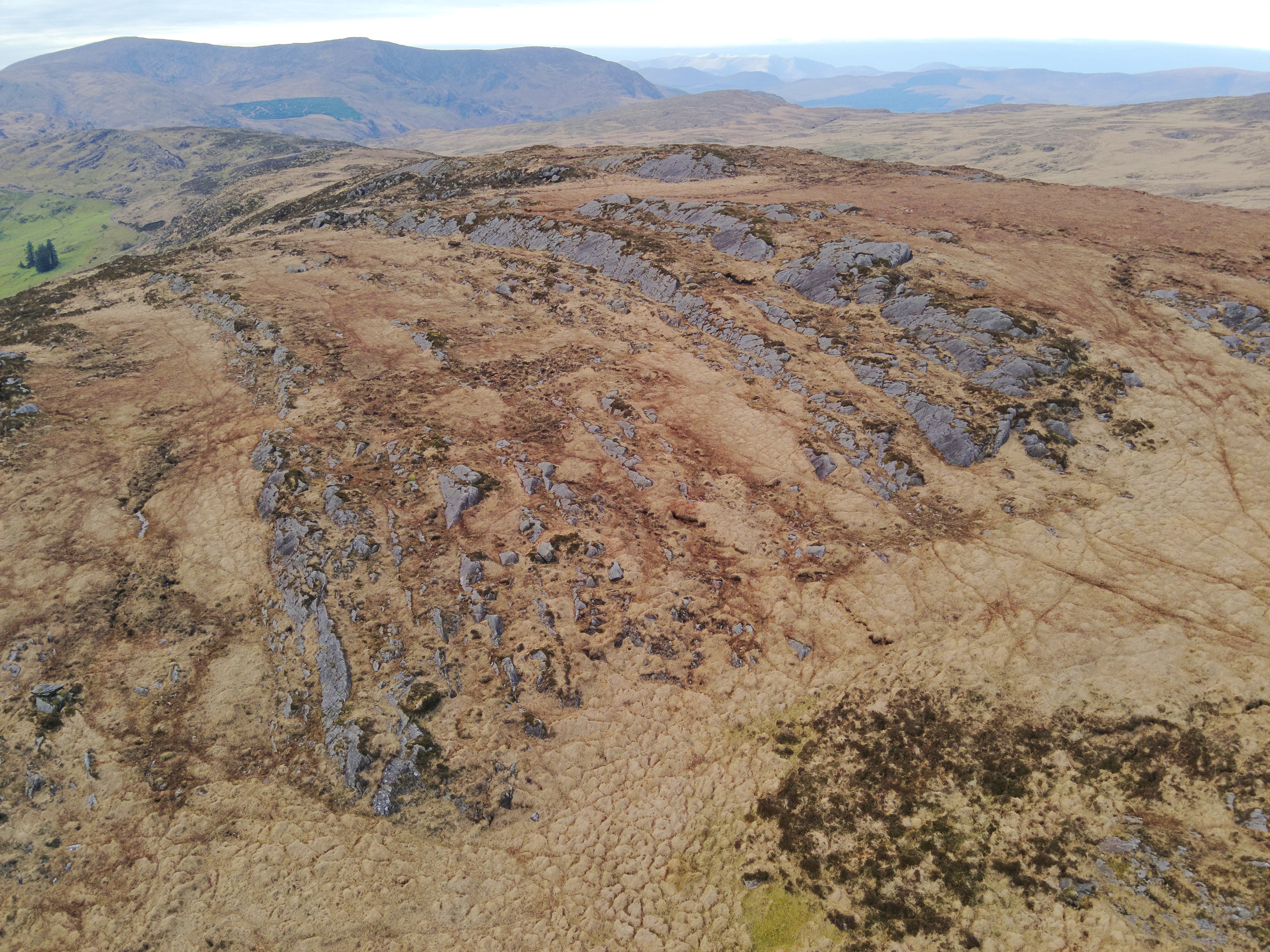
Fig 1. Upland landscape in County Kerry, where Red Grouse can still be found in patches of suitable vegetation
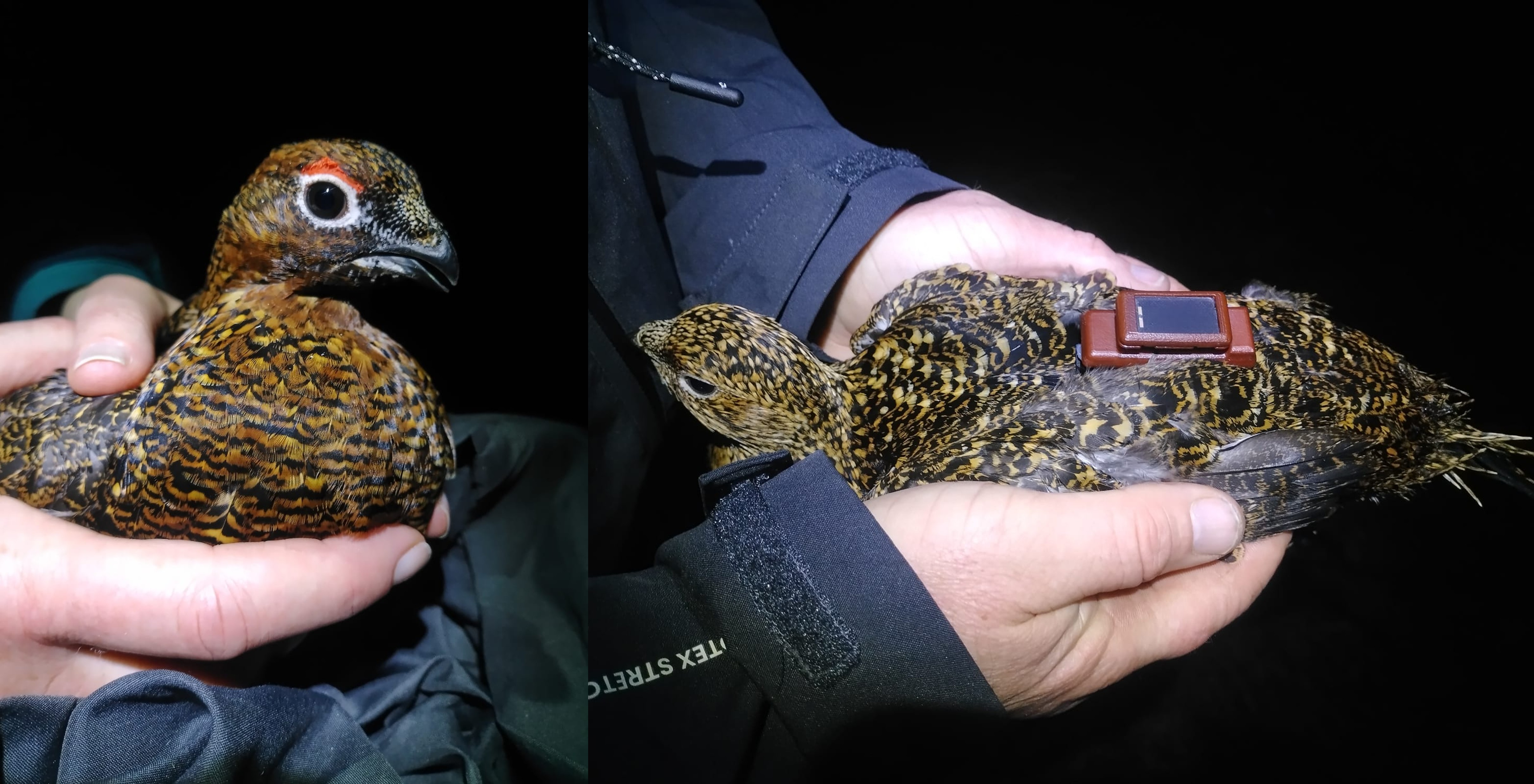
Fig 2. A female Red Grouse captured to attach a GPS tracking device, under licence. Detailed measurements and a DNA sample are also taken before release.
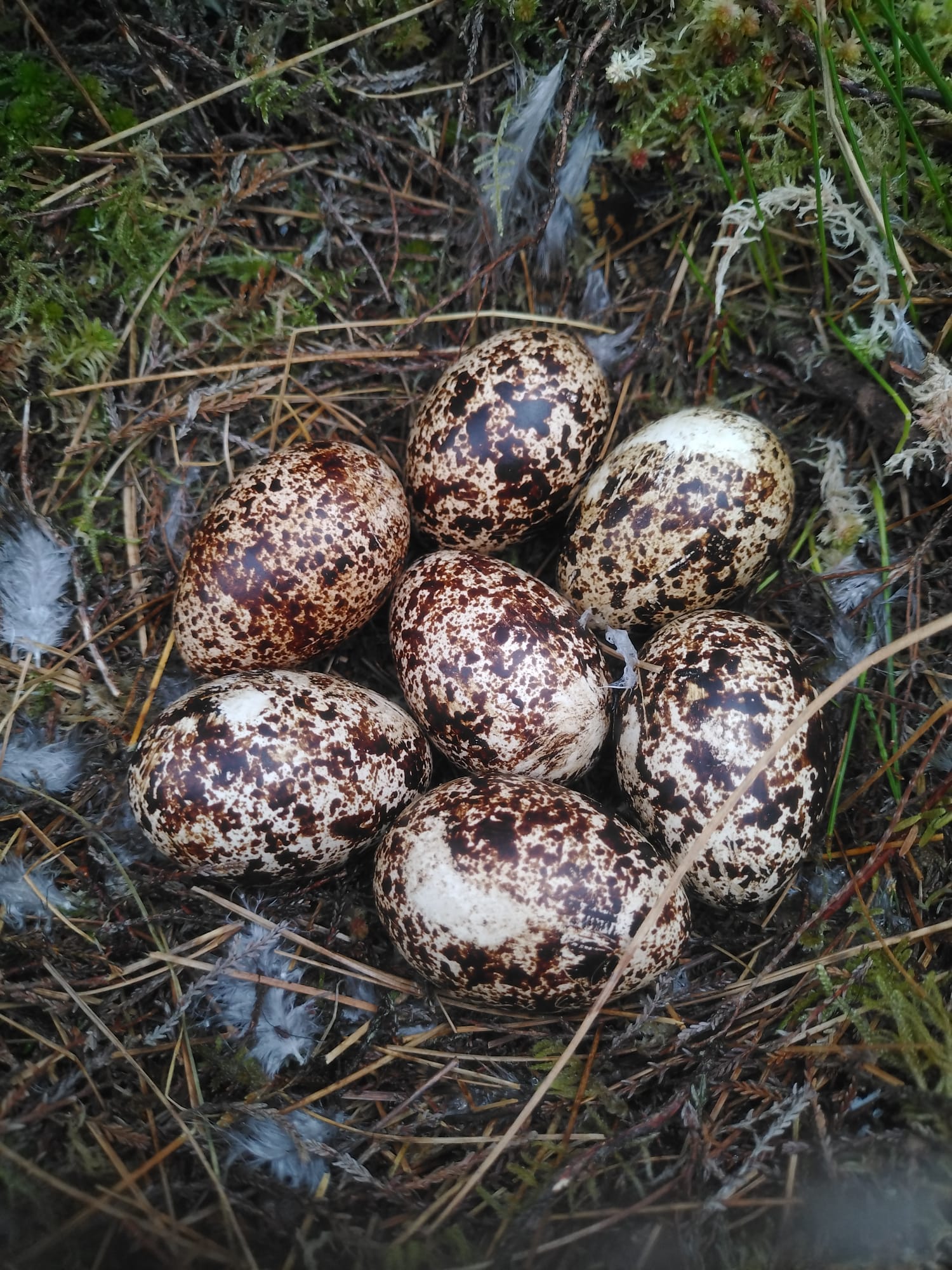
Fig 3. A Red Grouse nest, the eggs laid in a shallow depression amongst long heather. The female incubates them for 22 days before hatching. They are very vulnerable to predators at this stage.
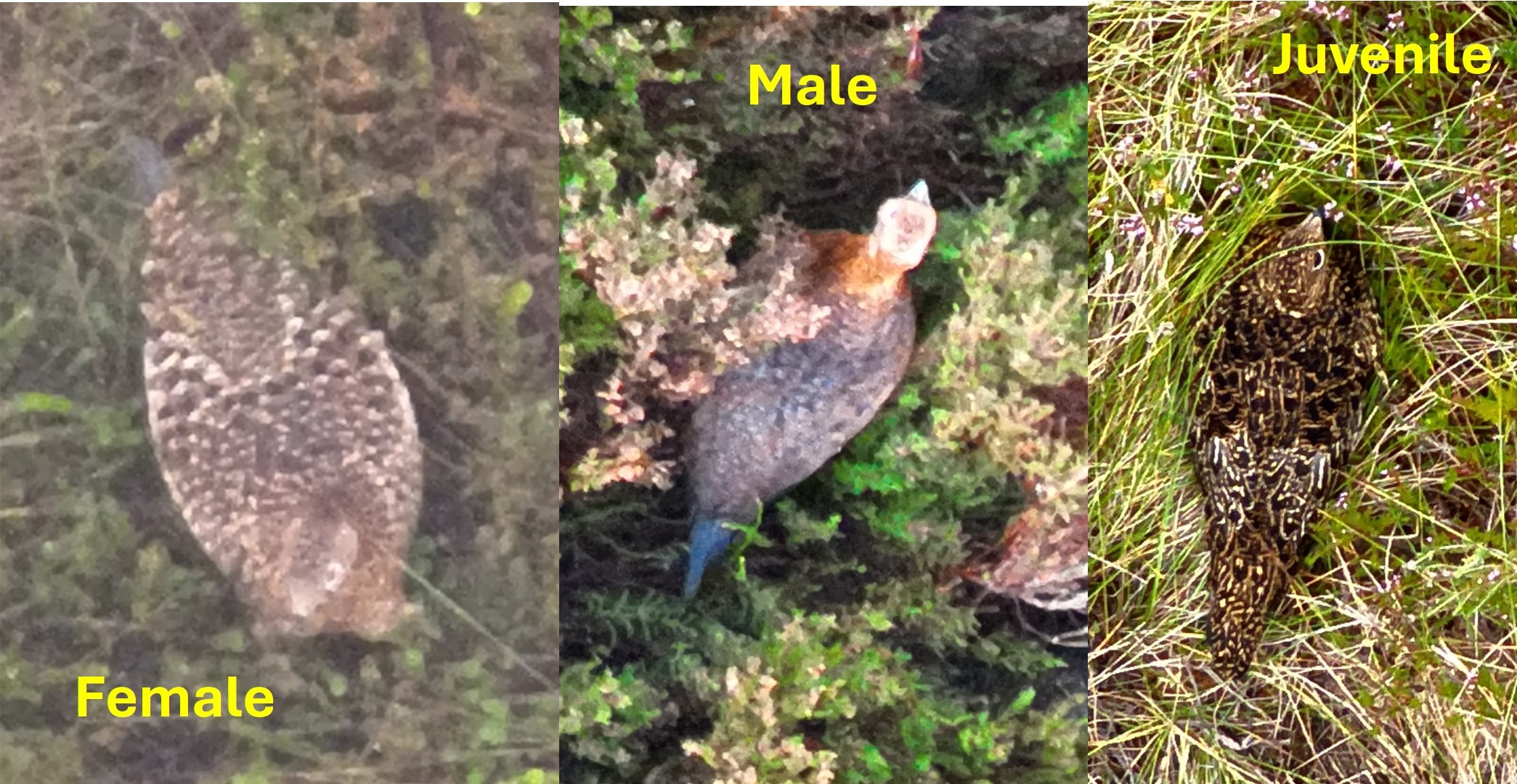
Fig 4. Images of Red Grouse taken using a thermal-imaging drone. Above, a view from the thermal camera showing five grouse in a group which are warmer than the surrounding habitat. Below, images taken using the drone’s zoom camera showing that it is possible to tell the sex and age of the birds.
Follow the project on Facebook for more information
Supported By
UCC Ornithology Research Group
Contact us
School of Biological, Earth and Environmental Sciences, UCC North Mall Campus, North Mall, Cork City,