In This Section
- Home
- About
- News
- Research Projects
- Great Saltee Island Seabird Conservation
- Estimating and mitigating the impact of bird damage to crops in Ireland
- The ecology of the Red Grouse in Ireland
- The conservation ecology of a declining population of hen harriers
- The spatial and population ecology of White-tailed Eagles since their reintroduction to Ireland
- Sustainability measures in cereal production
- Using spatial ecology to develop a sustainable habitat management strategy for red-billed chough in Ireland
- The distribution and behaviour of the European Storm-petrel at sea
- People
- Gallery
- How to Find Us

Project Overview
My research focuses on understanding and quantifying bird-related damage to agricultural crops in Ireland while examining the ecological, agricultural, and legal dimensions of human-wildlife interactions.
A central context for this research is the EU Birds Directive (Directive 2009/147/EC), which protects wild birds across the European Union and permits derogations from these protections only under specific circumstances. Under Article 9, derogations may be authorised where there is no other satisfactory solution, including to prevent serious damage to crops, livestock, forests, fisheries, or water, or for the protection of flora and fauna. The Directive further requires that derogations specify the species concerned, the authorised methods of capture or killing, the conditions under which such measures may be applied, and the monitoring and control arrangements that will be undertaken. Applications for control measures are assessed by considering the severity of the damage, the appropriateness of the proposed control method, and the conservation status of the species involved.
Within this legal and policy framework, my research addresses a key question: is the level of bird-related crop damage sufficient to justify lethal control, and is the killing of birds proportionate to the damage they actually cause? To answer this question, I investigate the relationships among bird presence and abundance, the type and extent of crop damage, and the resulting agricultural and economic impacts in Ireland.
To quantify bird-related damage, I use drone-based surveys to assess crop impacts across agricultural landscapes and combine aerial observations with detailed field assessments to validate damage estimates. This approach enables the identification of spatial patterns of damage and allows comparisons among crop types, locations, and seasons, providing robust evidence on the scale and significance of bird-related crop losses.
An additional component of my research involves engagement with farmers and other agricultural stakeholders to document their experiences, perceptions, and management practices. By integrating these socio-economic perspectives with ecological and spatial data, I seek to understand not only where and how much damage occurs, but also how farmers respond to it and which mitigation measures are currently employed.
Ultimately, my research aims to provide an evidence-based assessment of bird-agriculture conflicts that can inform wildlife management and decision-making related to Article 9 derogations. By quantifying the actual damage caused by birds and evaluating the effectiveness and necessity of different management measures, I aim to contribute to ensuring that any intervention, including legally authorised lethal control, is scientifically justified, proportionate to the damage incurred, and consistent with both agricultural requirements and bird conservation objectives.
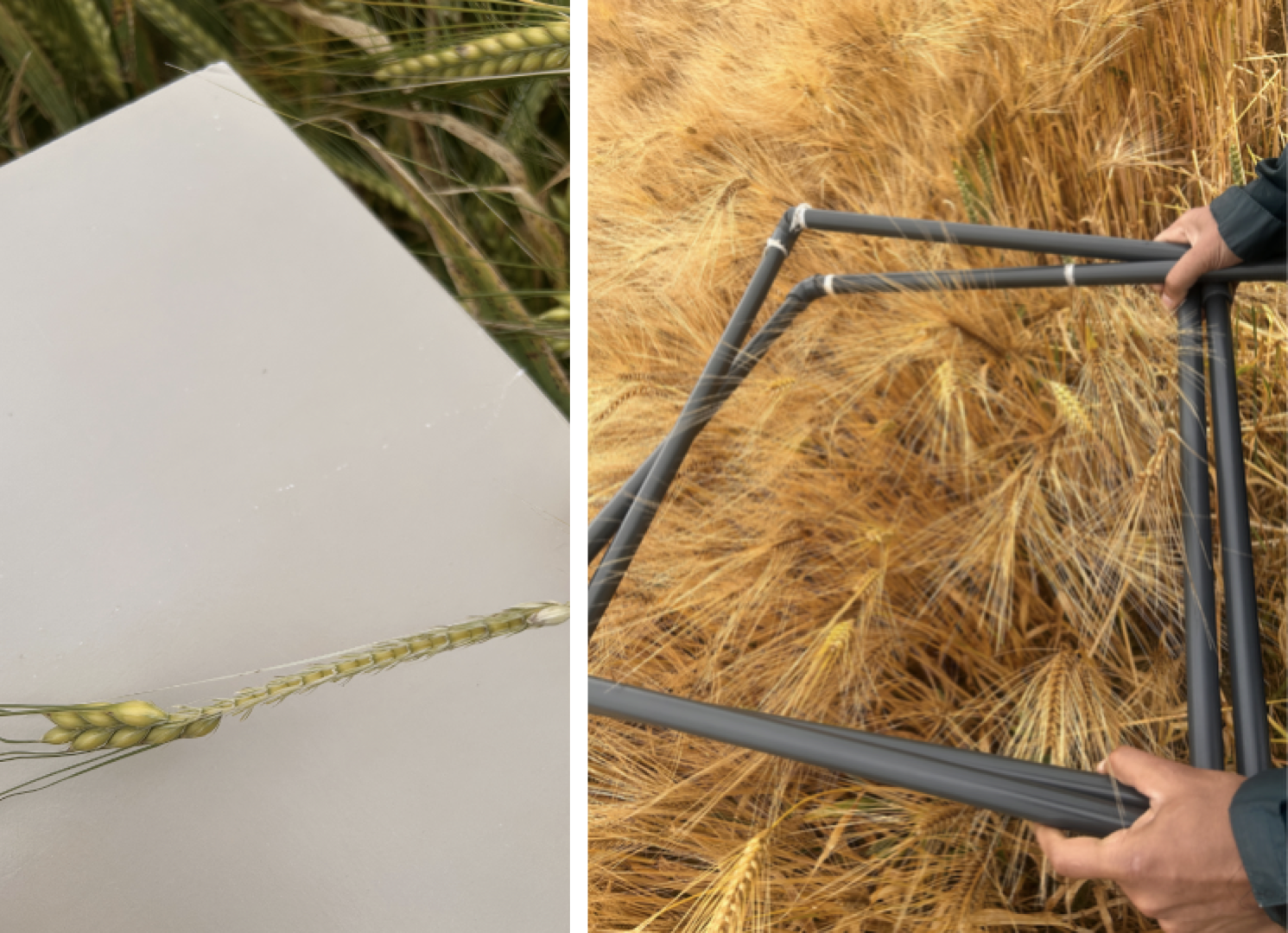
Fig 1. (Left) Assessment of bird-crop damage. (Right) Sampling quadrat deployed within a barley field to measure crop damage.
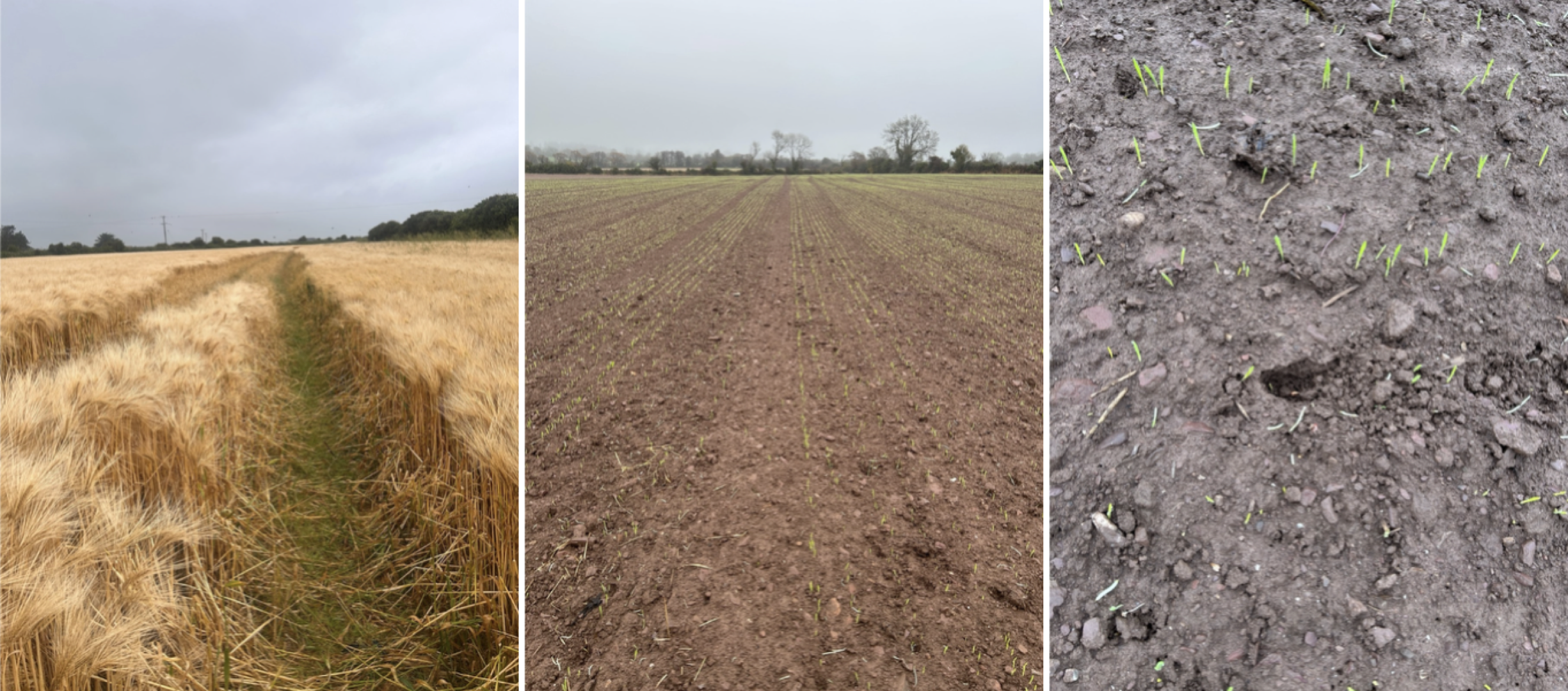
Fig 2. Evidence of bird-induced crop damage during (Left) the pre-harvest stage; (Middle) the post-sowing stage; and (Right) the post-sowing stage.
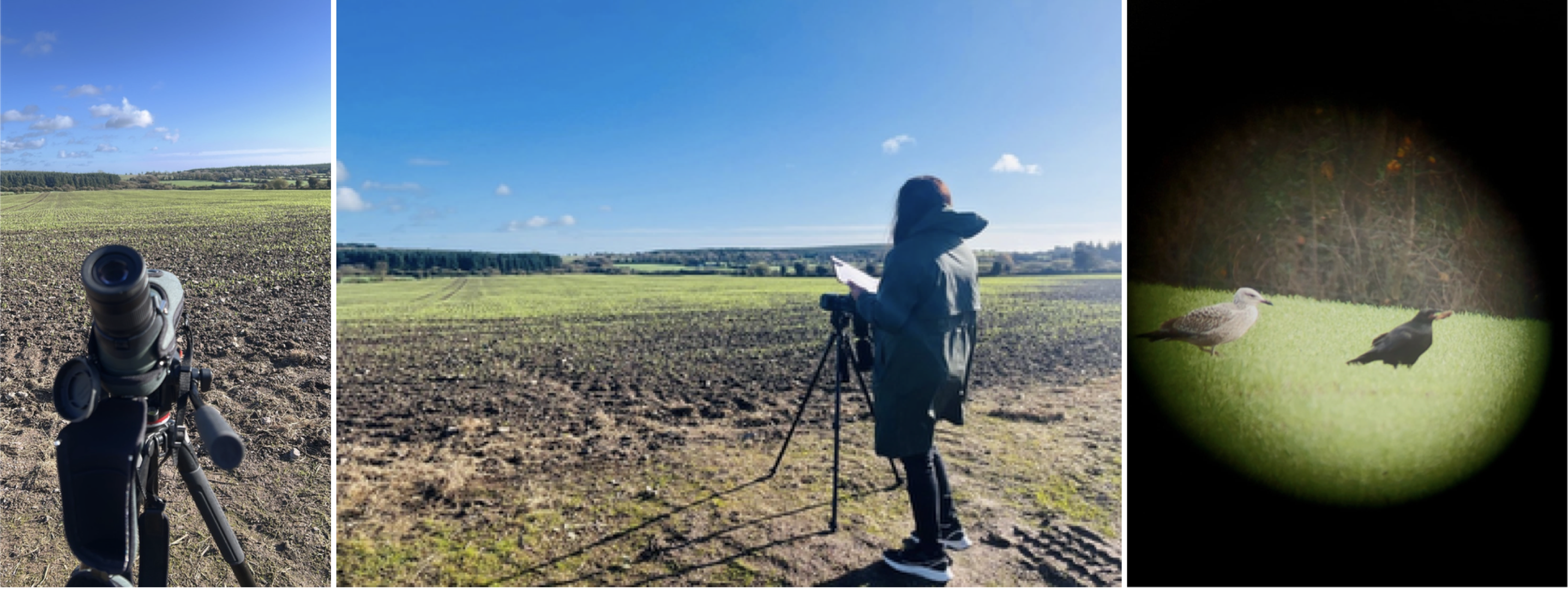
Fig 3. (Left) Field setup for observing bird activity in a post-sowing crop field. (Middle) Survey in progress. (Right) Telescopic view of bird activity on a post-sowing farm.
Supported By
UCC Ornithology Research Group
Contact us
School of Biological, Earth and Environmental Sciences, UCC North Mall Campus, North Mall, Cork City,