
What is involved in decarbonising ferries which serve our 25 offshore islands?
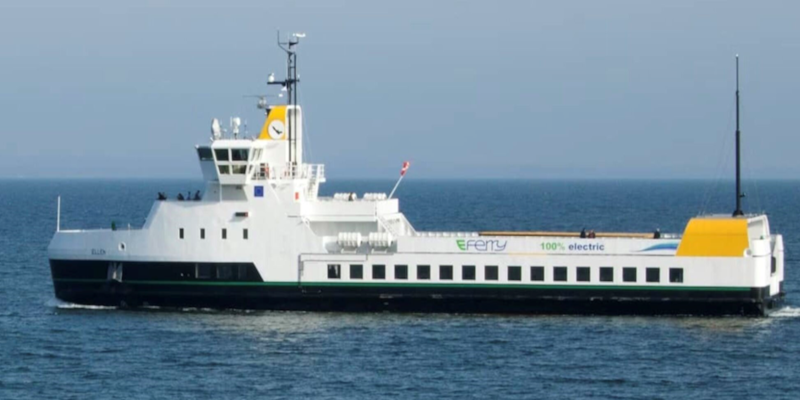
UCC Researchers have won €666,829 to answer this question through funding from Sustainable Energy Authority of Ireland (SEAI) on their research project "Alternative Indigenous fuels produced in circular economy systems for use in island Ferry services in Ireland (AI-Ferry)."
According to Prof Jerry Murphy lead PI, MaREI Circular Economy, Energy and Environmental Systems Group at the Sustainability Institute:
“The concept was initially to assess how we can electrify ferries to our island communities. We quickly realised these batteries can be of the order of 4MWh which is equivalent to 400 houses using 10 kWh of electricity per day. One battery charge per day may not even be enough, so we may need a hybrid battery fuel system. What is that hybrid fuel? Is it hydrogen generated on the island (which may be very expensive), or biomethane generated from wastes and residues, (which may not have sufficient resource), or is it imported HVO (which is not an element of our desired resilient circular economy system)?
If the ferry is charged on the island, we can’t use an island based diesel generator to fuel batteries. We have to decarbonise the island's electricity grid to decarbonise the ferry. We will examine two batteries: one battery is always on the island being charged; and one battery will be on the ferry. We need a battery swap system; we need a crane on the jetty that can pick up a 10t battery. The extra battery can also store a day's supply of electricity for 400 homes.
When we consider Storm Éowyn which brought gusts of 185 km/h and resulted in power outages to 768,000 homes over significant periods of time, we need a resilient renewable island electricity grid. We will assess PV to cover the electrical demand of the islands for the summer, and a wind turbine will be sized which could power the battery for the ferry during the summer days, while the other battery is on the ferry. This wind turbine can also serve the island during the winter when the island population is lower and PV is not working at capacity. Do we generate hydrogen (from excess electricity) via electrolysis as the hybrid fuel? Is this too expensive, especially considering the small scale of the island energy system? How would all of this impact on acceptability of the islanders? We need co-design with island communities.”
Sustainability Institute
Contact us
Ellen Hutchins Building, 6 Lee Rd, Sunday's Well, Cork, T23 XE10 and Beaufort Building, Ringaskiddy, Cork, P43 C573,