UCC research helps unlock centuries of plant data to tackle biodiversity crisis
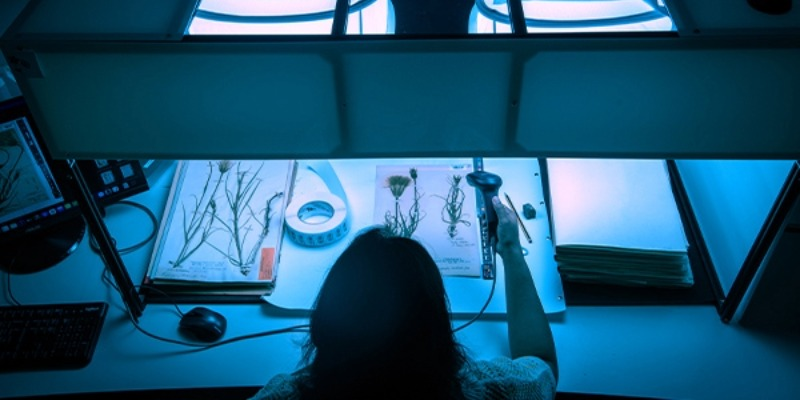
A landmark global report, with contributions from University College Cork (UCC), reveals how herbaria (collections of catalogued plant specimens) have the potential to play a powerful role in tackling today’s biodiversity crisis.
Herbaria have supported botanical research for centuries. Now, a study featured in the Royal Botanic Gardens, Kew’s “State of the World’s Plants and Fungi 2026", with contributions from Johan Reyes Chávez, PhD researcher at UCC’s School of Biological, Earth and Environmental Sciences/Sustainability Institute, highlights how integrating herbarium data with modern digital tools can significantly strengthen conservation efforts.
Focusing on Honduras, the research demonstrates how digitising and combining historical plant records with other data sources, including protected area management plans, can reveal critical gaps in our understanding of biodiversity. This approach helps identify where species are found, where they may be missing, and where current conservation efforts may be falling short. The study also found significant differences between individual data sources, underlining the risks of relying on unique or incomplete datasets when making conservation decisions.
“Essentially, this (herbarium integration) gives conservation managers a stronger evidence base to prioritise areas that are botanically important but currently under-protected,” said Reyes. “At a national level (in Honduras), we aim to use integrated herbarium datasets to help redefine Key Biodiversity Areas in collaboration with government partners. In countries where resources are limited, smarter use of data can make a significant difference.”
The research has implications far beyond Central America. By incorporating multiple data sets, including herbaria, into species distribution models, researchers can bring powerful insights of threats to biodiversity that field surveys alone cannot provide. At UCC, Reyes is now applying this approach to examine how climate change could reshape the distribution of the Irish threaten species Hordeum secalinum (Meadow Barley) across Europe. The work shows how methods used to uncover overlooked biodiversity in tropical regions can also help predict the future of threatened species closer to home.
As global biodiversity continues to decline, the study highlights how herbarium collections, one of science’s oldest resources, could become one of its most valuable tools.
The sixth State of the World’s Plants and Fungi report, published on 16 June 2026, brings together expertise from over 400 scientists across 40 countries to explore how new technology is transforming the race to save nature. The report argues technology can be nature’s ally, with digital tools exposing critical gaps in scientific knowledge and highlighting where action is most urgently needed to safeguard plants and fungi.
Plants and fungi underpin all life on Earth, regulating climate, storing carbon and supplying food and medicines. Without reliable data on what species exist, where they occur globally and the impacts of a changing climate, this report warns that conservation efforts may overlook the most vulnerable species, and opportunities for new medicines and sustainable future crops may be lost.
About the Royal Botanic Gardens, Kew
The Royal Botanic Gardens, Kew (RBG Kew) is a world-renowned charity and global centre for plant and fungal science, education, conservation, and horticulture. RBG Kew works to tackle biodiversity loss and climate change through innovative research, living collections, and influential partnerships.
More than 2.5 million people each year visit Kew Gardens, London’s largest UNESCO World Heritage Site, and Wakehurst, its wild botanic garden in Sussex, home to the Millennium Seed Bank. A year-round programme of exhibitions, festivals, learning experiences and events brings the work to life, inspiring visitors of all ages to connect with and care for the natural world.
Funded through a mix of philanthropy, commercial activity, and government support, RBG Kew is committed to widening access to nature and creating a thriving planet for all, powered by plants and fungi.
Sustainability Institute
Contact us
Ellen Hutchins Building, 6 Lee Rd, Sunday's Well, Cork, T23 XE10 and Beaufort Building, Ringaskiddy, Cork, P43 C573,