

News and media
PLRG welcomes cabinet approval of leave for pregnancy loss under 23 weeks
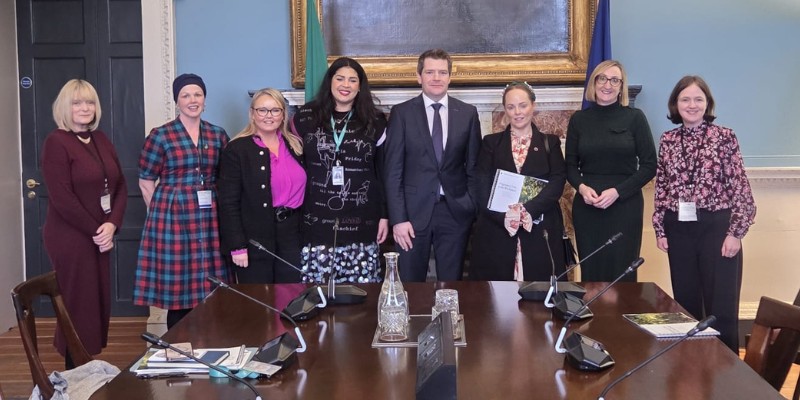
The Pregnancy Loss Research Group welcomes the approval by Cabinet of a proposal from the Minister for Enterprise, Tourism and Employment, Peter Burke TD, to draft a Leave for Pregnancy Loss Bill.
The Bill proposes to introduce statutory leave for pregnancy loss prior to 23 weeks gestation for the first time under Irish law. Under existing legislation, maternity leave is available for those who experience a loss from 23 weeks gestation and onwards. The Pregnancy Loss Leave Bill aims to provide for five days of paid leave per year for individuals who experience a pregnancy loss prior to 23 weeks gestation. The leave will be paid by the employer, at 70% of the daily rate capped at €110 a day, in line with statutory sick leave. The leave will require medical certification and while entitlement to leave will be a day one right, the entitlement to payment will include a 13-week service requirement.
Welcoming the news, Professor Keelin O’Donoghue, Consultant Obstetrician at Cork University Maternity Hospital (CUMH) and lead of the Pregnancy Loss Research Group (PLRG) at University College Cork said:
This is a significant step forward in reducing the gap between the needs of people who experience pregnancy loss and the supports available to them in workplaces. We particularly value the inclusion of all forms of pregnancy endings under 23 weeks within the legislative proposals, in line with recommendations from our PLACES report and related research. While the leave is limited to five days and excludes provision for partners, for now, employers may extend their own provisions beyond the statutory entitlements. We know from our research that people may require greater time off work after pregnancy loss and that partners also require support. The provision of tailored supports is required as individual experiences and needs vary.
The PLACES report, commissioned by the (then) Department of Children, Equality, Disability, Integration and Youth, and authored by researchers at University College Cork and the University of Galway, led by Professor O’Donoghue, recommended that a statutory right to paid leave should be introduced for pre-viability pregnancy loss, regardless of the gestational stage or the reason for the loss. The PLACES research shows that supporting workers must include interventions such as statutory paid leave to support individuals' needs, whilst also acknowledging its symbolic power in generating broader awareness and recognition of early pregnancy loss. It can be a catalyst for societal change and help to reduce the stigma surrounding pregnancy loss. Organisational policies, procedures, and practical supports, with associated training and awareness-raising are also needed.
The General Scheme of the Pregnancy Loss Leave Bill was informed by the PLACES report and also responds to recent Private Members Bills, including the Organisation of Working Time (Reproductive Health Related Leave) Bill 2021 and the Pregnancy Loss (Miscellaneous Provisions) Bill 2025.
In welcoming Government approval to draft the Bill, Minister Burke, in a statement from the Department, said:
By introducing a statutory entitlement to leave for pregnancy loss, we are strengthening workers’ rights in a meaningful and compassionate way - ensuring that employees are supported and treated with dignity at a time of great personal difficulty. This measure creates a more inclusive and responsive employment rights system.
Professor O’Donoghue added:
The final recommendation within the PLACES report called for political leadership to drive changes in public awareness and perceptions surrounding pregnancy loss. We are grateful to Minister Peter Burke for his leadership in securing support for legislative proposals for leave for pregnancy loss under 23 weeks. We look forward to working with the Minister and his officials, along with Senator Nicole Ryan, Senator Linda Nelson-Murray and the Cross Party Oireachtas Group on Pregnancy and Infant Loss, to ensure the successful development and implementation of the legislation.
While it will take some time to develop and enact this legislation, there is much that workplaces can do – and are doing – to create supportive environments. In October 2025, the PLRG launched practical resources and guidance – informed by findings from the PLACES project – to assist workplaces in implementing a supportive, caring environment for those who have experienced pregnancy loss. The toolkit provides practical guidance and templates for employers, managers and HR staff. It also provides guidance for employees on how best to navigate work after experiencing a pregnancy loss, as well as information for workers on how they can support colleagues who experience pregnancy loss. The PLRG has been working with a range of organisations on the development and implementation of workplace policies and supports for pregnancy loss, including its own institution – University College Cork – which launched the first Pregnancy Loss Support Policy for staff in an Irish university in October 2025.
Tara Woulfe, an expert-by-experience within the PLRG who was involved in the development of the workplace resources and policies, said:
The approval by Cabinet to draft a Leave for Pregnancy Loss Bill sends a powerful message of compassion to women and families across Ireland. Paid leave following pregnancy loss is a vital part of the wider network of supports that women and their families need while navigating one of life's most difficult experiences. While no single measure can remove the pain of pregnancy loss, this is an important and meaningful step. I feel strongly that women need to be recognised, supported and given the time and space to grieve. I hope this legislation will help ensure that fewer women have to carry that grief in silence.
Much credit is due to all of the individuals and organisations who have advocated and supported work to bring about this legislative change, including (and there are many more): The PLACES Team, research participants and project supporters; the (then) Department of Children, Equality, Disability, Integration and Youth, who commissioned the PLACES report; the Cross Party Oireachtas Group on Pregnancy and Infant Loss (particularly Chair, Senator Nicole Ryan and Deputy Chair, Senator Linda Nelson Murray); the Irish National Teachers Organisation (particularly, Maeve McCafferty); the Labour Party (Leader, Ivana Bacik TD); Minister Peter Burke, his officials and staff within the Department of Enterprise, Tourism and Employment (particularly Áine Maher and Sarah Henry); support organisations, particularly Féileacáin and the Miscarriage Association of Ireland.
More information
The PLACES project
The PLACES project – Pregnancy Loss in Workplaces: Informing policymakers on support mechanisms – was led by Professor Keelin O’Donoghue in collaboration with colleagues across University College Cork and the University of Galway. The research team surveyed almost 1,000 people and interviewed 13 people who had experienced a pregnancy loss under 24 weeks. The report also drew on a review of international literature, statutory leave provisions for pregnancy loss, and pregnancy loss policies across a sample of companies in the Republic of Ireland.
The nine recommendations outlined within the PLACES report state:
- A statutory right to paid leave should be introduced or pre-viability pregnancy loss, regardless of the gestational stage or the reason for the loss
- Any leave introduced should be of sufficient duration to meet the needs of those affected
- A statutory right to paid leave for pregnancy loss should also be introduced for partners
- Statutory leave for pregnancy loss should be added to the list of family/care-related leaves which are covered by the Unfair Dismissals Act
- People with lived experience of pregnancy loss should be involved in the development of workplace policies and practices
- The implementation of leave entitlements should be carefully considered by workplaces – procedures on notification, submitting certification, and requesting leave should be developed with sensitivity to the needs of individuals experiencing pregnancy loss
- Additional supports and accommodations should be made available to workers experiencing pregnancy loss through organisational policies and practices, with guidance from relevant Government departments
- Information about leave and support entitlements for pre viability pregnancy loss needs to be clear, publicly available and accessible
- Political leadership is needed to drive changes in public awareness and perceptions surrounding pregnancy loss.
Publications from the PLACES project:
- PLACES Report
- Statutory leave for early pregnancy loss: A comparative study
- Workplace supports for early pregnancy loss: A scoping review of international literature
- Lived experiences of pregnancy loss at work: Realizing meaningful supports.
The PLACES Research Team comprised: Professor Keelin O’Donoghue (PLRG, INFANT), Ruadh Kelly-Harrington (PLRG, INFANT), Marita Hennesy PhD (PLRG, INFANT), Dr Sara Leitao (National Perinatal Epidemiology Centre; PLRG), Dr Daniel Nuzum (PLRG), Dr Caroline Dalton-O'Connor (School of Nursing and Midwifery, UCC), Professor Mary Donnelly (School of Law, UCC), Dr Claire Murray (School of Law, UCC) and Dr Maeve O'Sullivan (JE Cairnes School of Business & Economics, University of Galway).
Workplace resources
Copies of ‘Pregnancy Loss and the Workplace: A Toolkit for Employers and Employees’ and ‘Words at Work: Experiences of pregnancy loss in the workplace {up to 23 weeks}’ are available on the PLRG website: https://www.ucc.ie/en/pregnancyloss/policyandadvocacy/workplaceresources/.
The Oireachtas Cross-Party Group on Pregnancy and Infant Loss
The Oireachtas Cross-Party Group on Pregnancy and Infant Loss was established by Senator Nicole Ryan in June 2025 to drive meaningful action in improving services, supports and outcomes in Ireland. Bringing together members of the Oireachtas across political parties, priority areas for the Cross-Party Group include: (1) Ending preventable baby deaths, (2) Improving and standardising service provision / structures for early pregnancy loss and (3) Recognising and acknowledging pregnancy loss under 23 weeks. The Pregnancy Loss Research Group and Féileacáin are Expert Advisors to the Group.
More information and support
For more information about all forms of pregnancy and baby loss, including details of support organisations, visit Pregnancy and Infant Loss Ireland: https://pregnancyandinfantloss.ie/.