

News and media
Feminist Miscarriage Project conference explores the multiple ways that people think and feel about pregnancy endings and calls for full-spectrum approach
The New Directions in Miscarriage Research: Interdisciplinary, Intersectional and Full-Spectrum Perspectives conference – hosted by the Feminist Miscarriage Project – brought together almost 80 researchers, clinicians and practitioners, artists, activists and campaigners, from across the UK, Europe, Canada and the US.
Across two days and an online session, the conference examined miscarriage through historical, literary, legal, medical, sociological, anthropological, psychological, political and creative perspectives. Contributions reinforced the need for a full-spectrum approach that recognises the complexity of people’s reproductive lives and insists on support and quality care for all, regardless of how a pregnancy ends or how the person feels about it.
On the opening day of the conference, Marita Hennessy and Professor Keelin O'Donoghue presented an overview of policy developments around miscarriage and other pregnancy endings in the Republic of Ireland. They shared their experiences of leading and collaborating on policy-making and political initiatives around pregnancies that end under 23 weeks, aiming to bring a broader range of meanings and interpretative practices to this area. Marita focused on implementing findings from two research projects – RE:CURRENT (national evaluation of recurrent miscarriage services) and PLACES (workplace supports for early pregnancy endings), learnings from other jurisdictions, and working with the newly established Cross-Party Group on Pregnancy and Infant Loss within Irish Government. She highlighted the importance of being mindful of potential for unintended consequences, the need to move from rhetoric to meaningful action, and considerations around ‘giving ground’ when trying to make progress. She added how vital the following are: always coming back to what (and who) matters, relationships, being solution-focused, and ensuring interdisciplinary perspectives and collaborative endeavours from the outset.
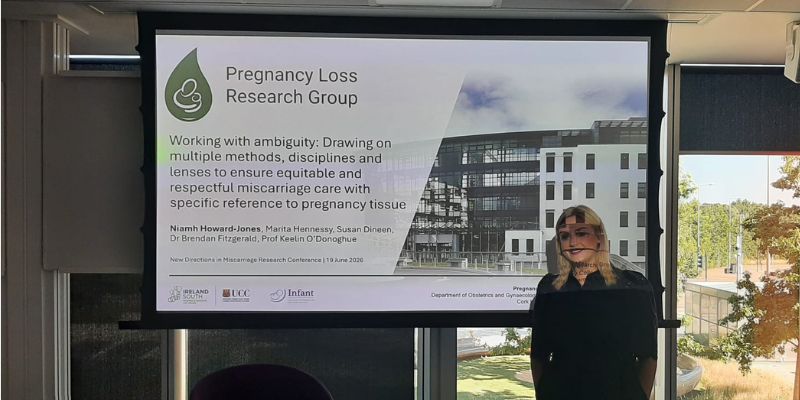
On day two, during the opening panel session on ‘Practices of Meaning-Making’, Niamh Howard-Jones - Candidate Advanced Midwife Practitioner - Early Pregnancy Loss/Miscarriage Services at Cork University Maternity Hospital - presented research she conducted around the management pregnancy tissue following first trimester miscarriage and associated communication practices. Through a national evaluation of the 19 maternity hospitals/units in Ireland, she found variation in practices and stressed the need for dedicated national guidance and information resources on pregnancy tissue, alongside staff training, to deliver equitable and respectful miscarriage care.
Over the course of the conference, we had the opportunity to engage with incredible people working in this area – too many to individually acknowledge, but we would encourage you to check out the conference programme and abstracts. One highlight which cannot go unmentioned was the powerful keynote from Professor Linda Layne and response from Professor Gayle Letherby. Reflecting on her career, Linda eloquently described, through words and artworks, how she began “toiling alone in an empty field” to now finding herself being “an honorary member…of a community of scholars working together on the same endeavour”. In response, Gayle emphasised how much still needs to be done to ensure that miscarriage, and discussions around it, move from a private space of shame to a public space of solidarity. She concluded that while we have been saying some of the same things that need to change, for decades, the difference now – and hope therein – is that there are so much more of us saying it and advocating for better.
Many thanks to Dr Victoria Browne and Professor Susie Kilshaw, co-leads of the Feminist Miscarriage Project, for bringing everyone together and creating a trusting and care-full (thank you Gayle!) communal space for us all to explore the complexities surrounding pregnancy endings in meaningful ways.
The conference took place at the London campus of Loughborough University on 18-19 June 2026, with an online session on 22 June.
Conference reports and reflections
- Read Victoria’s beautifully crafted Conference Report on the Feminist Miscarriage Project website
- View Collective Conference Reflections on the Feminist Miscarriage Project website
- See some photos from the event saved to our ‘FMP Conference’ highlight on our Instagram stories.
More about The Feminist Miscarriage Project
The Feminist Miscarriage Project is a collaboration led by two feminist academics, Victoria Browne and Susie Kilshaw, funded by a Curiosity Award from the UK Arts and Humanities Research Council from July 2025 to June 2027, connecting academics with activists, advocates, clinicians, artists and writers. The Feminist Miscarriage Project has 3 key aims:
- To promote intersectional research into how social inequalities affect miscarriage experiences and care structures.
- To advance a ‘full-spectrum’ approach that connects miscarriage with other pregnancy endings including abortion.
- To explore the multiple ways that people conceptualise and feel about miscarriage, making space for ambiguity and ambivalence.
The Pregnancy Endings exhibition
The Feminist Miscarriage Project’s ‘Pregnancy Endings’ exhibition will be on display in Anarcha’s Gallery in the Vagina Museum in London from 2 September to 31 December 2026. A collaboration between the Feminist Miscarriage Project, artist-curator Meg Ferguson, and documentary photographer Tara Todras-Whitehill, Pregnancy Endings explores the many possible meanings and endings of pregnancy guided by a ‘full-spectrum’ approach. It challenges the hierarchies and divisions surrounding abortion, miscarriage, stillbirth and other pregnancy endings and calls for the equal recognition, support and care for all.
Photo gallery
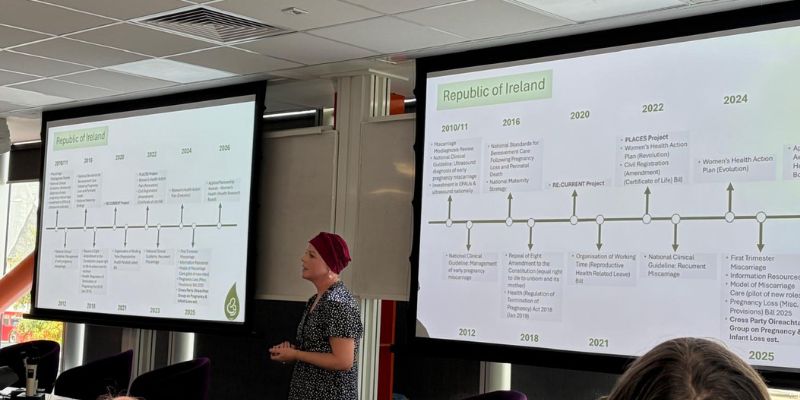 Marita Hennessy discussing work from the Pregnancy Loss Research Group that is ‘Informing policy-making and political initiatives around miscarriage and other pregnancy endings in the Republic of Ireland’
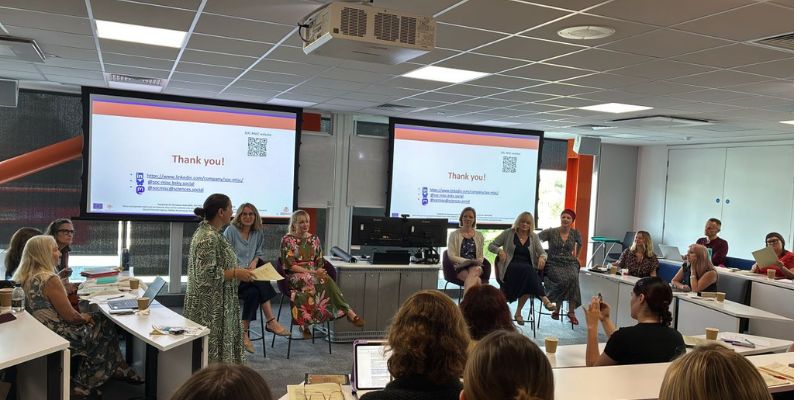
Panel 2 (Policy and Governance) discussion, left to right: Dr Zeynep Gurtin (Chair), Dr Aimee Middlemiss, Dr Victoria Newton, Dr Heini Väisänen, Professor Keelin O’Donoghue, Marita Hennessy PhD
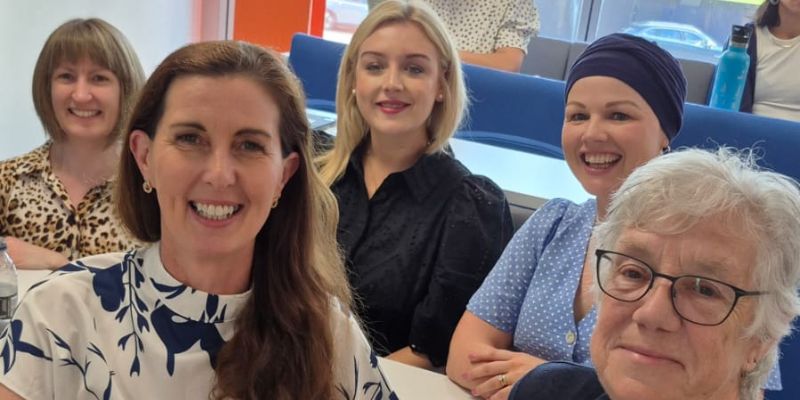 Pictured, left to right: Claire Flahavan, Dee Kelly, Niamh Howard-Jones, Marita Hennessy, Gayle Letherby