In This Section
UCC launches the Sustainability Institute
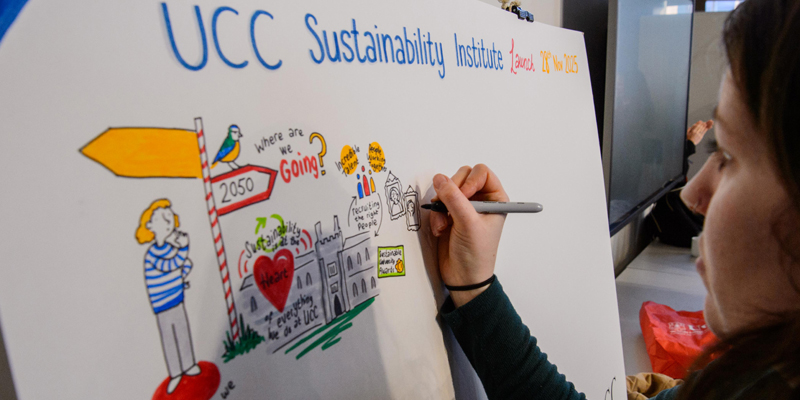
University College Cork (UCC) marks a significant milestone in its ongoing commitment to a sustainable future with the official launch of the Sustainability Institute.
Formerly known as the Environmental Research Institute (ERI), this new identity reflects an expanded and integrated vision for sustainability research that aligns with the university’s core values and ambitions.
A significant milestone for UCC
The Environmental Research Institute (ERI) was established in 2000 by UCC and the outputs from the research has advanced sustainability locally, nationally, and internationally through our collaborations with business, policy and civil society over the past 25 years. UCC is currently ranked internationally as a global leader in sustainability, and today’s Sustainability Institute brings together over 400 researchers engaged in sustainability research across UCC.
"UCC is a university of and for sustainability, committed to the stewardship of our planet. Launching the UCC Sustainability Institute where the fundamentals for life to flourish – for both people and planet is a natural next step for our university" stated Professor John O’Halloran, President of UCC.
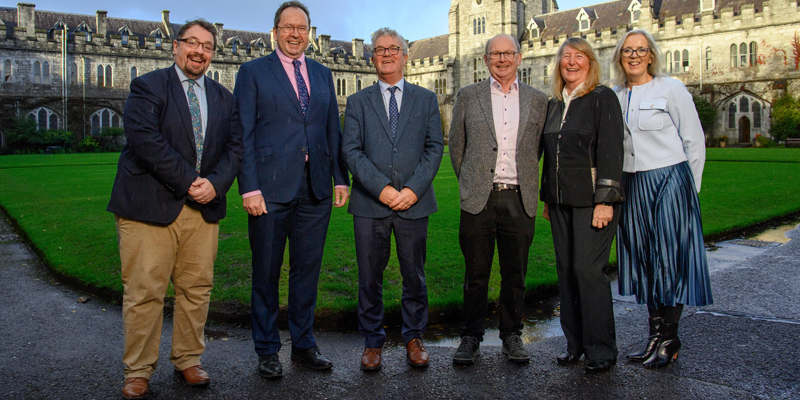 Photo (L-R): Professor John Cryan, Vice President for Research & Innovation at UCC; Professor Brian Ó Gallachóir, Director of the Sustainability Institute; Professor John O'Halloran, President of UCC; Kevin O’ Sullivan, Environment & Science Editor with The Irish Times; Marie Donnelly, Climate Change Advisory Council; Dr. Gillian Bruton, Chief Commercial Officer of the Sustainability Institute.
Professor Brian Ó Gallachóir, Director of the Sustainability Institute said "our focus on delivering both research excellence and societal impact means that not only are research papers published in the leading international scientific journals and highly cited, we also focus on translating the research results into actionable insights to advance sustainability in Cork, in Ireland and globally. We will really benefit from the multiple suggestions provided at this launch event on how we can further increase the impact of our research."
Kevin O’ Sullivan, Environment & Science Editor with The Irish Times was presented with the inaugural UCC President's Award for Sustainability Leadership at the event for his extensive and knowledgeable coverage of climate change, renewable energy and sustainability issues including the UN Sustainable Development Goals.
A key constituent of UCC Futures
The Sustainability Institute is a key constituent of UCC Futures, an ambitious programme of research prioritisation with the goal of securing our future through research excellence.
Professor John F. Cryan, Vice President of Research and Innovation at UCC said: "Sustainability research is embedded in our DNA at UCC, with a longstanding mission to deliver scientific excellence and maximum societal impact. Today is a momentous day for UCC with the launch of the Sustainability Institute – the first of our flagship UCC Futures Institutes, which will continue to drive sustainability research within UCC, nationally, and globally."
Professor Sarah Culloty, Head of College of Science, Engineering and Food Science at UCC, said, "the launch of the Sustainability Institute marks a transformative moment for UCC and for sustainability research globally. By bringing together expertise from across disciplines, we are creating a collaborative platform that will not only advance scientific understanding but also deliver real-world solutions to the critical environmental challenges of our time. Thank you to Professor Brian Ó Gallachóir, Dr. Gillian Bruton, and colleagues for their leadership in bringing this project to fruition."
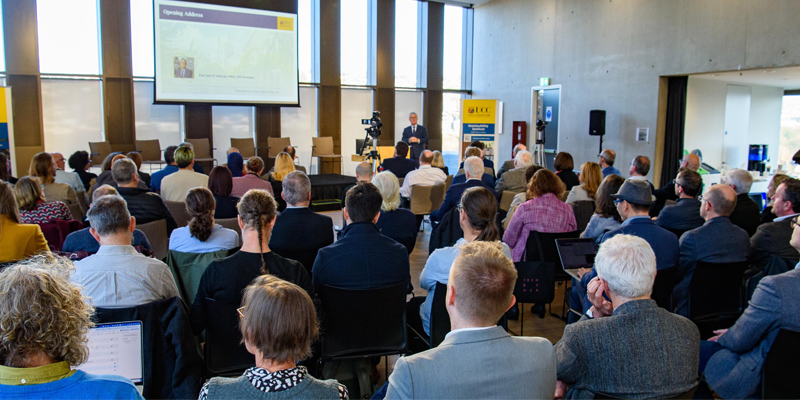
At the event panellists reflected on how UCC research has advanced sustainability locally, nationally and globally and how it will look to the future, recognising that while some of the challenges can be addressed by science and engineering, we also need to draw on the expertise available from law, business, health, social sciences, arts and humanities to each contribute from their area of expertise to collectively and collaboratively advance sustainability.