UCC Researcher Contributes to Study of Rare Greenland Shark Stranding
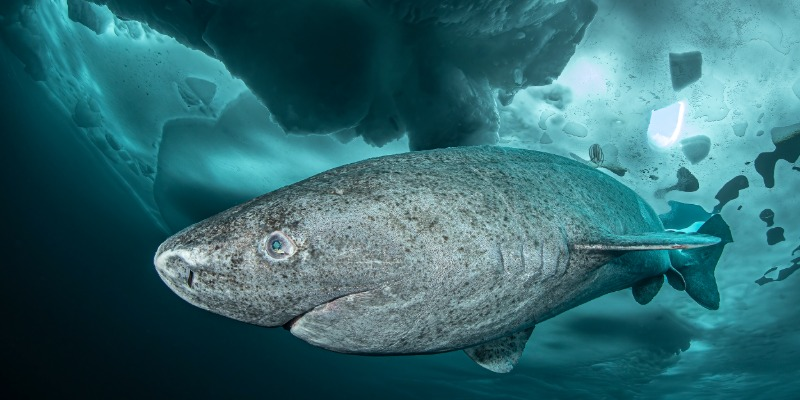
A University College Cork (UCC) researcher has contributed to the study of a rare Greenland shark that stranded on Ireland's west coast, providing scientists with a unique opportunity to learn more about one of the longest-living vertebrates on Earth.
The Greenland shark, a species that can live for around 400 years, stranded in County Sligo earlier this year. Researchers from a number of organisations collaborated in the examination of the animal, including Jasmine Stavenow Jerremalm, a PhD researcher in marine ecology at the Sustainability Institute, UCC.
The rare event provided researchers with an opportunity to collect samples and investigate aspects of the shark's biology that remain poorly understood. Despite being one of the largest predators in the North Atlantic, scientists still know relatively little about the Greenland shark's breeding habits, migration patterns and remarkable longevity.
The recovery operation was overseen by the National Museum of Ireland and the specimen may ultimately become part of a display there.
Jasmine Stavenow Jerremalm participated in the necropsy of the shark alongside researchers from several organisations.
"There is something very intimate about working with dead animals, because you really get to know the species. Dead animals can tell us a lot about the living ones."
Jasmine Stavenow Jerremalm, PhD Researcher, Sustainability Institute, University College Cork.
The story of the stranded shark and the scientific insights gained from its examination have been featured by BBC Future.
Sustainability Institute
Contact us
Ellen Hutchins Building, 6 Lee Rd, Sunday's Well, Cork, T23 XE10 and Beaufort Building, Ringaskiddy, Cork, P43 C573,