UCC Joins the IAGOS Network to Advance Global Atmospheric Research
Represented by the PI Prof Andy Ruth (School of Physics and Center for Research into Atmospheric Chemistry) University College Cork has recently joined the In-service Aircraft for a Global Observing System (IAGOS) research infrastructure, strengthening international efforts to monitor the Earth's atmosphere and better understand the processes that shape air quality and climate.
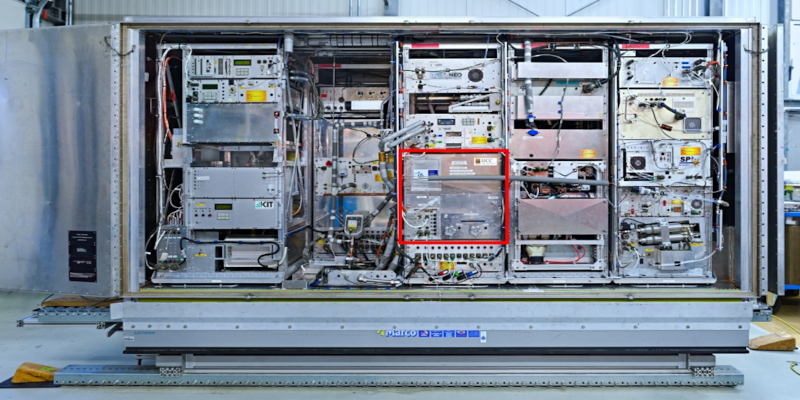
As part of this collaboration, UCC will contribute to the CARIBIC (Civil Aircraft for the Regular Investigation of the Atmosphere Based on an Instrument Container) section of IAGOS, which uses an instrumented cargo container onboard a commercial aircraft to collect high-quality atmospheric measurements during routine passenger flights around the world. UCC’s contribution will concern the investigation of the nitrogen budget of the upper troposphere through the detection or NO2, NO3, N2O5 and O3. Some of these species have never been monitored at the cruising altitudes of aircrafts between 10 and 12 km and high quality data are expected from this endeavour.
By joining the IAGOS community, UCC becomes part of a unique global network that provides long-term observations of greenhouse gases, aerosols, trace gases, and other atmospheric constituents across regions that are difficult to monitor using ground-based stations alone. These measurements are essential for improving climate models, validating satellite observations, and advancing our understanding of atmospheric chemistry and long-range pollution transport.
The partnership brings significant benefits to both UCC and IAGOS. UCC contributes expertise in laser-based spectroscopy, trace gas sensing, and atmospheric measurement technologies, complementing the network's existing scientific capabilities. In return, researchers and students at UCC gain access to an internationally recognised research infrastructure, fostering new opportunities for collaboration, technology development, and scientific discovery.
The collaboration also creates valuable synergies between instrument development, laboratory research, and real-world atmospheric observations. By working closely with the wider IAGOS consortium, UCC will help develop and evaluate next-generation measurement techniques capable of delivering even more accurate and comprehensive observations from commercial aircraft. These collaborative efforts will support a new generation of atmospheric scientists while strengthening links between Irish and international research communities.
Ultimately, the impact of this partnership extends far beyond academia. Reliable atmospheric observations are fundamental to understanding climate change, improving air quality, informing environmental policy, and protecting public health. Through its participation in IAGOS and the CARIBIC programme, the Center for Research into Atmospheric Chemistry (Futures Sustainability Institute, UCC) is contributing to a global scientific effort that provides the knowledge needed to address some of the most pressing environmental challenges facing society today.
The activity has been funded by Research Ireland’s Strategic Partnership Programme (14/SPPI3010) as well as through a Frontiers for the Future Award (21/FFP-A/8973).
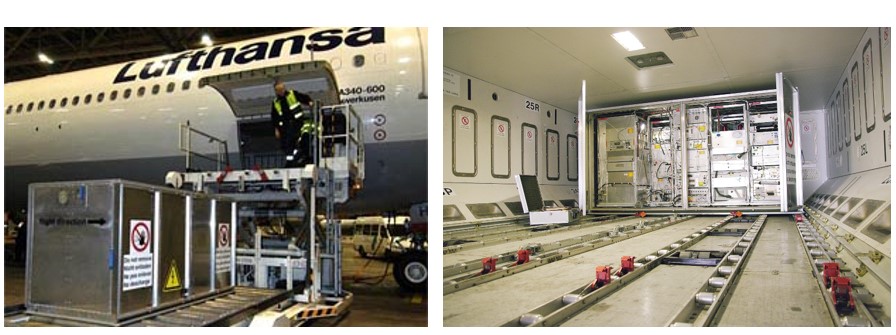
Fig. 2 Loading the air freight container into the cargo bay of a Lufthansa Airbus 340-600, a commercial aircraft (Courtesy KIT, Germany).
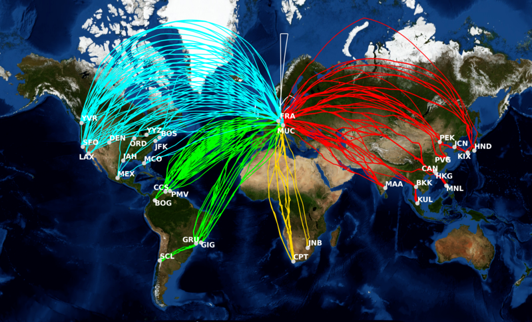
Fig 3. Typical flight routes of the IAGOS-CARIBIC aircraft around the globe (Courtesy KIT, Germany).
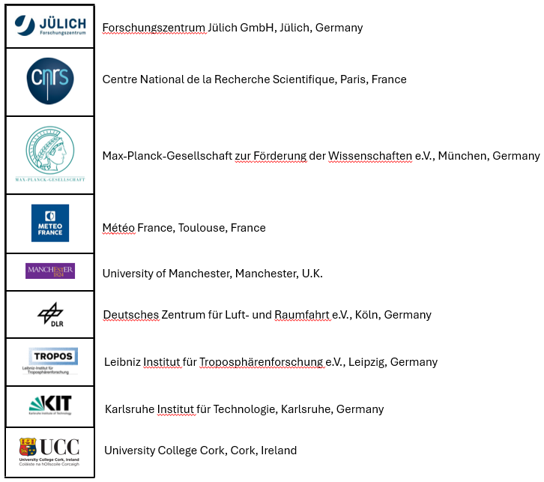
Fig 4. IAGOS Members.
Sustainability Institute
Contact us
Ellen Hutchins Building, 6 Lee Rd, Sunday's Well, Cork, T23 XE10 and Beaufort Building, Ringaskiddy, Cork, P43 C573,