Researchers at UCC Engineer Yeast to Recycle Plastic More Sustainably
Scientists at University College Cork (UCC) have achieved a significant breakthrough in sustainable plastic recycling by engineering baker’s yeast to break down polyethylene terephthalate (PET), one of the world’s most widely used plastics.
Their findings show that engineered yeast could offer a greener and more efficient alternative to conventional, energy‑intensive plastic recycling methods.
This work forms part of a broader project in which the team has developed an enhanced genetic toolkit that expands the capabilities of yeast in synthetic biology.
The research, titled “Yeast MoClo secretion and surface display toolkit 2.0: improvements and applications for analysis of protein–protein interactions and whole-cell biocatalysis,” was conducted by Dr Paul Young and team, School of Biochemistry and Cell Biology, UCC in collaboration with Prof. Justin Holmes, School of Chemistry, UCC (Sustainability Institute and AMBER Centre). It is published in the journal ACS Synthetic Biology.
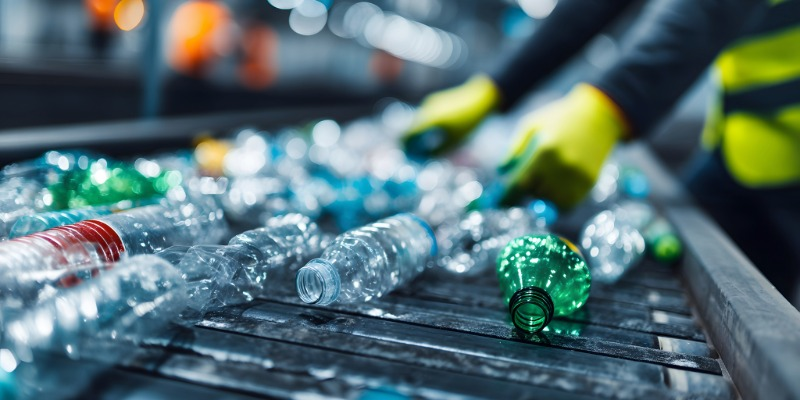
PET, commonly found in food packaging and textiles, is notoriously difficult to degrade. The UCC team engineered yeast cells capable of producing a suite of enzymes that can break this plastic down into its recyclable building blocks.
The researchers started with an enzyme that is found naturally in compost where it breaks down the waxy layer on leaves and stems. Firstly, they programmed yeast cells to display this enzyme on their surface, enabling them to efficiently break apart PET. Next, PET breakdown rates were more than doubled by incorporating a protein that helps yeast cells attach directly to the plastic surface.
Finally, by adding a third enzyme to the yeast surface, the engineered cells achieved complete conversion of the intermediate breakdown products into terephthalic acid, a key compound that can be reused to make new PET.
This demonstrates that whole‑cell biocatalysts could help recycle plastic in a more sustainable and energy‑efficient way.
Beyond plastic degradation, the toolkit also enables cost‑effective analysis of interactions between proteins. Yeast engineered to display antibodies on their surface can be used to study these interactions directly in crude extracts using flow cytometry, a common lab technology that can quickly analyse the characteristics of cells. This removes the need for expensive purification steps and provides an accessible platform for biomedical research
The “MoClo YSD Toolkit 2.0” offers a modular, standardised framework that can be adopted across diverse fields—from industrial biotechnology to basic cell biology. The toolkit includes expanded options for anchoring proteins to the yeast surface, modular tagging systems for detection and analysis, and secretion‑enhancing yeast factors to boost recombinant protein production.
Dr Paul Young, project lead said: “These improvements make it faster and easier to test how proteins behave, whether we want to study how they interact or engineer them to perform useful chemical transformations. Breaking down PET plastic is one such example, and while it represents an advancement in the field, it is important to note that these experiments were performed on a small scale. Complete and economically viable enzymatic (or chemical) recycling of PET or other plastics at scale is still a long way off. Technological progress on recycling should not be used as a justification to maintain the current massive levels of plastic production from fossil fuels.”
This platform will be freely available to the research community and is expected to have wide-reaching applications well beyond the two case studies featured.
Sustainability Institute
Contact us
Ellen Hutchins Building, 6 Lee Rd, Sunday's Well, Cork, T23 XE10 and Beaufort Building, Ringaskiddy, Cork, P43 C573,