
In This Section
UCC palaeontologists reveal the hidden role of eye pigments in vertebrate evolution
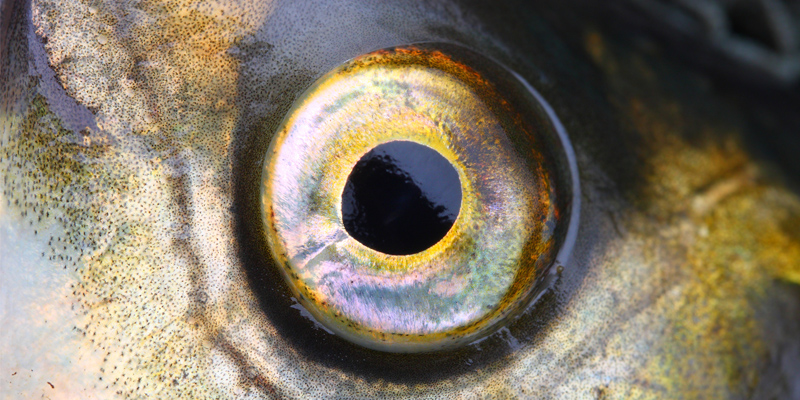
Palaeontologists at University College Cork (UCC) have discovered that the evolution of fish is linked to the shape, location and abundance of tiny melanin-rich granules called melanosomes.
Remarkably, these features survive in 300-million-year-old fossil fish, suggesting that melanosomes have played a key role in vertebrate evolution since the major fish groups evolved around 445 million years ago. The study is published in Nature Communications today.
Melanin is best known as the pigment that gives our skin and hair their colour, but it also plays an important role in protecting internal organs from harmful substances. In vertebrates, melanin is stored in microscopic structures called melanosomes, which come in different shapes and sizes. Surprisingly, little is known about the biological function of these differences, or how melanosomes vary among different fish species.
The team painstakingly measured roughly 23,000 melanosomes from the eyes, skin and internal organs of 12 modern fish species belonging to major fish groups - jawless fishes, cartilaginous fishes and bony fishes. They then compared their findings with 3,000 fossilised melanosomes preserved in 300-million-year-old fish fossils from the Mazon Creek biota from Illinois, USA.
The researchers discovered striking differences in eye melanosomes between major living fish groups. Bony fish have both meatball- and sausage-shaped melanosomes, whereas all other fish groups examined have only meatball-shaped melanosomes.
"These different melanosome shapes are linked to vision," said Dan Cirtina, PhD researcher and lead author of the study. "In bony fish, sausage-shaped melanosomes in the retina appear to sharpen vision and help control how much light reaches the light-sensitive cells in the eye, although this process is pretty slow. Cartilaginous fish like sharks and rays, however, have lost these melanosomes entirely, allowing more light to reach specialised reflective crystals at the back of their eyes so they can see better in low-light. Instead, these fish rely more on rapid adjustments in pupil size to control incoming light, helping them to quickly adjust to changing light levels as they swim between shallow and deep waters."
Remarkably, the team discovered the same distinctive patterns of melanosome shape in fossil fish, suggesting that these differences in eye structure and fish vision have been important ever since these groups split, roughly 445 million years ago.
The team also found that African lungfish have unusually large and abundant melanosomes in their internal organs. These findings support other evidence that melanin protects tissues against physiological stress. This is an important adaptation that may have enabled early vertebrates to survive outside water and transition to life on land.
"Our findings show that melanin is much more than a pigment used to colour our skin and hair," said Prof. Maria McNamara, Professor of Palaeontology at University College Cork and senior author on the study. "The shape and distribution of melanosomes are closely linked to major changes in fish evolution - how they see, how their bodies function and how they adapt to the environment. The fossil fish show that these relationships are extremely ancient and are part of our evolutionary history."