
News
Year in Review 2019
We are delighted to highlight an incredible year of success and impact for the APC Microbiome Ireland and UCC communities
January

Launch of MASTER
On 10 January, APC celebrated 15 years of research leadership with the release of “Mining Microbes for Mankind”, a report detailing APC’s economic and scientific impact. It highlighted APC’s role in attracting industry investment, producing highly cited research, and addressing global health challenges.
On 17 January, the EU-funded MASTER project was launched at Teagasc, led by Dr Paul Cotter. The €11 million initiative brings together 31 international partners to harness microbiome knowledge across food systems, aiming to enhance sustainability and health through cross-sector innovation.
On 21 January, APC published research showing that a high-fat “Western” diet reduces immune defences and increases susceptibility to Listeria monocytogenes. The study linked diet-induced changes in gut microbes and immune response to increased infection risk, especially concerning for vulnerable populations.
February
No public announcements were made this month.
March
On 4 March, APC announced a public seminar in Cork on maternal stress during pregnancy. Experts from psychiatry, neuroscience, and obstetrics explored how stress and the microbiome influence maternal and infant health, including simple techniques for stress reduction.
On 8 March, APC opened applications for its annual summer studentship programme. The initiative offers undergraduate students hands-on lab experience across diverse microbiome research areas, from brain-gut signalling to food bioactives.
On 12 March, the SFI St Patrick’s Day Medals were awarded to Prof Eamonn Quigley and Michael Mahoney for their academic and industry leadership. Prof Quigley, a UCC alumnus and APC founding investigator, was honoured for his global contributions to gastroenterology and research collaboration.
On 14 March, APC announced a collaboration with Tate & Lyle on dietary fibre research. The project aims to assess prebiotic effects and health benefits of fibres across age groups, focusing on cardio-metabolic outcomes and microbiome support.
On 19 March, a Japanese study with APC revealed that shared family bathing traditions may contribute to gut microbe transmission. Analysis of bath water and faecal samples showed overlapping strains, particularly Bifidobacterium, among co-bathing family members.
On 20 March, APC announced a new collaboration with PepsiCo to develop functional foods targeting microbiome health. The partnership will apply APC’s expertise in food-microbiome interactions to design evidence-based dietary interventions.
April
On 10 April, researchers led by Prof Catherine Stanton published evidence that birth mode and gestational age leave lasting effects on the gut microbiome up to four years. The study confirmed a “microbiome memory” shaped by early life events, with long-term implications for health.
On 11 April, APC joined National Workplace Wellbeing Day with staff events including walks, healthy snacks, and acts of kindness. The APC Wellbeing Committee continues to promote a positive and supportive work environment for researchers and staff.
May
On 9 May, the Irish government announced €230 million funding for six SFI Research Centres, including APC, to support 850 researchers and drive industry collaboration. This investment under Project Ireland 2040 reinforces Ireland’s role in global research and innovation.
On 16 May, APC researchers found that a diet rich in inulin, a prebiotic fibre, can reverse brain inflammation in middle-aged mice. The study suggests dietary interventions might help prevent age-related cognitive decline by restoring gut-brain immune balance.
On 26 May, Prof Fergus Shanahan received an honorary DSc from McMaster University. Recognised for his contributions to immunology and microbiology, he addressed graduates on the importance of scientific risk-taking and innovation.
On 27 May, Prof Catherine Stanton and Prof Ivan Perry were elected to the Royal Irish Academy. Stanton was recognised for her research in infant gut health and dairy microbiota, and Perry for his leadership in public health epidemiology.
June

Game of Microbes
On 17 June, APC encouraged global participation in World Microbiome Day 2019, themed around antibiotic resistance. The initiative promotes awareness of microbial diversity and responsible antibiotic use through global events and outreach.
On 26 June, Prof Paul Ross was appointed as APC Director. His leadership marks a new phase for the Centre as it enters another six-year SFI funding cycle focused on health and industry impact.
On 27 June, APC highlighted antibiotic resistance on World Microbiome Day with the campaign “Game of Microbes: Winter Is Coming.” The event drew parallels between microbial battles and pop culture to raise awareness of superbugs and alternative therapies like phages.
July
No public announcements were made this month.
August
On 12 August, APC partnered with the Glucksman Gallery on the “Circadian Rhythms” exhibition. The show combined art and science to explore daily biological cycles, highlighting APC’s research on gut microbes and their role in metabolic and brain functions.
September
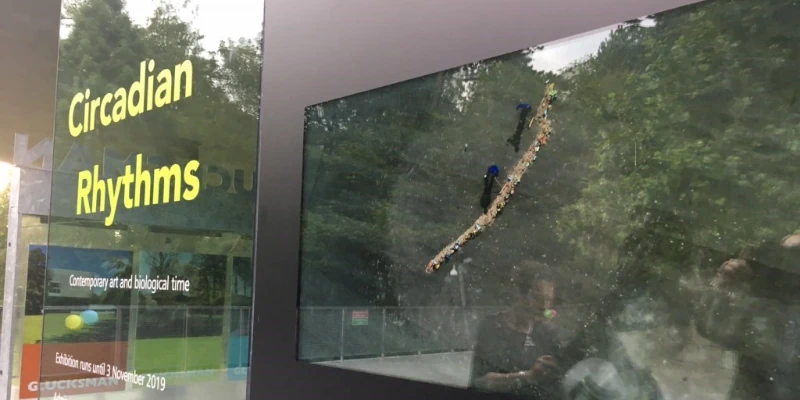
Circadian Rhythms
On 2 September, Dr Niall Hyland was awarded a €100,000 Global Grant for Gut Health to investigate how gut bacteria influence response to psychiatric medication. The project will model individual drug responses based on microbiome profiles.
On 16 September, Prof John Cryan featured in an ARTE documentary exploring how food influences brain function. The film highlights the science behind the gut-brain connection and how dietary changes affect behaviour and cognition.
On 30 September, APC hosted Prof Russell Foster, a sleep and circadian rhythm expert, for a public lecture at UCC. He discussed the physiological importance of daily biological rhythms and their links to mental and physical health.
October
On 4 October, a study led by Dr Martin Buckley and APC colleagues showed that bifidobacteria can heal aspirin-induced intestinal ulcers. This was the first trial to demonstrate protective effects of probiotics in humans with photographic evidence.
November
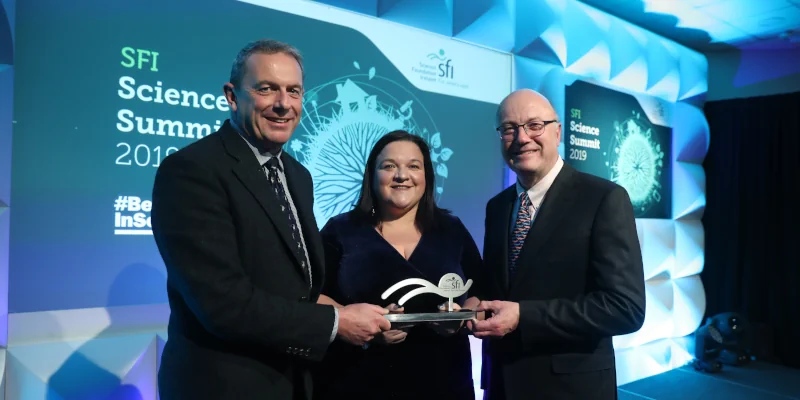
Dr Orla O'Sullivan receiving the SFI Early Career Researcher of the Year award
On 5 November, APC hosted a Pregnancy and Wellness event for Stress Awareness Day at the Glucksman Gallery. Pregnant attendees took part in yoga and art therapy, alongside talks on maternal diet and stress from APC researchers.
On 7 November, Dr Orla O’Sullivan received the SFI Early Career Researcher of the Year Award. Recognised for her work on the gut microbiome and diet, she also leads public engagement activities and microbiome outreach.
On 11 November, APC celebrated Science Week with school visits, fermentation workshops, and outreach events across Cork. Activities included online science Q&As, native language workshops, and fermentation tastings to promote public understanding of microbiome science.
On 19 November, nine APC researchers were named Highly Cited Researchers by Clarivate Analytics. This recognition places them among the top 1% globally for research impact in microbiome and food health science.
December
On 4 December, APC joined UCC’s purple campaign to raise awareness for Inflammatory Bowel Disease. Researchers distributed information around campus and promoted digital tools like the #InMyShoes app to foster understanding of IBD experiences.
