
News
Year in Review 2018
We are delighted to highlight an incredible year of success and impact for the APC Microbiome Ireland and UCC communities
January
On 22 January, APC hosted a major event on antimicrobial resistance (AMR), showcasing microbiome-based approaches such as narrow-spectrum antimicrobials and bacteriophage therapies. Colin Hill and Fergus Shanahan emphasised the need to move away from broad-spectrum antibiotics to protect gut health and prevent resistance.
Then on 30 January, APC launched the APEX (APC Postdoctoral Excellence) programme. This EU co-funded fellowship targets international researchers aiming to develop careers in microbiome science. The programme offers two-year fellowships across four research themes and includes mandatory secondments to non-academic partners.
February

Dr Toshitaka Odamaki, Morinaga Milk and Prof Douwe van Sinderen
On 7 February, Professors John Cryan and Ted Dinan released The Psychobiotic Revolution, a popular science book linking gut bacteria with mental health. The book presents a paradigm shift in psychiatry, promoting dietary interventions alongside traditional treatments.
A major study published on 15 February revealed how the gut bacterium Bifidobacterium longum is passed across three generations. Conducted by APC and Morinaga Milk, the research showed genetic adaptation of the strain to different life stages and highlighted intergenerational transmission beyond mother-to-child.
On 23 February, Kevin Egan of APC won the CommBeBiz photo competition for his image capturing bacteriocin-producing Lactococcus lactis fighting off resistant pathogens. The striking photo illustrates the potential of microbiome-derived solutions to AMR.
March
On 16 March, APC hosted the annual Science for All competition. Six PhD students presented their research in plain language, on topics ranging from psychotropic drugs and gut microbes to AI and sustainable fisheries. The event aimed to demystify science for the public.
April
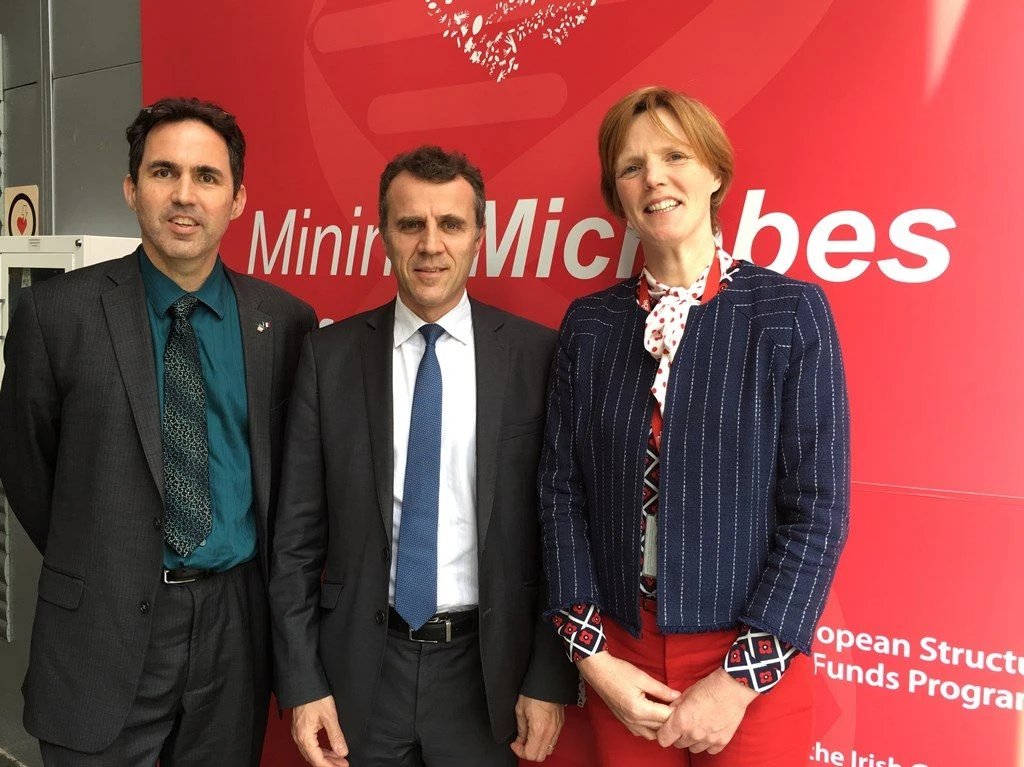
Dr Marc Daumas, Science Attaché in the French Embassy, HE .Stéphane Crouzat, French Ambassador to Ireland and Dr Sally Cudmore
On 4 April, Tom Sutton won Science for All with his talk “Fighting fire with fire”, exploring the use of viruses to combat antibiotic-resistant bacteria.
A day later, on 5 April, Professor John Cryan received an honorary doctorate from the University of Antwerp for his research on the microbiota-gut-brain axis. His lecture focused on how gut microbes influence stress, behaviour, and immunity.
On 8 April, Professor Fergus Shanahan was honoured with the John J Ryan Distinguished Lecture at RCSI. He spoke about translating microbiome research into practice and APC’s role in drawing international investment into Ireland.
On 9 April, APC hosted Fianna Fáil TD James Lawless and adviser Dr Kevin Byrne for policy discussions. The visit strengthened ties between science and politics, and showcased APC’s research infrastructure.
On 25 April, APC-affiliated labs led by Catherine Stanton and Paul Cotter won three Irish Laboratory Awards, including Academic Lab of the Year and Food Lab of the Year, recognising leadership in food microbiology and gut health.
The month ended with a visit from the French Ambassador on 30 April. HE Stéphane Crouzat and colleagues toured APC labs, met French researchers based there, and explored collaboration opportunities.
May
On 8 May, APC researchers held a microbiome-themed bake sale for Cork ARC Cancer Support House. Entries included “Microbe Man” and “Mint your Microbes” cakes. The event raised over €600 and brought science into the community in a playful way.
On 9 May, Dutch biology students from Radboud University visited APC as part of the “Biologen Op Stap” tour. They met with researchers including Marcel van de Wouw for informal discussions on careers and microbiome science.
A funding boost came on 10 May when Dr Marcus Claesson secured €504,000 from Science Foundation Ireland to study ulcerative colitis in children. His team will use multi-omics and machine learning to predict treatment outcomes and relapse risk.
On 11 May, APC researchers featured in the BBC’s The Second Genome and RTÉ’s Stressed documentaries, showcasing public interest in the microbiome's influence on mental health. That same day, APC released video interviews for International Women’s Day, highlighting female scientists' motivations and experiences.
On 24 May, APC announced the inaugural World Microbiome Day, themed “Mind Our Microbes”, to be held on 27 June. The day aims to raise public awareness of the importance of microbial diversity.
By 31 May, new APC research revealed how a mother’s diet, specifically omega-3 vs omega-6 intake can affect her child’s gut health and long-term weight regulation. The study, in partnership with Harvard, showed the role of microbes in mediating these effects.
June
On 12 June, two APC PhD students—Elaine Enright and Shane O’Donnell—were awarded Fulbright scholarships. Enright will study drug absorption at Purdue, while O’Donnell will research IBS and Lactobacillus casei at Harvard using a specialised mouse model.
July
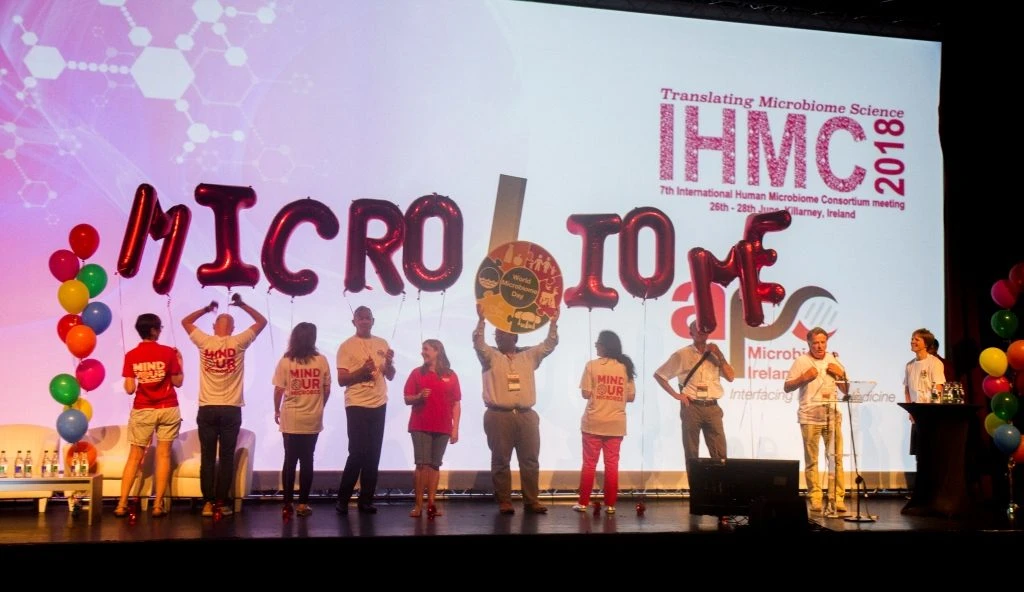
Official launch of World Microbiome Day
On 9 July, APC researchers led by John Cryan published a study showing that germ-free mice have altered social behaviours due to differences in brain gene activity. The work adds to evidence linking the microbiome to social behaviour and neurodevelopmental conditions.
A day later, on 10 July, six APC postgraduates were awarded PhDs or MScs in microbiology. Their research spanned infant gut health, milk oligosaccharide metabolism, and microbial genome analysis.
On 11 July, World Microbiome Day was celebrated with global activities—from microbiome-themed exhibits in Cork and probiotic giveaways in Switzerland to online Q&As and school outreach. APC coordinated the global effort.
On 19 July, UCC hosted the International Society for Serotonin Research conference. Over 200 delegates attended talks on serotonin's role in gut-brain function and IBS, with sessions promoting early-career researchers.
August
New research published on 1 August showed that short-chain fatty acids from fibre-rich diets help reduce gut leakiness and anxiety-like behaviours in mice. APC scientists say this may pave the way for dietary treatments for stress-related disorders.
On 16 August, APC launched a call for commercial leadership to spin out a new microbiome analytics company, building on its strengths in sequencing and bioinformatics.
September
On 6 September, APC research was celebrated in a national stamp series by An Post. A €1 stamp titled “Fighting Superbugs” highlighted the discovery of formicin, a novel antimicrobial from mackerel gut bacteria, found by PhD student Fergus Collins.
October
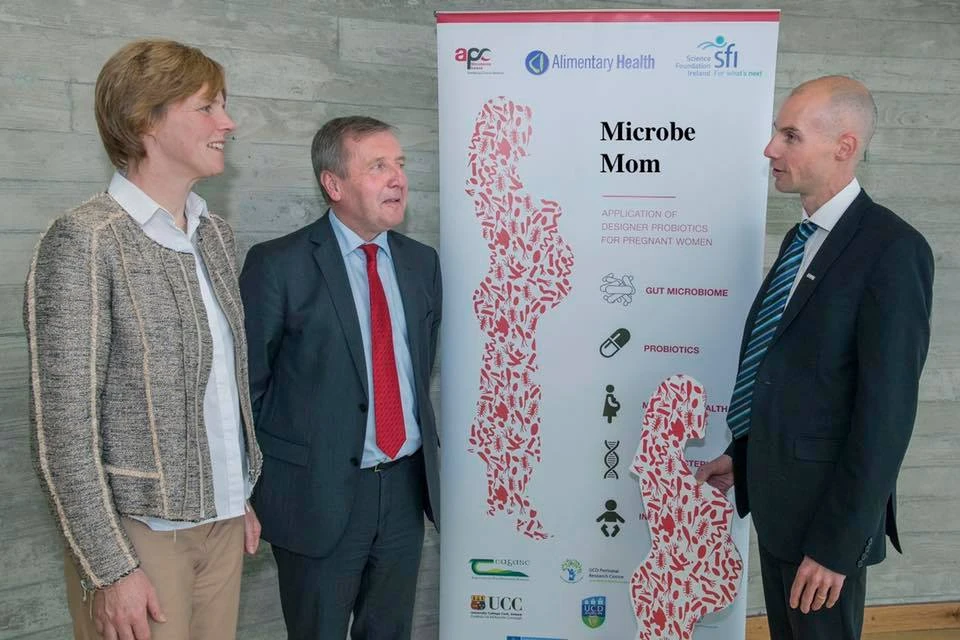
Dr Sally Cudmore, APC Microbiome Ireland, UCC; Mr Michael Creed, Minister for Agriculture, Food and the Marine and Dr Paul Cotter, Teagasc, APC Microbiome Ireland
On 17 October, Andrea Doolan, co-founder of Atlantia Food Clinical Trials and APC alumna, won the Matheson WMB Female Entrepreneur of the Year Award. Her company, spun out from APC in 2013, now serves clients worldwide in food and health claims testing.
On 18 October, UCC honoured three APC team members—Prof Fergus Shanahan (Career Achievement), Dr Pauline Scanlan (Early Career Researcher), and Mary Hough (Research Support)—for their research and institutional contributions.
On 23 October, APC launched “Microbe Mom,” a €3.4 million research initiative with Alimentary Health Group and UCD. The project studies how specific strains of Bifidobacteria are transferred from mother to baby and aims to identify optimal probiotics for pregnancy and early life.
November
On 6 November, APC hosted a public forum on gut health, sports, and nutrition as part of Science Week. Held at Páirc Uí Chaoimh, the event featured experts including Oxford’s Prof Kieran Clarke, elite athletes, and APC researchers discussing the gut-performance link.
On 27 November, ten APC researchers were named among the world’s most Highly Cited Researchers by Clarivate Analytics. The list includes global leaders across multiple disciplines, reaffirming APC’s international influence.
December
On 13 December, Professor Ted Dinan won the 2018 NEAR Award from the American College of Neuropsychopharmacology for the most influential review article in Neuropsychopharmacology. His paper explored the links between gut microbes, immunity, and behaviour—laying the groundwork for future psychiatric treatments.
