
News
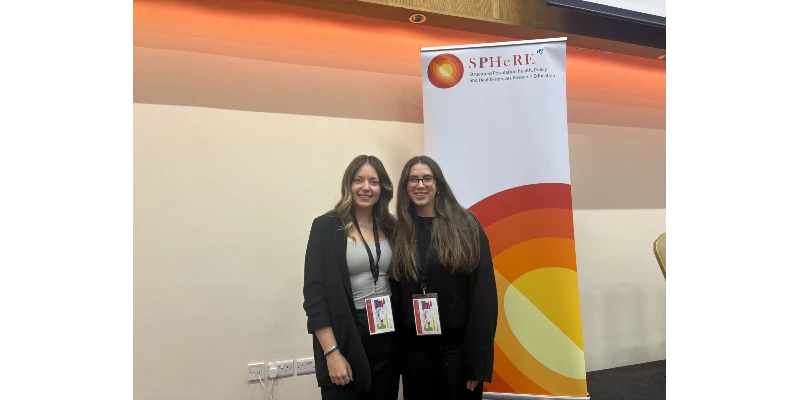
Madison Curran presents on behalf of HIRH at the 12th Annual SPHeRE conference
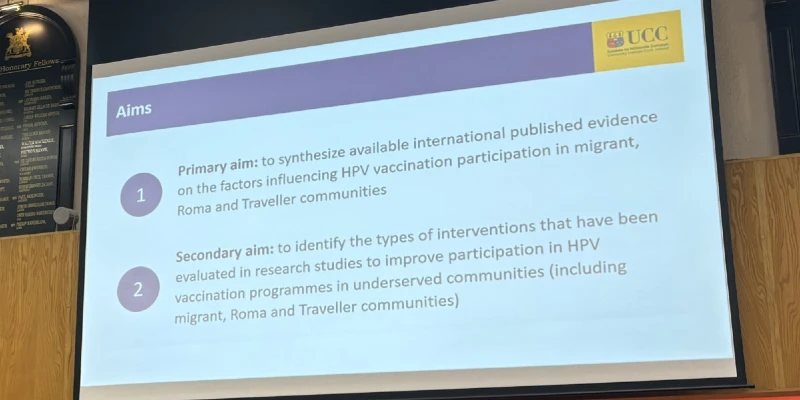
In 2025, the National Screening Service (NSS) commissioned University College Cork researchers Dr Aoife O’Mahony and Dr Sheena McHugh to deliver a rapid evidence review to inform strategies for improving HPV vaccination uptake among underserved populations, including migrant, Roma, and Traveller communities. The consultancy aimed to generate actionable insights within a tight timeframe to support national programme planning.
The oral presentation, “Barriers and enablers to HPV vaccination among migrant, Roma, and Traveller communities, and interventions to improve uptake: A rapid review,” was delivered on behalf of HIRH by Madison Curran. She described how the consultancy produced two clear and accessible outputs: a comprehensive report incorporating a narrative synthesis and summary tables, and a plain‑language briefing designed for wider stakeholder use. Madison then outlined how the NSS has applied these findings to inform the design of targeted outreach initiatives and to refine national communication strategies for HPV vaccination. By translating complex evidence into practical, context‑specific recommendations, the consultancy contributed directly to efforts to reduce health inequities and to ensure that underserved communities are more effectively reached by Ireland’s HPV vaccination programme.
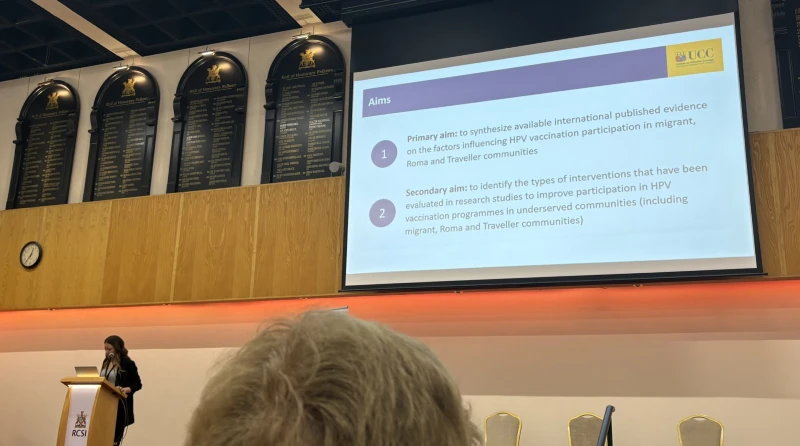
This was Madison’s first time presenting at an academic conference, and she shared the following reflections on the experience:
“It was an incredible experience, highlighted by the fantastic network of attendees. The day began with a compelling talk from Prof. Susan Smith, who addressed key issues in public health research, particularly the inverse care law. I then participated in the Equity in Mental Health workshop facilitated by Prof. Sinéad McGilloway. I found the discussion especially valuable, as it explored how inequities can arise throughout the research process—from planning through to publication.
For example, several participants noted that power imbalances can exist before a project even begins, as funding bodies and project organisers influence research agendas. Another important point related to recruitment challenges, particularly when seeking representative samples from disadvantaged populations such as Traveller or migrant communities. This raised questions about how we can improve inclusivity and how feasible it is to ask individuals to dedicate their time to research.
Next came the oral presentations. I was grateful for the opportunity to share our findings with such an engaged audience and took away many lessons that will support my career going forward. After presenting, I had the privilege of listening to the remaining talks and keynote sessions. The programme showcased a diverse range of exceptional and informative presentations on population health, health inequalities, and health services research.
I am extremely thankful for this opportunity and would like to express my appreciation to all attendees—and especially my UCC colleagues—for their support.”*