Blog
How Climate Change Affects Disadvantaged Groups in Our Countries: The Words of Young Climate Advocates
In this blog post, two of our young advisers from India and Pakistan explain how climate change affects the most disadvantaged communities in their different countries.
This blog post was written by Agastya, Aitzaz, Aoife and Florencia
Equality and non-discrimination are keystone principles of international human rights law, enshrined in every international and regional international human rights instrument, including the United Nations Convention on the Rights of the Child (the “CRC”). Article 2 of the CRC says that states will ensure that children enjoy their CRC rights “without discrimination of any kind”. Yet some groups are affected much worse than others when it comes to the climate crisis.
Indirect discrimination results when a policy or rule applies to everyone, but has an inadvertent yet unfair impact on people in a particular group. You could argue that this is what's happening when states fail to do enough to stop the climate crisis: some groups are affected much worse than others, such as indigenous people, children, women, the elderly, people with disabilities, and those living in poverty. Globally, children represent half of those struggling to survive on less than $1.90 a day.[1]
The climate crisis is unfolding, at present, because governments all over the world are failing to take adequate action. Kaya points out that most cases relating to indirect discrimination “rely on the fact that no action was taken to correct an injustice that resulted from a general rule that was the same for everyone”.[2] Some of the young people of our Young Advisory Team can see this happening in their own countries and wanted to talk about it, which they have done here.
India – Agastya
India is highly vulnerable to climate change due to its reliance on monsoon-dependent agriculture, its vast and densely populated coastline, and fragile ecosystems such as the Himalayas. Climate change in India is not experienced equally; it affects every community differently. Vulnerable groups, including women, children, older people, Tribal communities, rural agricultural households, coastal fishing communities, urban slum dwellers, and LGBTQIA+ people, are among those most exposed to its impacts.
This can be seen in many ways. For example, during periods of drought, girls are often the first to drop out of school. In water-scarce regions such as Rajasthan, women frequently have to travel long distances to collect water for their households.
India is an active participant in international climate agreements, but it does not yet have dedicated national climate legislation. Instead, it has adopted policy measures such as the National Action Plan on Climate Change (NAPCC) and state-level climate policies. The NAPCC aims to mainstream climate change adaptation and mitigation through sector-specific missions that promote sustainable development, resource conservation, renewable energy, and scientific research. While the NAPCC acknowledges that climate change disproportionately affects vulnerable groups, it does not include a dedicated mission focused specifically on marginalised communities such as Scheduled Castes, Scheduled Tribes, women, persons with disabilities, or LGBTQIA+ people.
In 2024, M.K. Ranjitsinh v. Union of India became a landmark case in which the Supreme Court, for the first time, explicitly recognised a constitutional right to be free from the adverse effects of climate change. The Court linked climate change and equality by recognising that climate change exacerbates existing inequalities. Those who are already disadvantaged often bear the greatest burden, making climate change not only an environmental issue but also an issue of constitutional equality. The judgment is expected to encourage stronger government action to protect vulnerable communities affected by climate change.
Pakistan – Aitzaz
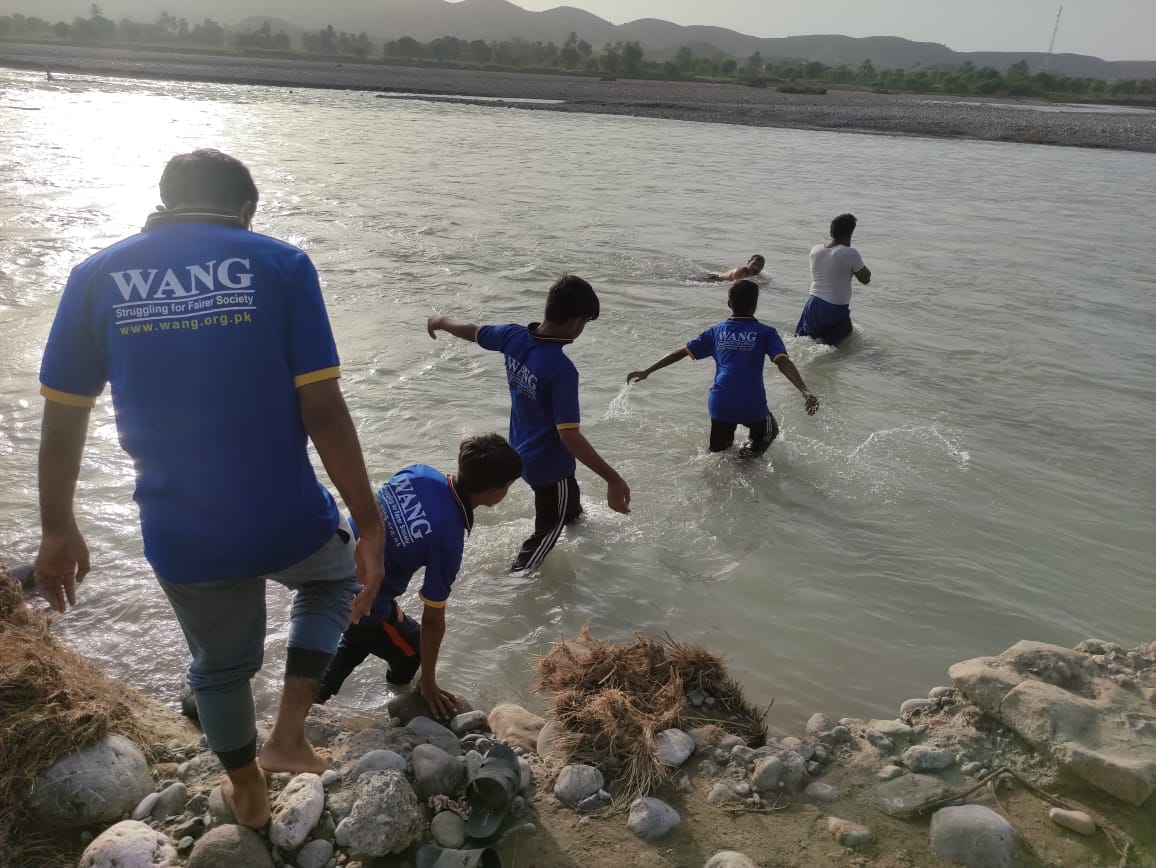
Across Pakistan, the impacts of climate change are becoming increasingly visible through recurring floods, prolonged droughts, rising temperatures, and water scarcity. While these challenges affect millions of people, they place the greatest burden on marginalized communities in Balochistan, interior Sindh, and other underserved parts of the country. Many of these communities already face poverty, limited access to education and healthcare, inadequate infrastructure, fewer economic opportunities, and long-standing injustice and inequality. Climate-related disasters further deepen these existing challenges, making recovery and long-term resilience even more difficult.
Women and girls are often among those most affected during climate-related crises. In Pakistan's largely patriarchal society, they frequently have less access to resources, decision-making, and economic opportunities, making them more vulnerable during disasters.
Although Pakistan has introduced several climate policies and adaptation plans, many challenges faced by women in vulnerable communities continue. In many villages across Pakistan, it is still common to see women carrying pots of water on their heads and walking long distances to collect water for their families.
Closing thoughts
What Agastya's and Aitzaz's accounts show, from two different countries, is a common pattern: climate change does not create injustice out of nothing, it deepens injustices that were already there. The same groups who face the greatest barriers to water, education, healthcare, and decision-making in ordinary times are the ones left most exposed when floods, droughts, and rising temperatures hit. Children and youth are also groups who are worst affected, as well as future generations, because they will live with climate crisis the longest.
This is precisely why equality and non-discrimination are not a side issue in climate law and policy, but a central one; without attention to who bears the burden, climate action risks reproducing the very inequalities it should be addressing.
[1] https://www.unicef.org/social-policy/child-poverty.
[2] R. Kaya, ‘Challenging Environmental Exposures Through Discrimination Law in Europe’, 20:1 Ankara Avrupa Çalışmaları Dergisi (2021) pp. 195–219.