
Our Book
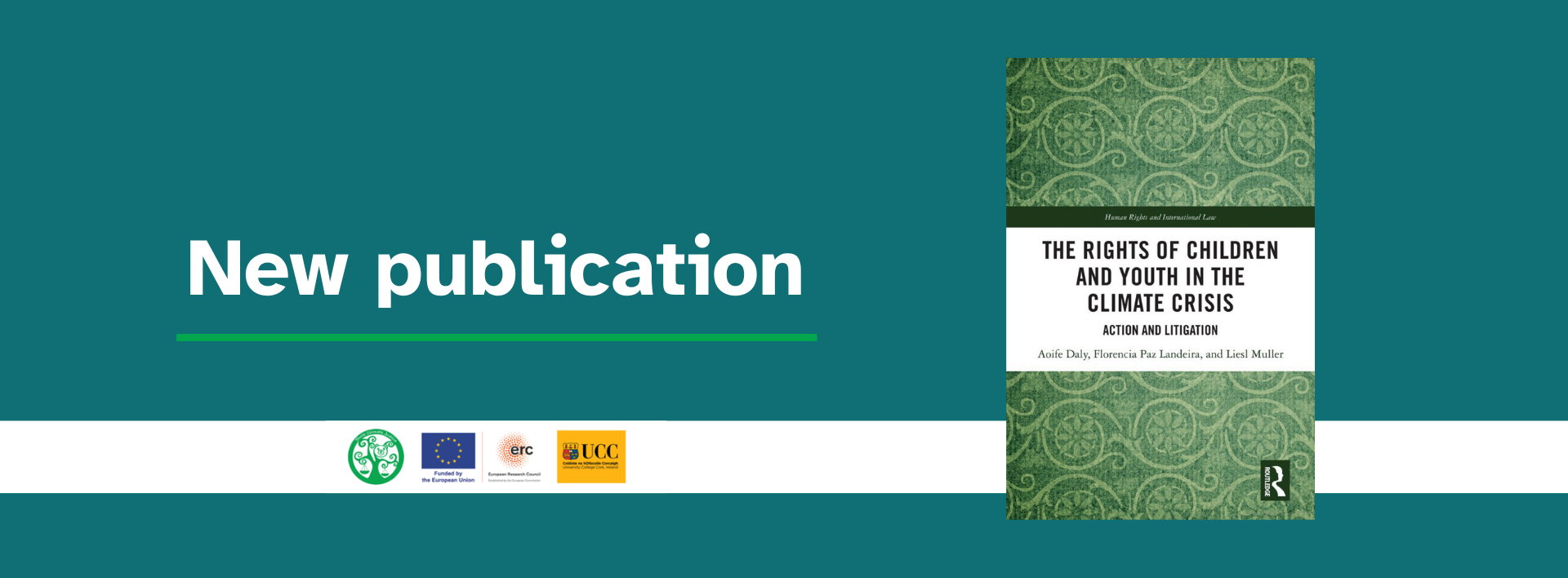
The Rights of Children and Youth in the Climate Crisis: Action and Litigation
Aoife Daly, Florencia Paz Landeira and Liesl Muller
Routledge, 2026
The Rights of Children and Youth in the Climate Crisis: Action and Litigation examines the climate crisis through the framework of children’s rights, while placing children and youth at the centre of contemporary transformations in climate law, governance and advocacy.
The climate crisis affects virtually every right recognised in the UN Convention on the Rights of the Child, including the rights to life, health, development, education, culture, play and participation. These impacts are not experienced equally: climate-related harms intersect with poverty, disability, race, gender, Indigeneity, migration status and geographical inequality. The book therefore argues that responding to climate change requires more than recognising children as particularly vulnerable. It requires treating them as rights-holders whose interests, experiences and perspectives must shape climate decisions.
At the same time, the book moves beyond an understanding of children and youth primarily as victims of environmental harm. Across the world, young climate advocates are organising protests, producing knowledge, developing policy proposals, participating in national and international governance processes, defending their communities and bringing legal actions against governments and corporations. Through these activities, they are not simply claiming rights that adults have defined for them. They are actively interpreting, expanding and reshaping legal and political norms.
The book describes this transformation through the concept of postpaternalism. Postpaternalism challenges traditional approaches in which adults are understood as the actors who grant, protect or speak on behalf of children’s rights. Instead, it recognises children and youth as present-day political and legal actors who negotiate, exercise and remake their rights, often working alongside adults as collaborators and allies.
From climate action to rights-making
Drawing together insights from children’s rights law, human rights law, environmental law, childhood studies, youth studies and climate governance, the book explores how children and youth have become influential actors across multiple arenas.
It traces the development of child and youth climate action, from Indigenous and community-based environmental struggles to global school strikes, digital advocacy, mutual-aid initiatives and transnational campaigns. It then examines how children and youth have entered formal decision-making spaces, including children’s assemblies, youth climate councils, national policy processes and the United Nations Framework Convention on Climate Change Conferences of the Parties.
Particular attention is given to the development of the UN Committee on the Rights of the Child’s General Comment No. 26 on children’s rights and the environment, with a special focus on climate change. The participatory process behind General Comment No. 26 demonstrates how children can contribute not only to consultations but also to the creation of international human rights standards.
The book nevertheless highlights the continuing distance between participation and power. Children and youth may be invited to speak without being given meaningful influence over decisions. Adultism, tokenism, unequal access to resources and safeguarding practices that prioritise control over empowerment can all restrict their participation. Meaningful participation therefore requires institutions that provide children with not only space and voice, but also an audience and genuine influence.
Children and youth in climate litigation
A major part of the book is dedicated to the growing field of child- and youth-involved climate litigation. Drawing on the Youth Climate Justice Case Law Database, the authors analyse 81 cases from jurisdictions around the world.
The analysis considers the different ways children and youth participate in climate cases, the rights and legal arguments invoked, the procedural obstacles they encounter and the broader outcomes of litigation. It examines questions including legal standing, causation, admissibility, access to effective remedies, child testimony and the separation of powers.
Although many cases encounter significant procedural barriers, the book demonstrates that the impact of climate litigation cannot be assessed solely through courtroom victories. Cases that are unsuccessful in formal legal terms may still influence public debate, government policy, institutional practices and the development of legal norms. Child- and youth-involved litigation has contributed to growing recognition of the right to a clean, healthy and sustainable environment, intergenerational equity and the need for justice processes that are genuinely accessible and appropriate for children.
The book argues that climate litigation is itself a form of children’s participation. Through legal action, children and youth seek not only to protect their own rights but also to strengthen climate accountability and human rights protections for society as a whole.
Rethinking climate justice and children’s rights
The central argument of the book is that children and youth are becoming rights-makers. Their climate action is helping to transform the meaning and practice of human rights, participation, democracy and intergenerational justice.
Recognising this contribution requires institutional change. Children and youth must be included in climate governance through accessible, properly resourced and enforceable participation mechanisms. Courts and other justice systems must adopt child-friendly procedures, and climate policies must systematically incorporate children’s rights and interests.
By placing children and youth at the centre of climate justice, the book shows that strengthening children’s rights does not benefit children alone. Their demands for prevention, accountability, meaningful participation and long-term thinking can strengthen human rights and democratic institutions for everyone.
The book will be of interest to researchers and students working in children’s rights, human rights, environmental law, climate litigation, childhood studies, youth studies and social policy. It also provides valuable analysis for policymakers, legal practitioners, climate advocates and children and young people engaged in climate action.
Publication details
Daly, Aoife, Florencia Paz Landeira and Liesl Muller. The Rights of Children and Youth in the Climate Crisis: Action and Litigation. Routledge, 2026.
ISBN: 978-1-032-28795-9
eBook ISBN: 978-1-003-29855-7
DOI: 10.4324/9781003298557
Find out more about the book, read and download for free here.