
News
Irish women join landmark ENDO1000 study with APC Microbiome Ireland leading microbiome research
Women in Ireland can now take part in ENDO1000, a major international study that aims to build a detailed picture of endometriosis over time, with APC Microbiome Ireland at University College Cork playing a leading role in its microbiome research.
The expansion of ENDO1000 to Ireland means Irish women will now be represented in a major longitudinal endometriosis research resource, contributing biological samples and health data alongside participants across the UK and Europe.
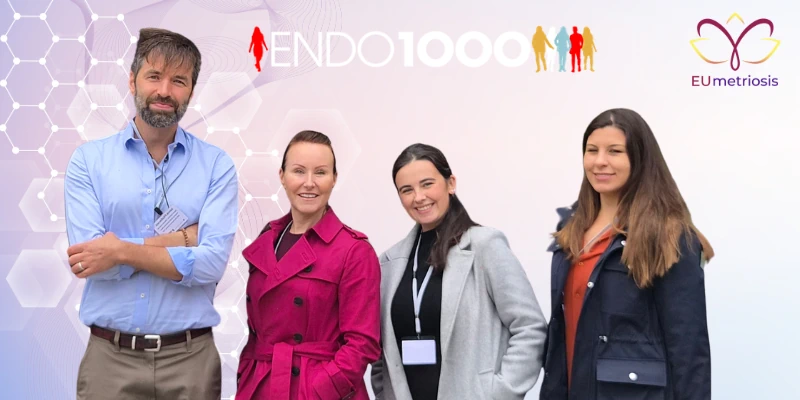
The Irish ENDO1000 team brings together clinical expertise and microbiome research. Professor Siobhain O’Mahony, Group Leader at APC Microbiome Ireland and Professor of Neurobiology at UCC, is leading the ENDO1000 Ireland team. Dr Cathy Burke, Consultant Gynaecologist and Clinical Lead at the Endometriosis Centre in Cork is the clinical lead.
The rest of the Cork Team includes APC Microbiome Ireland researchers Ellie Power, PhD student, Dr Mariarosaria Cuozzo, Postdoctoral Researcher, and Dr Jamie Fitzgerald, Senior Postdoctoral Researcher.
Early interest in taking part has been strong, with 98 women signing up in Ireland at the time of writing.
Building a detailed picture of endometriosis
ENDO1000 is designed to collect detailed information from people with endometriosis over a two-year period.
The project aims to recruit 1,000 participants and combine biological samples with information on symptoms, health, treatment and lifestyle.
Participants collect biological samples at multiple timepoints from home. The study also uses a mobile app and wearable technology to gather information on areas including diet, physical activity, sleep and daily rhythms.
Following participants over time will allow researchers to examine how endometriosis differs between individuals and how symptoms and other biological and lifestyle factors change.
For Irish participants, the expansion provides an opportunity to contribute directly to this growing international endometriosis research resource.
APC Microbiome Ireland leading the microbiome research
Microbiome research is an important part of the wider programme, with the APC Microbiome Ireland team at UCC leading this component.
Researchers will analyse microbiome samples and combine these findings with detailed information on areas including pain, inflammation, hormones, diet, fertility and lifestyle.
Looking at these different types of data together will allow researchers to investigate whether patterns in the gut and reproductive microbiomes are associated with differences in endometriosis symptoms and other aspects of the condition.
The Irish participants are particularly important for APC Microbiome Ireland because their samples and data will now be represented within this wider resource.
The work builds on APC Microbiome Ireland’s expertise in microbiome science and Professor O’Mahony’s research into women’s health, pain and the microbiome-gut-brain axis.
Part of a wider European research programme
This research forms part of EUmetriosis, a five-year European research programme working to improve understanding, diagnosis and treatment of endometriosis.
Through EUmetriosis, the APC Microbiome Ireland team is coordinating microbiome research across several European endometriosis studies. These include intervention studies examining pain and fertility as well as the longitudinal biological and clinical data being collected through ENDO1000.
Rather than focusing on these studies individually, the combined approach allows APC researchers to bring microbiome data from different populations and research settings together using a coordinated analytical approach.
By integrating high-resolution microbiome data with information on pain, inflammation, hormones, diet, fertility and lifestyle, the programme aims to create the largest and most comprehensive microbiome database for endometriosis developed to date.
The addition of participants from Ireland strengthens that resource and ensures that Irish women are represented within the international dataset.
Why the research matters
Endometriosis can affect people very differently. Symptoms, pain, fertility and responses to treatment can vary considerably between individuals.
Researchers are investigating whether studying the microbiome alongside detailed clinical, biological and lifestyle information can help explain some of this variation.
The longitudinal nature of ENDO1000 is particularly valuable. Rather than providing a snapshot at one point in time, following participants over two years allows researchers to identify patterns and changes and explore how these relate to symptoms, treatments and daily life.
Combining these longitudinal data with APC Microbiome Ireland’s microbiome analysis creates an opportunity to investigate endometriosis at a scale and level of detail that has not previously been possible.
The ultimate aim is to generate evidence that can contribute to better understanding of endometriosis and support the development of more personalised approaches to diagnosis, treatment and long-term care.
About EUmetriosis
EUmetriosis brings together researchers, clinicians, patient organisations and people with lived experience of endometriosis from across Europe.
The programme spans microbiome research, biomarkers, nutrition, pain, fertility, digital health and data analysis, with patient and public involvement integrated across the research.
Professor Siobhain O’Mahony leads the microbiome work packages within EUmetriosis, with APC Microbiome Ireland at UCC responsible for microbiome analysis across the programme.
EUmetriosis has received funding from the European Union’s Horizon Research and Innovation Programme.
Women interested in finding out more about ENDO1000 and taking part in Ireland can visit the ENDO1000 website and follow the ENDO1000 project on social media.
