Blog
Youth Climate Justice Workshop Methodology
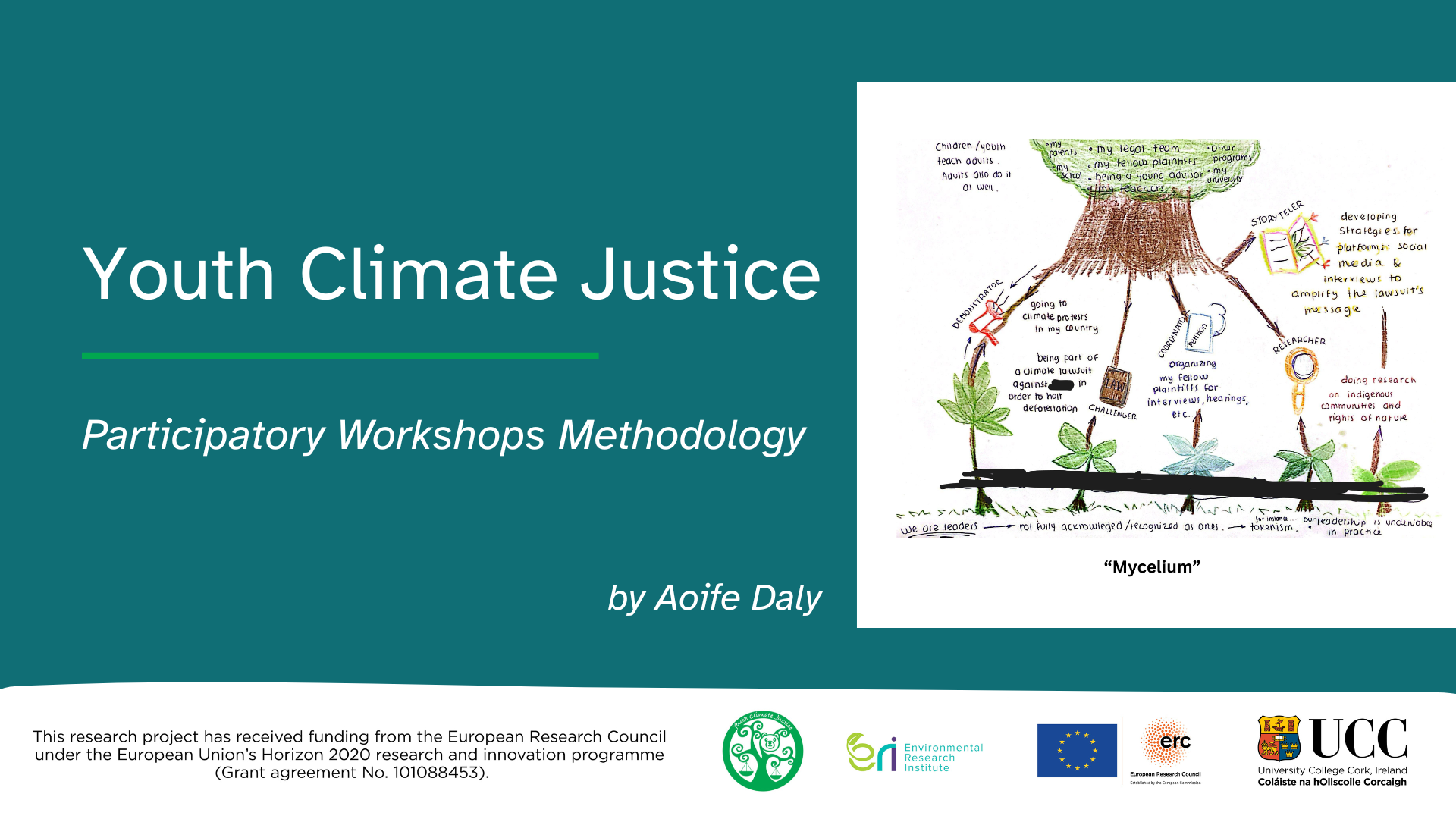
Prof Aoife Daly outlines the aims and methods of this exciting project on children’s leadership on human rights in the climate crisis and reflects on how it has been implemented so far through creative workshops and research with children and young people across several countries.
Creating the youth climate Justice project
In 2022, I devised the Youth Climate Justice (YCJ) project, to examine the exciting phenomenon of child and youth climate action around the world, focusing on child/youth leadership in advancing human rights. I designed a project involving interdisciplinary inquiry, arts-based workshops and programmes of interviews and surveys with young climate advocates across different regions.
The YCJ project proposes the ‘postpaternalism’ hypothesis. Traditionally it is assumed that children are ‘given’ rights by adults such as the right to be heard. However, child/youth climate activists are increasingly taking ownership of their rights and asserting them on a global scale — including within justice systems. The project seeks to shift how we understand what children and young people can do, both in academia and beyond, and to highlight the real change they are making in the world.
Another key aim of the project is to examine how to make how justice systems can become more child-friendly, particularly given the increasing involvement of children and young people in climate litigation. We want to ascertain how to achieve child friendly climate justice.
The youth climate justice project so far
In 2023, following the successful funding of the project by the European Research Council EU, I started to recruit an interdisciplinary team of researchers to carry out the work. Now, in 2026, we are halfway through this five-year project.
- Florencia, a postdoctoral researcher specialising in anthropology, has been researching the experiences of children and youth at COP conferences, exploring how they advocate at the international level in efforts to mitigate the climate crisis.
- Nabin, a postdoctoral researcher in youth studies, has researched with indigenous children and youth in Nepal, exploring their experiences of environmental engagement through local garden clubs.
- Emily, a doctoral researcher specialising in children’s relationship with nature, has led the organisation of our online Young Advisory Team. This group brings together children and young people under the age of 18 from eleven countries who have extensive experience of climate leadership.
- Liesl, a practising lawyer specialising in child law, has been analysing youth climate cases by breaking them down into their different children’s rights components.
The project is structured around three main parts: Judgments, Litigation and Participation.
- Judgments focuses on analysing youth climate cases.
- Litigation involves speaking directly with young litigants about their experiences of participating in these cases.
- Participation focuses on working with children in their communities through arts-based methods to explore their experiences and perspectives on climate action.
We have ensured that the framework for child friendly climate justice is both transnational and intergenerational. The countries included in the project represent diverse legal systems, geographical contexts, and forms of climate activism, including Indigenous perspectives and island nations.
We have had some exciting writing outputs based on our work, including a special issue in The International Journal of Children's Rights on Children's Rights and Climate Justice and the book The Rights of Children and Youth in the Climate Crisis, which will be released by Routledge in April 2026.
Participation workshops
Within the Participation work package, we are conducting workshops in Argentina, Canada, Ireland, and Nepal, as well as an online case study involving children from different countries. So far, we have completed the Nepal workshops, led by Postdoctoral Researcher Nabin Maharjan, and the online research workshops, led by PhD researcher Emily Murray, alongside child participation expert Katie Reid and myself. We were so fortunate to have many talented children and youth reflect on youth climate action through their artistic expressions.
I designed the workshop approach to ensure that children’s and young people’s contributions would both be supported and showcased, highlighting their leadership on climate issues. The process allows participants to explore their views and experiences of the climate crisis, as well as the actions they are taking in response. As one participant in the Nepal workshops reflected:
“The workshops helped me see that my ideas about the environment matter and that I can share them with others.”
For example, participants identify a research question that matters to them and explore it through creative methods such as photovoice or visual art. The images and artworks they produce then become the basis for group reflection, using participatory tools such as the “Rights Tree” to connect their experiences with children’s rights.
Across five workshops, participants:
- Discuss human rights and the environment
- Learn about arts-based research methods
- Engage in a field trip designed to inspire ideas for their artwork
- Reflect on the art they have produced, and prepare it for exhibition
- Present their work in an art exhibition where community leaders join them for intergenerational dialogue.
Through this process, we are supporting children to discuss and reflect on human rights standards, particularly the UN Convention on the Rights of the Child, which enshrines rights such as the right to be heard (Article 12) and the right to a healthy environment (Article 24).
Participants receive training in artistic approaches such as photography and painting, and are encouraged to use art as a way to communicate their experiences and perspectives. After reflecting on their work, they present their artistic pieces in a public exhibition. These exhibitions also create opportunities for intergenerational dialogue between young participants and leaders in their communities. As one Young Advisory Team member explained:
“Sometimes children notice things that adults forget. When children go to forums they ask good questions, speak up, and share ideas about how to take care of nature and protect the rights of all people.”
In Nepal, for example, the Minister for the Environment attended the exhibition, which made the discussion particularly meaningful for the children involved.
A selection of the artworks created by children and young people across the project’s different case studies can be viewed in the Artwork section of the Youth Climate Justice website.
The importance of creating spaces where children can participate meaningfully in climate discussions was emphasised by members of the Young Advisory Team:
“Children’s voices are often unheard and they’re not given the same platforms that adults are.”
We are at present writing up the findings from this exciting work and look forward to sharing these insights in future publications that highlight children’s voices and contributions to climate action.