Blog
The Polish-Ukrainian Borderlands - Aleksandra Sobańska
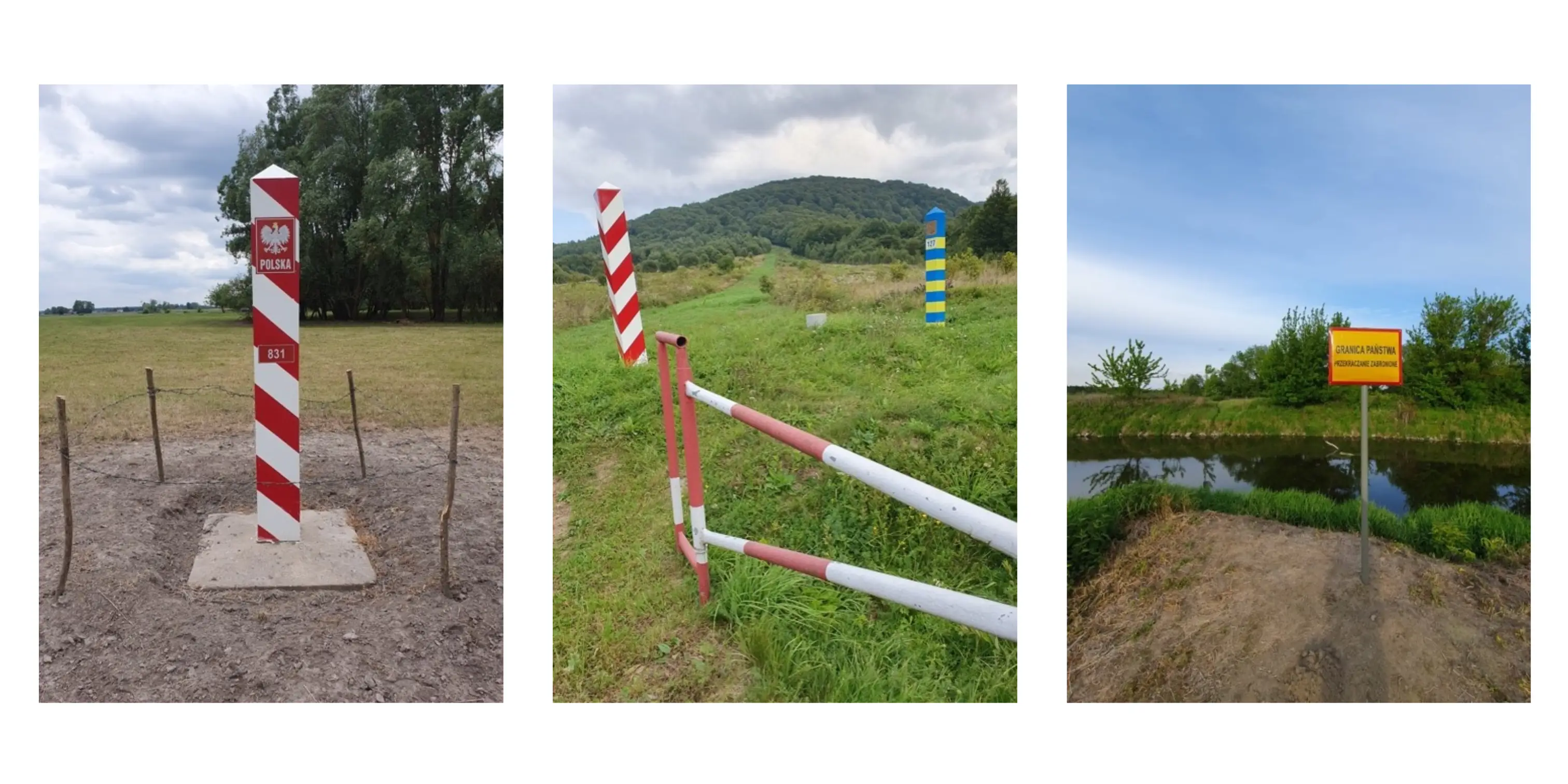
During the course of the EuroBorderWalks fieldwork, the research team from University of Lodz* made several visits to the Polish–Ukrainian borderland, conducting narrative and walking biographical interviews as well as artistic responses to the border and borderlands. As the postdoctoral researcher working on the Polish- Ukraine border I spent the longest period in the borderland area and share some of the images I took whilst conducting fieldwork.
On the Polish side, the Polish–Ukrainian borderland is predominantly rural and partly mountainous, with an economy largely based on agriculture and public-sector occupations, including border guards, foresters, school employees, civil servants, and workers in cultural institutions. One of the participants referred to the borderland as a “silver tsunami,” alluding to the predominance of elderly inhabitants with grey hair. Young adults frequently migrate to larger urban centres located further from the border in search of better employment opportunities and prospects for personal development. The region is characterised by a condition of peripherality resulting from the intersection of multiple unfavourable factors. These include both its geographical distance from the central areas of Poland and the limited opportunities for Polish–Ukrainian cross-border cooperation, due to the relatively small number of border crossings. As previously noted, the region is affected by population outmigration, particularly among young adults, and is characterised by limited access to public transportation as well as an underdeveloped private sector, which contributes to a shortage of employment opportunities. An additional challenge is the stereotypical perception of borderland inhabitants as possessing lower levels of cultural capital.
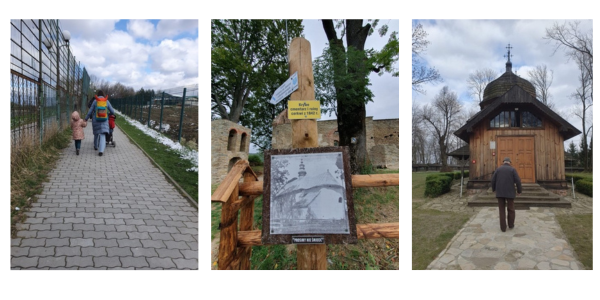
To the researcher, the borderland emerges as a space marked by profound ambivalence. Beautiful green landscapes are interwoven with sites commemorating the Polish–Ukrainian conflict during the Second World War, including monuments, ruins of Greek Catholic churches, and old cemeteries. The memory of historical antagonisms remains vividly present not only in the physical landscape but also in the collective memory of the participants, many of whom are descendants of victims of wartime violence or forced displacement. At the same time, numerous participants have been actively involved in initiatives aimed at fostering cross-border integration, such as the Good Neighbourhood Days celebrations and humanitarian assistance efforts following the outbreak of the full-scale war by Russia in Ukraine in 2022. Many also maintain friendships across the border. Nevertheless, mistrust and tension continue to be strongly perceptible, both within the social space of the borderland and in the narratives themselves. The borderland and the legacy of past events continue to shape public discourse in Poland, contributing to increasingly visible prejudices against Ukrainians, especially after the large-scale arrival of Ukrainian refugees following the outbreak of Russia’s full-scale war against Ukraine. At the same time, the inhabitants of the borderland themselves are not free from the influence of media and political narratives, which also affect the ways in which mutual perceptions and tensions are formed.
.webp "A series of photos from the Polish Ukrainian Borderlands")
At the beginning of June 2026, the researcher will once again travel to the borderland in order to conduct fieldwork on the Ukrainian side. This will mark the completion of the data collection phase. However, the primary objective of this visit is to gain a deeper understanding of the perspectives of Ukrainian narrators and to compare and critically confront these perspectives with observations gathered on the Polish side of the border.
*The EuroBorderWalks research team based in Łódź comprises scholars from the Institute of Sociology at the University of Łódź: Professor Agnieszka Golczyńska-Grondas, Dr Aleksandra Sobańska, Professor Katarzyna Waniek, and Professor Tomasz Ferenc – as well as Professor Marek Domański from the Academy of Fine Arts in Łódź.