
News
Study explores potential of beneficial bacteria in silage to influence methane emissions from dairy cattle
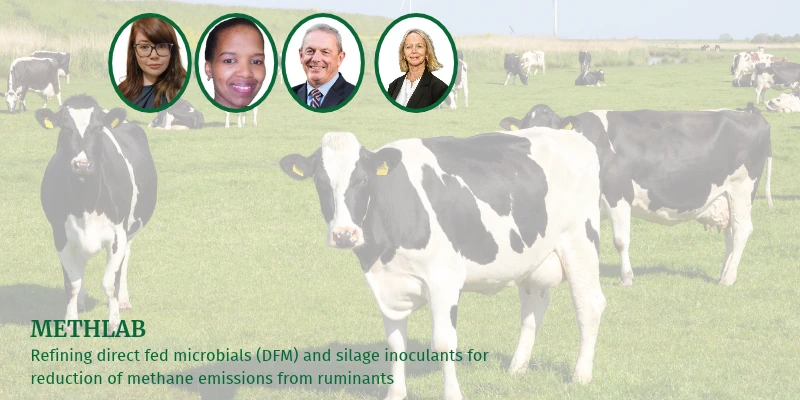
Researchers at APC Microbiome Ireland, Teagasc and collaborating institutions have found that adding selected bacteria to silage may influence the rumen microbiome and methane emissions in dairy cattle.
Methane produced during digestion in cattle is a significant source of agricultural greenhouse gas emissions. Researchers are exploring whether beneficial bacteria added to animal feed could influence the microbial processes involved in methane production.
In a seven-week study involving 30 dairy cows, researchers tested silage treated with two strains of bacteriocin-producing lactic acid bacteria, Lactococcus lactis SL242 and Lactiplantibacillus plantarum LP58. Bacteriocins are small proteinaceous antimicrobials produced by some bacteria which kill other microorganisms such as those which produce methane in the rumen.
The study found an average 5.7% reduction in methane emissions during weeks 5–7 in the group receiving bacteria-treated silage, with the greatest reduction of 7.7% recorded in week 5. Differences between the treated and control groups were statistically significant in weeks 5 and 7.
The researchers also observed changes in the rumen microbiome and temporary increases in milk fat and milk solids. The treatment did not affect feed intake, overall milk yield or body condition.
These findings suggest that bacteria added to silage may influence rumen microbial communities and methane production over specific periods. The four-week pattern of lower emissions warrants further research to understand these effects and determine whether they can be achieved consistently.
Research team and collaborators
The study was led by a collaborative research team involving APC Microbiome Ireland, Teagasc, University College Cork (UCC), VistaMilk, University College Dublin (UCD) and Sacco Srl, Italy.
The research involved Natasha Doyle, Michael Kennedy, Philiswa Mbandlwa, Kevin Linehan, Ghjuvan Grimaud, Gareth Gillen, Paul E. Smith, Ines Martinez, Michael O’Donovan, Pat Dillon, Colin Hill, R. Paul Ross, Michael Egan and Catherine Stanton.
The collaboration brought together expertise from APC Microbiome Ireland and the School of Microbiology at UCC; Teagasc's Food Research Centre at Moorepark, Animal and Grassland Research and Innovation Centres at Moorepark and Dunsany, and Environmental Research Centre at Johnstown Castle; VistaMilk at Teagasc; UCD's School of Agriculture and Food Science; and Sacco Srl in Italy.
Read the research: Bacteriocin-producing lactic acid bacteria as silage inoculants to reduce methane emissions in late lactation dairy cattle
