News and events
A report from the ICCPR 2026 in Ottawa: Multilingual Literature, Cultural Policy and “Small Literatures”
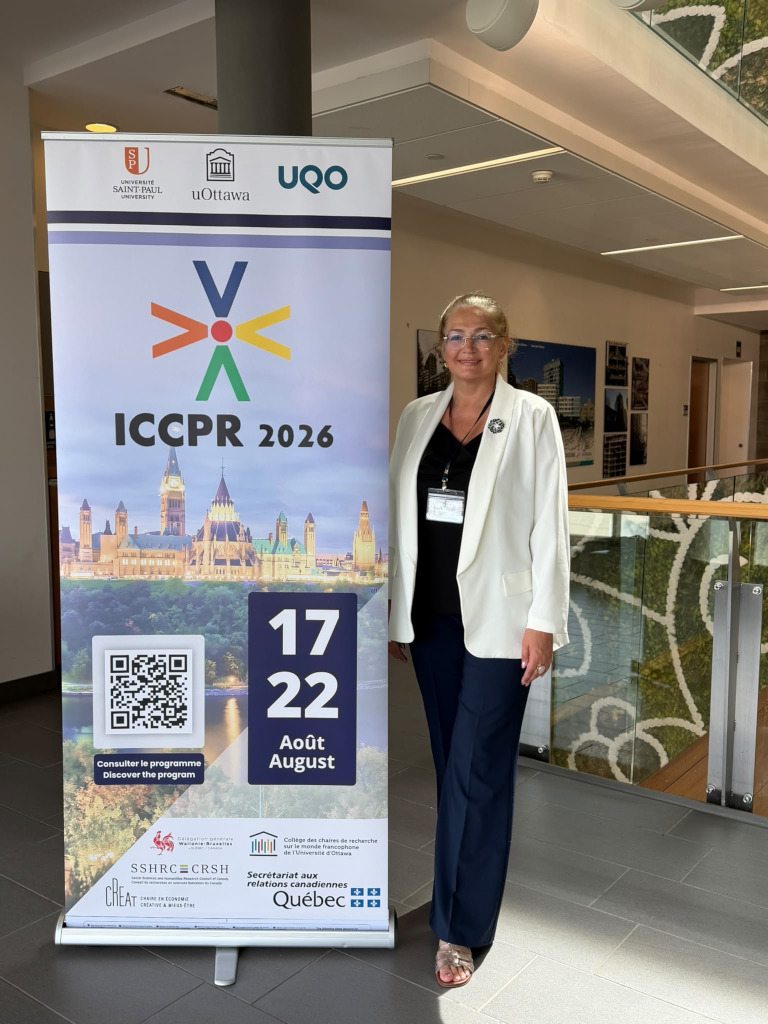
On 17–22 August 2026, Prof. Maija Burima, a participant from Latvia in COST Action CA24137 “MultiLiLiTrans – Literary Multilingualism and Social Change,” took part in the International Conference on Cultural Policy Research (ICCPR 2026) in Ottawa, Canada, organised by the University of Ottawa. Her participation was closely connected with the thematic focus of the COST Action and with her own research on literary multilingualism, translingual practices, and the institutional dimensions of “small literatures.”
Canada provided a particularly relevant context for these discussions, given its strong tradition of multilingualism, official bilingualism, multicultural policy, and institutional approaches to linguistic diversity.
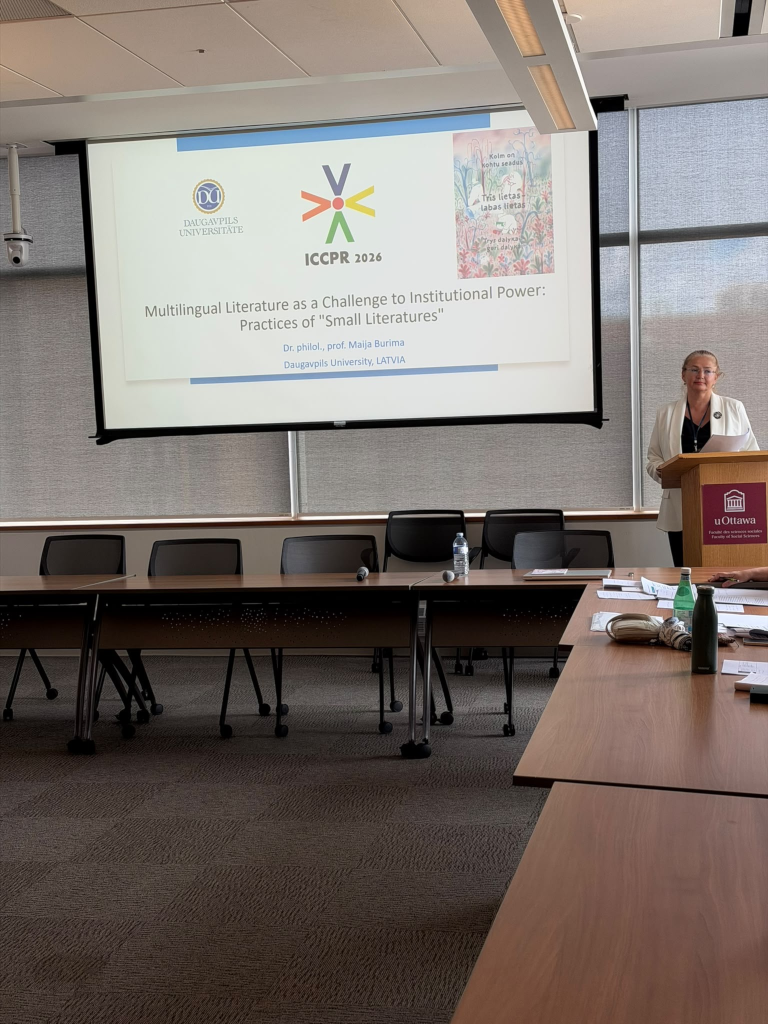
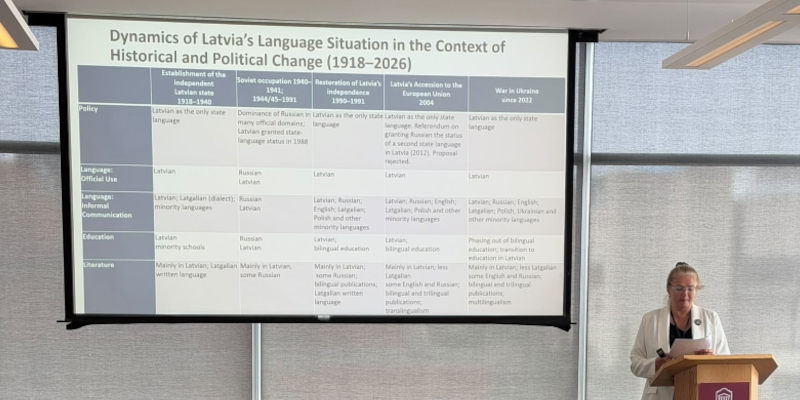
At the conference, Prof. Burima presented the paper “Multilingual Literature as a Challenge to Institutional Power: Practices of ‘Small Literatures’” in the session Language and Cultural Policy: Diversity and Literature. Using examples from texts of different genres in contemporary Latvian literature, the presentation approached multilingualism not simply as the coexistence of several languages within a literary text, but as a dynamic literary and sociocultural practice. Particular attention was given to translingualism, linguistic repertoire, code-switching, and code-meshing, as well as to the ways in which writers combine and transform different linguistic resources and cultural codes.
The paper also examined the relationship between multilingual literary practices and institutional power, including publishing, literary criticism, canon formation, and education. These issues are particularly significant for “small literatures”, where linguistic diversity is closely connected with cultural representation, institutional recognition, and the position of national literature within broader transnational contexts.
The presentation was followed by a discussion on the relationship between multilingual literature, state language policy, and education, with particular attention to the historical and contemporary geopolitical context of the Baltic region. The discussion addressed how multilingual literary practices can be understood in societies where the state language has historically been shaped by unequal power relations; how openness to diverse linguistic repertoires can be balanced with the need to maintain and strengthen the position of the state language; and how multilingual and translingual texts may be incorporated into education and the literary canon.
Participation in ICCPR 2026 provided new perspectives for further research on literary multilingualism, translingualism, and “small literatures”. It also offered an opportunity to place the Latvian experience in a broader comparative context, establish new professional contacts, and identify possibilities for future international research cooperation within COST Action CA24137 “MultiLiLiTrans – Literary Multilingualism and Social Change.”