In This Section
- Home
- About the EDI Unit
- News & Events
- News Archive
- Events Archive
- Newsletters
- EDIB Calendar
- Publications
- EDI Training Hub
- UCC Equality, Diversity and Inclusion Framework and Action Plan 2025-2028
- Governance and Oversight Committees
- Public Sector Duty
- Athena Swan
- Race Equality Action Plan
- Accenture's Women on Walls
- Speak Out
- Gender Identity and Expression
- Funded Projects
- Staff Networks
- ESVH Hub
- University of Sanctuary
- EDI Data
Brigid Carmody, co-ordinator of the Cork Traveller Women’s Network
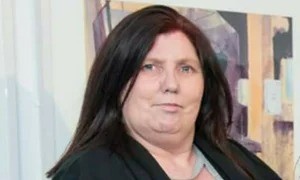
Brigid Carmody saw activism in action from an early age. Her aunt Mary O’Sullivan was a founding member of the Cork Traveller Women’s Network (CTWN) and Brigid began going to meetings as a teenager. She would take part in classes, help with paperwork, or just sit and listen, absorbing the issues that were affecting Traveller women in Cork. Decades later, as co-ordinator of the network, Brigid continues to advocate for her community, giving a voice to Traveller women while creating a greater understanding and appreciation of Traveller culture in Irish society.
Driving Brigid on is a desire to tackle the pervasive discrimination experienced by Travellers, something that blighted her own schooling and which she was determined to address when it came to her own seven children, who would tell her of the stigma they felt for being part of the Traveller community. “It was so they didn't have to feel like they had to hide who they are.” Her legacy continues with her own family. “I love that my own children, from when they were babies, were brought to meetings with me.”
One of the significant projects undertaken by the CTWN was the creation of a barrel-top wagon for the Cork 2005 European Capital of Culture, which is now part of a permanent public display on Traveller culture at Cork Public Museum, the only Traveller-curated exhibition of its kind. The wagon is a symbol of pride for Travellers and a reminder of a time when the community was free to travel. It was a pioneering project, with two women, Brigid and her aunt Mary, the driving forces. As she recalls: “We were managing men that were working on the project, including my husband; I would be arguing with him at the kitchen table about the colour of the front door of the wagon. We were in charge — we had the chequebook, it was our project.” The contribution of women was underlined when Brigid’s daughter Amanda, who was still in primary school, spoke at the launch event, a particularly proud moment for the family.
In her role as co-ordinator of CTWN, Bridget heads a small team of staff who work in partnership with volunteers across the community. The network is based at Triskel Arts Centre, a unique collaboration which enables access to the arts for the Traveller community and also gives a platform to their voices.
The network also provides services to enhance the health and wellbeing of the Traveller community. Accommodation takes up much of Brigid’s time, particularly ongoing issues at the Spring Lane site in Cork. The network also manages Meelagh Traveller Community Development Project in Mahon, and it has an outreach development worker based on the halting site there.
Bridget has one son and six daughters, including 19-year-old triplets, and lives in a Traveller group housing scheme on Kinsale Road. She attended Turner’s Cross primary school, and her family has long-established links to the area; her sister still lives in their grandfather’s house in Ballyphehane.
As well as her role as an advocate for her community, Brigid and the network have also been to the forefront in recording and celebrating the unique Traveller heritage. “We are losing the traditions and cultures that we are very proud of and want our children to be proud of,” says Brigid.
The network has been active in trying to keep Traveller culture alive through cultural projects such as Missling on the Tobar, which mapped a network of former Traveller campsites in and around Cork city from nomadic times, and collected soil from the areas as a symbolic act of reclamation.
The network also has its eye on future generations, embracing new technology to tell their story, working with Cork City Council on a virtual reality experience celebrating Traveller culture. A VR headset immerses participants in Traveller lives, including a performance from 17-year-old singer Rosie McCarthy and Martin and Richie McCarthy discussing horse-keeping on the northside of the city.
In March 2017, Brigid was in the Dáil when the Government formally recognised Travellers as an ethnic group and the then Taoiseach Enda Kenny said: “Our Traveller Community is an integral part of our society for over [a millennium], with their own distinct identity - a people within our people”.
At the time, it was seen as a historic step towards equality and inclusion but much work remains to be done on both fronts, says Brigid. While there is more awareness of discrimination and efforts are being made to tackle it, disinformation about Travellers continues to spread, exacerbated by social media. She is a firm believer in dialogue as a means of tackling such issues. The network delivers Traveller Culture Awareness Training which Brigid says has been valuable in challenging negative stereotypes, although she cautions against such initiatives becoming box-ticking exercises.
In her work, she says it can feel like there is always a battle, but along with the many challenges and frustrations, there are the small achievements that mean a great deal, such as getting a call from someone in the community thanking her for her help. “I love my job and the women I work with, especially the volunteers who are always at the end of the phone. We have worked damn hard to get the Cork Traveller Women's Network to where it is now. And that would be one of my achievements — that we are a respected Traveller-led organisation.”
Caitríona Twomey, volunteer and long-time trustee of Cork Penny Dinners

For Caitríona Twomey, family is everything. She has five sons, two daughters, 15 grandchildren and what she describes as a loving extended family. She also has another large family — the many people she has helped in her role as a co-ordinator at Cork Penny Dinners and the volunteers she has worked with at the charity, which offers food and support to those in need, in a welcoming space where everyone is treated with dignity and respect. According to Caitríona, just as important as offering people material comforts is responding to their need for connection: “somebody to talk to, just to say hello”.
She regularly meets people who have turned their lives around thanks to the help they have received, and they in turn have become a support network that she can now call on when required.
Caitríona, the eldest of six children, grew up on the northside of Cork, and attended school at North Presentation across the road from the family home on Peacock Lane. She was a sporty child, playing camogie, basketball, volleyball, handball, and table tennis; she is also a soccer fan and lifelong ‘Toffee’, a supporter of Everton F.C. Her family were active in the community and she credits them with her impulse to help others. She recalls stepping on a snail — or a ‘Tom Tivey’ in old Cork parlance — when she was a small child and her grandmother then introducing her to “his mother, father, brothers, sisters, auntie and uncle”. It was a lesson in kindness and caring that has stayed with her ever since.
Her father was the cook sergeant at the local barracks, later running several chip shops, while her mother worked in an office and her grandmother was a supervisor in a local business. It was a comfortable childhood by the standards of the time, and Caitríona was encouraged to share what they had with the less fortunate from an early age. She brought in parcels wrapped in brown paper to school, which she later discovered were clothes and food for people in need. She would often accompany her father when he would donate food from the takeaways to Cork Penny Dinners or the Simon Community. Her father would disappear every Christmas Day, much to the chagrin of a young Caitríona, who couldn’t eat her selection box until after he had returned for dinner. She discovered what he had been doing when he brought her along to help with the dinner for the poor and elderly which he helped organise on Christmas Day. It was an eye-opening experience for Caitríona, who was put to work early on Christmas morning peeling carrots, making desserts and putting up decorations. She begged him to take her home but by the time dinner was served and the music and singalong started, she didn’t want to leave.
It was the start of a journey that in 2006 led her to become a full-time volunteer at Cork Penny Dinners, the city’s oldest charity, which was established in 1888. It was a role which she juggled with raising a growing family, as her father did. Throughout her time at the charity, she has been a voice for people experiencing homelessness, mental health issues and addiction. She has been involved in securing a new premises for the charity at James Street in the city and has done significant work in terms of making facilities available for those attempting to recover from addiction. Caitríona has been involved in many initiatives over the years but one that is particularly close to her heart is the Penny Dinners High Hopes Choir, inspired by the original choir set up under David Brophy of the RTÉ Concert Orchestra. The choir is composed of people who have been affected by homelessness, addiction and mental health issues, and is 10 years in existence this year. She describes them as “rock stars”, saying the choir has been a hugely therapeutic endeavour for those involved. They have travelled abroad and performed in locations from the European Parliament in Brussels to the Lough in Cork.
Caitríona has stepped back from the day-to-day running of Cork Penny Dinners as she approaches her 70th birthday but she remains on the board as a trustee and her outreach work continues, as demand for help and support grows. She could be doing anything from helping people with literacy issues to arranging clothes for someone who has been admitted to hospital in an emergency. She believes that people come to her for help because she won’t judge them: “I'm privileged to have had the life experience I’ve had, because I don't get fazed by anything anybody tells me and they feel comfortable with me.”
As well as completing a diploma in youth and community work at UCC, she also has a qualification in psychotherapy from UCD, which she was inspired to undertake by a friend who had lost a son to addiction. When she was conferred with an honorary doctorate at UCC in 2018, she spoke about how every day in Penny Dinners, she learned something. “I learn ‘We Are One’. When you have the great privilege of being of service to your fellow human beings; when you are humbled by the kindness, generosity and caring of all who keep our doors open, it is then you understand life.”
Dola Twomey, campaigner and therapist at the Sexual Violence Centre
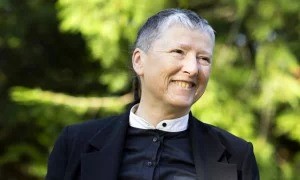
Dola Twomey was not a big fan of school but growing up on Shandon Street in the heart of Cork, where her parents had a small grocery shop, was an education in itself. It was also where she first became aware of how inequality and injustice shaped people’s lives.
“It was a very alive part of the world, you could see human life and all its vagaries. I saw there was a pecking order, and people’s life chances were totally dictated by that. But I loved it. I felt totally at home there. Which is probably why I’ve never left.”
Dola has left her mark on her native city in her work as a therapist and campaigner at the Sexual Violence Centre on Camden Quay, just a short walk from her childhood home. She attended St Vincent’s primary school, finishing her secondary education at St Angela’s school in 1978. It was a time of recession and emigration, when the outlook was bleak. Dola went on to work for the HSE for a number of years. Meeting her partner Mary Crilly was a pivotal moment in her life. “She’s one of these people that once she gets you in her clutches, you might as well surrender. She can find work to do for everybody.”
Dola came on board with projects Mary was running at the time, including a support service for women who had experienced domestic violence. Being involved in their lives, along with a curiosity and desire to understand what the women were going through spurred Dola on to train as a therapist. Favouring a different focus to what she considered the more prescriptive training on offer in Ireland, she spent many years studying psychotherapy in the Netherlands and the UK.
Her work as a therapist in the Sexual Violence Centre brings great responsibility but she also describes it as life-enhancing. “You're holding hope for somebody up to a point where they can see it for themselves. It's a huge privilege and very precious, and something that needs to be minded really well. Every client I've ever met has given me something. They've all impacted me.”
When it comes to the campaigning side of her work, Dola says the fight isn’t necessarily against the perpetrators of sexual violence but the system that enables and facilitates them. She points to the centre’s continuing work on human trafficking and says that when they were trying to raise awareness of the issue in the early 2000s, there was a denial by institutions that it was even happening. The same dynamic applies to the issues of stalking and harassment. While standalone legislation has been introduced, she says there has been no public awareness campaign, and no training for gardaí and court services. She describes these times when nothing is happening as a huge source of frustration and one of her biggest struggles. While policy and legislation play a role in achieving change, Dola hopes for an even more radical outcome; a complete transformation in how sexual violence is perceived. “We've done it before — I remember people smoking on planes, in hospitals, now we wouldn't dream of doing it. What was totally acceptable, facilitated, is no longer tolerated. Sexual violence is one form of violence on a spectrum. It’s ultimately about how we treat people and how we think of people.”
Dola has seen many positive changes in her work as a therapist and campaigner. She says institutional abuse especially has been brought out in the open, and lifting the veil of shame and stigma has had a profound effect. While previously, many people would have told no-one about their abuse, that has completely turned on its head. “Now they will have told a friend or a parent. That's a culture shift — that something that couldn't be spoken about can be spoken about. That's phenomenal. No policy has done that, no institution has done that. That is people.”
She describes herself as a “low-flying optimist” and says her faith in people continues to be renewed through the collaboration and co-operation she sees in her work. “Anything that I've managed to pull out the bag I didn’t do myself, nor would it have actually worked. You get people to throw their weight in with you, then you've started a momentum that is pretty much unstoppable. I think of the women through the years who have been incredible champions for us; the world will never know because they stood up to the plate without expecting any nod of gratitude.”
Dr Evelyn Grant, musician and arts advocate
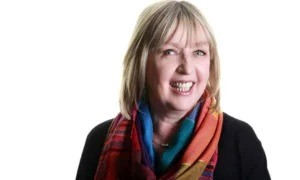
Music has been a huge part of Evelyn Grant’s life for as long as she can remember. Evelyn grew up in Donnycarney, Co Dublin, the second youngest of five siblings. Her mother was a piano teacher who demonstrated the importance of education while her father, who worked for the OPW, believed talent was a privilege that needed to be shared with others. This emphasis on the transformative power of music and education has informed Evelyn’s life as a performer and passionate advocate for the arts.
Her appetite for learning was encouraged during her studies at Scoil Áine primary school and Manor House secondary school, both in Raheny, while her love of music was nurtured at the College of Music in Chatham St, which had a vocational ethos that emphasised the importance of inclusion. She played the piano and the violin before discovering a harmonious partner in the flute when she was 13 years old. She caught up quickly, joining the newly-established Irish Youth Orchestra in 1970 when she was 14. It was a life-changing moment for the young musician in more ways than one. Making music with others brought a whole new dimension to her life, while she also met her future husband, Gerry Kelly, who played cello with the orchestra.
After a year studying English and history at UCD, Evelyn followed her destiny, professionally and personally, marrying Gerry and joining him in Germany, where she completed a music degree and gave birth to their first child, a daughter. The family later returned to Ireland, settling in Cork, where they quickly felt at home and immersed themselves in a thriving music and arts scene.
When Evelyn began teaching in Cork School of Music, she immediately became involved in social inclusion projects, with the aim of ensuring access to music education for children from all backgrounds. In 1984, she and a colleague set up the Children's Music Hour, family-based performances in the School of Music which were later extended to schools. In the 1990s, Evelyn and Gerry organised musical performances for the Tall Ships race in Cork and became increasingly involved in community events. Out of this grew the Cork Pops Orchestra, which has become a much-loved fixture on the city’s musical calendar, bringing the magic of music to thousands of primary and post-primary students every year. For Evelyn, people don’t need to play or perform to enjoy the benefits of music, something that the Cork Pops Orchestra demonstrates with its emphasis on audience participation and active listening. She cherishes encounters with the pupils and teachers who tell her about the lasting impact the events had on them. Another proud achievement has been Cork Music Works, which she set up with music therapist Judith Brereton in 1999 to ensure people with a disability would be represented in music performances during Cork’s tenure as European Capital of Culture in 2005.
In her work, Evelyn says she has been buoyed by a large community of like-minded people interested in social inclusion and musical education, highlighting the works of groups such as the Cork Academy of Music, the Barrack Street Band, Cork Community Artlink and in recent years, the Kabin Studio in Knocknaheeny. She has also derived much inspiration from her long-running association with the West Cork Chamber Music Festival.
After almost three decades of teaching, she retired from the Cork School of Music in 2009, and has been busier than ever, becoming involved in a range of projects, including working with the Lantern Project and Cork Migrant Centre at Nano Nagle Place. Then there is her involvement in perennial favourites such as the Lord Mayor’s Tea Dance, a multi-generational evening of song and dance. Evelyn has made it her life’s work to promote music and the arts as a means of self-expression and social connection, and this extends to the importance of performing in healthcare settings. During Covid especially, she says bringing music to care homes was a hugely rewarding experience.
Along the way, she and Gerry have shared their passion for music with their four children, all of whom have made a career in the field. Evelyn has also been a shining example of lifelong learning, becoming the first Irish person to receive a Master’s Degree in Community Music, and earning a PhD from UCC for her research on social inclusion in music education in Ireland.
Evelyn added a further string to her bow when she joined RTÉ Lyric FM as a part-time presenter in 2000, helming the Weekend Drive programme for many years. She embraced the opportunity and found presenting a natural progression from teaching music and talking to concert audiences. It was also a perfect fit with her work on inclusion — once again sharing the joy of music with a diverse community of all ages. Her engaging presence was a source of comfort to many during lockdown, when Lyric became a vital means of connection for people seeking respite from the endless stream of Covid-related news. At the time, Ann-Marie Power, RTÉ group head of arts and culture described the station as “a salve for the soul providing people with the world’s most beautiful music and serving as a cultural force in Irish society”.
Having made a life in Cork and raised her family there, Evelyn considers herself an adopted Corkonian, although she enjoys the best of both worlds when it comes to GAA rivalry — if Cork and Dublin are playing, she just goes for the winning team. Her own musical tastes are broad, taking in everything from musicals to traditional music; the next generation is already following in her footsteps and Evelyn is delighted to see her young granddaughter taking lessons in piano and violin. She wants everyone to have the same opportunities and her ongoing work reminds us that music and the arts are not a luxury but an essential. “I've always understood the benefit of music, not just as a profession, it’s that collective thing of being in an audience.”
Joanne O’Riordan, disability activist, motivational speaker, sports journalist, and student of law

In April 2012, in the week she celebrated her 16th birthday, Joanne O’Riordan addressed the United Nations in New York on the topic of girls in technology, receiving a standing ovation and making headlines around the globe. It was an extraordinary moment and a memory that Joanne still cherishes. It does not however, surpass the highlight of her life so far — meeting her hero, soccer legend Lionel Messi, when she attended a Barcelona game at the Nou Camp for her 18th birthday. Sport, from GAA to the NFL, is one of her great passions and also an area where she has shone professionally, as a sports columnist and media contributor.
By any standards, Joanne has packed a lot into her life so far, challenging the government on disability funding as a schoolgirl, completing a degree in criminology at UCC, and travelling the world as a campaigner. What makes her list of achievements even more remarkable is that she has done all of this while living with tetra-amelia syndrome, a rare condition that means she was born without limbs. The title of the 2013 documentary about her life, No Limbs, No Limits, directed by her brother Steven, encapsulates her approach to dealing with the considerable challenges of living, studying and working in a world created for able-bodied people.
Joanne, the youngest of five, grew up in Millstreet, Co Cork, a short distance from the Kerry border, but describes herself as “a Rebel to the bone". From the start, her parents Joe and Anne were determined to treat her the same as her three brothers and sister. The rough and tumble of family life, from wrestling with her brother Denis to acting as goalie for her brother Danny’s shooting practice, imbued her with a toughness that has stood her in good stead, as well as a hugely competitive streak.
Her boldness came to the fore in 2011 when Enda Kenny visited Millstreet while on the election campaign trail and she questioned him on protecting people with disabilities. He assured her he would do everything in his power to do so but when he became Taoiseach, the Government cut the domiciliary payment to people aged under 18 living with a disability. Joanne went into action, writing a powerful, hard-hitting piece about how the cut would affect her and others, which appeared on the front page of The Irish Examiner the next day. It eventually led to a U-turn on the decision by the Government and set her on the path to becoming a journalist.
On completing her leaving cert, Joanne was awarded a prestigious Quercus scholarship at UCC and went on to study criminology. It was an exciting time and she relished it, living independently and enjoying the student social life. She also spent a year in the English city of York as part of the Erasmus programme, an experience she describes as “fundamental in terms of defining who I was and the kind of life I wanted to lead”.
It also showed her what was possible in terms of getting the necessary supports. As she says: “It wasn't until I left college that I realised adult services just aren't there when you're out of education. And I think if it wasn't for the supports I got in UCC, I wouldn't be able to hold the supports I received to a certain standard.”
Joanne went on to build a career as a journalist, writing columns for The Irish Examiner, The Irish Times and contributing to coverage of the 2024 Paralympics in Paris for RTÉ which proved to be a revelatory experience. Seeing the Paralympic Village and how it was designed to cater to the needs of people with disabilities was eye-opening: “That was probably the first time I saw that come together and I took great inspiration from it.”
Writing was also important in allowing her an identity apart from the public perception of her as an activist. As she said: “Plenty of people are curious about how I write, but I would prefer it if they cared about what I write.”
Joanne is now focused on pursuing a career in law, a natural progression from her media work and a field she has been interested in since studying criminology. She sees a legal career as a reinvention and a natural progression in terms of advocating for the rights of people with disabilities and all minorities. Preparing to enter a new professional arena has also brought home how far Ireland has to go in terms of providing services and support to people with disabilities. She says it can be exhausting and frustrating to constantly fight for the basic needs that most people take for granted. “You don't realise how many Government departments you have to get involved with to get the thing that one person can just show up and do.”
She also acknowledges that it is sometimes “very hard to be a trailblazer” and is forthright about people paying lip service to equality of access for people with disabilities without taking action to make it happen: “Don’t clap me for jumping the hurdle. Help me remove it.”
Knowing that she is in a position to facilitate change keeps her going. Most of all, she is determined to stay curious and open to all opportunities. She recalls interviewing the well-known US soccer player Christen Press who described herself as ‘World Cup winner, soccer player and rookie for life’. She has embraced that philosophy of staying curious, open and interested. “That's very much the attitude that I take — that you're always learning everywhere you go.”
Mary Crilly, founding member and CEO of the Sexual Violence Centre Cork

Mary Crilly can remember attending performances of The Vagina Monologues in the august surroundings of the Aula Maxima in UCC and surveying the portraits of men that lined the walls. “I would be looking up at the men, thinking, hey, are you listening?”
Mary has never shied away from asking difficult questions throughout her years of campaigning and supporting those who have experienced sexual violence. When she helped establish the Cork Rape Crisis Centre in 1983, Ireland was a harsh and judgmental place to be a woman. Contraception was still difficult to access, marital rape was not recognised as a crime, and even the concept of sexual violence was treated with disdain. Mary had moved to Cork from her native Dublin in 1977 and after a short-lived marriage, found herself on her own with two daughters. It was an isolating and uncertain time and when she was asked by a neighbour if she would be interested in joining a group to start a rape crisis centre, she hesitated, thinking she would not be up to the task. However, when she began attending meetings, she found her calling as an activist and campaigner.
Since then, Mary has been instrumental in providing a range of confidential and free services to survivors of rape, sexual assault and child sexual abuse. She has steered what is now called the Sexual Violence Centre across five decades, from its initial incarnation in a room above the Quay Co-Op to its current premises on Camden Quay. “Thinking back on the first seven or eight years, the word I would use is lonely. It was a very lonely place to be. I didn’t really know what I was doing, but I remember being adamant that wherever was happening, this place was going to keep going.”
Mary’s feminism was ingrained early on when she saw the inequality faced by women. Her mother wasn’t educated beyond primary school, as secondary school education was only available to those with the means to pay for it. Mary’s father died of TB when she was only 10 years old, and her mother, having lost one child, was left with four children to bring up on her own.
“She was working two jobs, in a bakery and cleaning. I had two older brothers but I remember seeing the way the boys were treated compared to the way we were treated. I don't think my mother meant it, I have huge admiration and compassion for her, but I really thought, 'this isn't right, this isn't fair’.”
Mary has faced many challenges in her work, from funding issues and institutional opposition to threats and aggression, but she has met them head on, seeing opportunity in adversity. When the centre changed its name from the Cork Rape Crisis Centre to the Sexual Violence Centre, she worried that she was departing from her feminist principles but the change opened up a whole new and welcome conversation. “It was a big shake-up because it was originally about safety for women. But I'd also met somebody who said to me, 'I didn’t know my brother could come in’.” Now, 15% to 20% of the centre’s clients are male.
Mary’s willingness and openness to see what issues are emerging and what needs addressing has been key to the survival of the Sexual Violence Centre. As her partner and fellow campaigner Dola Twomey says: “For an organisation that in lifetime terms should be very staid and solid, like an old river, she has maintained that early sense of an organisation with a quick response.”
Mary was awarded an honorary doctorate at UCC in 2023, which she cites as “amazing” for someone who returned to education at 50 years old. After gaining a diploma in the Psychology of Criminal Behaviour at UCC, she went on to complete a master’s degree in Women’s Studies. She says her time as a mature student was hugely rewarding. She revels in the company of young people, which she finds energising. One of the centre’s recent initiatives has been the hugely successful ‘Safe Gigs’ campaign, which aims to make gigs and nightlife safer by creating a zero tolerance environment for sexual violence. Along with the many young volunteers, Mary has attended gigs and festivals around the country raising awareness of the campaign; she says Longitude is her favourite.
Much has changed for the better in the 40 or so years that Mary has been campaigning, especially in terms of co-operation from the gardaí; a world away from the early years of the Rape Crisis Centre when it was raided by the Special Branch. She continues to push for policy and legislative change, for example, working with Senator Eileen Flynn to replace the term ‘child pornography’ with ‘child sexual abuse material’ in legislation. But she says much work remains to be done in how victims of rape and sexual assault are treated in an adversarial legal system. She wants her legacy to be an end to victim blaming which “comes from everywhere”. There are also the spectres of human trafficking, spiking and stalking to contend with.
For Mary, switching off mainly involves catching up on admin when she goes home in the evening. She also enjoys spending time with her three grandchildren, two of whom live in Norway. When she was diagnosed with bowel cancer several years ago, she says the assumption was that she would reevaluate her work-life balance and take a step back. “But I get energised by seeing changes. I get frustrated as well when I think things are moving slowly.”
In 2022, Mary was awarded the Freedom of Cork City “in recognition of her unstinting support and advocacy for survivors of sexual violence over four decades”. It was a proud moment, even if she admits to being hesitant about acknowledging that she was actually a Dub. While the accolades are welcome, what matters most are the people she encounters in her work: “It’s seeing somebody getting their life back — when I see a young girl with her boyfriend, having said she didn’t think she would ever be able to have a relationship; a woman telling me she was able to let her daughter go to a concert, where previously she wouldn't even let her out the door, because she had been raped when she was a teenager. That's really what it is all about.”
Dr Myra Cullinane: Doctor, Barrister and Senior Dublin District Coroner who oversaw the Stardust Inquests
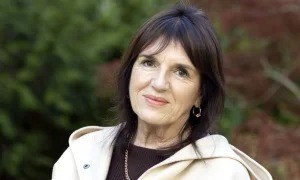
The Stardust inquests, which began on April 25, 2023, were a landmark event for many reasons. They were the result of more than 40 years of campaigning by the families of the 48 people who died in the nightclub fire on February 14, 1981, and became the longest-running hearing of its kind in the history of the State. Before evidence was heard, coroner Dr Myra Cullinane gave relatives an opportunity to personally present a ‘pen portrait’ of those who lost their lives. This was to allow the bereaved paint a picture of their loved ones as individuals, their personality, their hopes and dreams, and in turn allow the jury and the wider public to understand the very human loss the families had experienced. This move ensured the focus of the inquest was not just on establishing the facts of the fire, but on honouring those who died and acknowledging the lasting impact on their families. In a powerful affirmation of the process, the late Marie Kennedy’s sister Michelle said: “Marie has been lost in the smoke and devastation of the Stardust for too long …We are reclaiming her from the darkness and despair and bringing her back into the sunlight where she belongs.”
Dr Cullinane’s assured and empathetic handling of the inquest was praised by many, including solicitor Darragh Macklin, who said the families he represented wanted to express their “sincere gratitude” for “giving them a voice and giving the victims their identity back”. Almost a year after the inquest began, the jury delivered a verdict of unlawful killing in the case of all 48 people who died. There was a standing ovation when Dr Cullinane paid tribute to the jury, saying it had been a “great act of public service”.
This sense of public service is also at the core of Dr Cullinane’s life and career. While the Stardust inquest attracted a great deal of public attention, she says the principles that people saw in action there are applied by all coroners in every inquest. She describes the Coroner’s Service as a service for the living, which helps bereaved families to understand complex material and deal with unanswered questions. For her, no two deaths or no set of circumstances are the same and every time she sits and hears an inquest she acknowledges how important it is for the family involved.
Dr Cullinane previously made history when she became the first female coroner in Cork. As a qualified doctor and barrister, she has the medical and legal training that are seen as important requirements for the job. Born in London, she moved to Dublin at a young age, attending Notre Dame des Missions school in Churchtown. She found the idea of studying medicine interesting and challenging, seeing it as a people-centred career. She completed her medical studies at Trinity College, Dublin, going on to train in paediatrics. During her training she worked at both St Thomas Hospital’ and Great Ormond Street Hospital for Children, where she says dealing with children and their anxious parents may have honed her communications skills and emotional intelligence, qualities which she sought to bring to her role as coroner.
She returned to Dublin while still a hospital doctor, where she considered expanding her professional qualifications. She started a law degree and found that the law was the perfect fit — a different field but still analytical and complementary to medicine. She attended the Kings Inns and was called to the bar in 1994. She moved to Cork in 1996 and when the position of Cork City Coroner was advertised, she saw it as an excellent opportunity to utilise her medical and legal skills. She was appointed in 1999 and remained Cork City Coroner until 2016. It was a demanding and challenging role, in the second busiest Coroner’s district in the country in a metropolitan area with a major tertiary referral hospital, a major maternity hospital and a prison population. As a result she dealt with many varied and sometimes difficult inquests from all over Munster. It was experience which stood her in good stead when she took up her role in the Dublin District Coroner’s Court in 2016.
She sees her role of dealing with the bereaved as an important part of the fabric of society, and cites the words of English statesman and politician William Gladstone as inspiration: “Show me the manner in which a nation cares for its dead and I will measure with mathematical exactness, the tender mercy of its people, their respect for the law of the land and their loyalty to high ideals.”
Dr Cullinane says her work has taught her humility and the importance of showing sensitivity and compassion to families in their dealings with what they may consider the Establishment. Her hope is that a family that comes to the Coroner’s Court has trust in it and goes away with their questions answered and somehow at peace with losing a loved one. “You deal with members of the public in their darkest hour, which is a huge responsibility and an honour.”
Honora ‘Nano’ Nagle (1718-1784), educator, defender of the poor and founder of the Presentation Sisters religious order
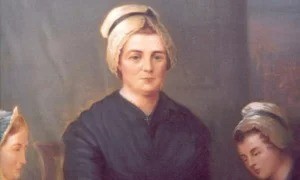
When she arrived in the world in 1718, not much would have been expected of Honora Nagle. She may have born into wealth and privilege but as a woman, opportunities were limited. However, Nano defied not only societal expectations but also ruthless political and legal forces to become a pioneering force in the field of education, championing social justice and equality, and bequeathing an extraordinary legacy to Ireland and the world.
She grew up in Ballygriffin, Co Cork, at a dark and dangerous time in Irish history, when poverty and destitution were rife. The country was in the grip of the Penal Laws, which denied Catholics education, ownership of property, and the right to worship. When she was around ten years old, she was smuggled out of the country to be educated in France with her sister Ann, a journey that was in itself a risky undertaking, and an early exercise in courage.
She spent many years in France, and after her schooling was completed she enjoyed a life mixing with high society in Paris. However, early one morning on her way home from a ball, she witnessed paupers gathering at a church for mass and the contrast between their circumstances and hers pricked her conscience. When she returned to Ireland after the death of her father in 1746, she and her sister went to live with their mother in Dublin, where she could not escape the reality of the poverty, sickness and starvation that surrounded her. She went along with Ann on visits to the poor, and on discovering that her sister had sold a roll of silk Nano had intended to use for dresses, she once again reflected on her direction in life.
After suffering a double loss with the sudden death of Ann and then her mother, Nano was unable to live on her own as an unmarried woman and returned to Ballygriffin to live with her brother David and his wife Mary. Visiting the homes of the poor in the area, she was shocked at their lack of education and religious instruction. She decided to dedicate her life to prayer, returning to Paris to enter a religious order. However, she could not wipe the suffering she had witnessed at home from her mind and after being counselled by a Jesuit priest, she decided to return home and begin her mission of helping the poor.
On her return to Cork, she lived with her brother Joseph and his wife Frances, on Cove Lane (now Douglas Street). In an act of immense bravery, as she faced imprisonment or death if her plans were discovered, she began work on her first school for girls, which was established in 1754. Housed in a mud cabin, it was an inauspicious beginning, but within ten years, aided by an inheritance from her uncle, Nano had established seven schools for boys and girls across the city. At night, her work continued as she visited the poor, traversing the dark and unsafe city by the light of the lamp she carried. She became known as ‘the Lady of the Lantern’ a striking and symbolic image emblematic of her efforts to bring hope to people living in the darkness of poverty and also the guiding light of Christ.
Nano was also a businesswoman, and a shrewd negotiator, who recognised the benefits of collaboration in achieving her goals. In this vein, in 1771 she built a convent for a number of Ursuline Sisters to help continue her work. However, her efforts were frustrated when the ecclesiastical law of enclosure meant they were unable to travel through the city. Nano became determined to set up her own order and on December 24, 1775, she and three others began the preparation for the taking of vows that would lead to the establishment of the Presentation Sisters of the Blessed Virgin Mary. Nano’s tireless efforts eventually took their toll and she died from tuberculosis on April 26, 1784 at the age of 66, having dedicated herself to the service of God through the poor.
Her mission and message continued to spread in the years that followed. While playing an invaluable role in the education of children in Cork and Munster, the Presentation Order also quickly expanded outside the country, establishing communities and networks that spanned continents. The convent schools were an empowering environment for millions of young girls and produced generations of strong and powerful women.
In the spirit of Nano’s innovative vision, the order continues to evolve and look to the future. One of the order’s notable achievements is the impressive transformation of the site of her original convent on Douglas Street into a complex housing Nano’s tomb, the Sisters Graveyard, a museum, chapel, gardens, bookshop and cafés. Nano Nagle Place has become a significant tourist attraction, drawing thousands of visitors a year. It is often described as an oasis in the city, reflecting a deeply spiritual ambience, redolent of the contemplation and prayer which sustained Nano in her work. It has also become a home for community education and social justice initiatives such as the Lantern Project, Men’s Group and Cork Migrant Centre. There is also a small community of Presentation Sisters still in residence at Nano Nagle Place, where they continue the hospitality of their founder and connect with others inspired by her work.
The significant global impact of Nano’s life and work was acknowledged on October 31, 2013, when she was declared Venerable by Pope Francis, another step on the road to canonisation. Her recognition as “a woman of faith, hope, and heroic virtue whose vision and work transformed the lives of very many” was welcomed by the Presentation Sisters. It is remarkable that more than 300 years after her birth, as they prepare to celebrate the 250th anniversary of the founding of the congregation, Nano’s influence is stronger than ever, as those that follow her continue to be a guiding light to those in need.
Dr Naomi Masheti, psychologist and programme director of the Cork Migrant Centre

When Naomi Masheti was growing up in Kenya, her mother was the person people turned to when they needed help. “She managed the community. Even the poorest person, she found a way to empower them. The charity organisations, they never went to the chiefs or the administration, they knew they had to go to my mum, she was the one who made sure that money or support actually went where it was needed.”
That philosophy was very much in evidence when Naomi came to Cork from Kenya in 2001, settling in the suburb of Ballincollig with her young family. It was a new beginning, alive with opportunities but also challenges. In Kenya, she had followed the academic route, like her father, a university professor. She gained a business degree and worked for an oil company, but decided that the corporate world was not for her. Naomi went on to work for the International Red Cross in Sudan, where the immense human suffering that she witnessed changed her whole outlook on what she wanted to do with her life. She saw people struggling for basic needs such as housing and food but she was also inspired by their resilience and how communities mobilised to support themselves.
When Naomi arrived in Ireland, she decided to pursue her dream of studying psychology. The family’s move here was in one sense a homecoming. It was a hectic few years, while she juggled her studies with childcare. Her two sons were in school and her youngest child was only nine months old when she began her degree in UCC; she would go to and from the university’s crèche to breastfeed her infant daughter throughout the day. It was also a fruitful and productive time for Naomi, as she began to forge relationships and supportive networks that would be invaluable in her work. Having witnessed how people survived war and humanitarian disaster, she wanted to move away from the more individual-focused psychology she was studying toward collective responses to psychosocial needs. After she was awarded her degree, she gained another qualification in clinical psychology, before going on to do a PhD on the psychosocial wellbeing of African migrant children, particularly in Ireland. This involved interviewing migrant mothers, who spoke to her about their difficulty accessing services and the lack of support networks. Naomi was able to empathise with the overwhelming uncertainty they felt. “I was a very confident person at home in Kenya, I knew about society, the rules, I knew my friends. And then you come here, and it's like darkness, you are nobody, you have no friends, it's like you have no hope, you don't know what tomorrow is.”
She could also see the situation from the perspective of frontline service providers such as social workers and psychologists, who told her they often felt unprepared and overwhelmed. While she was considering staying in academia as a lecturer, Naomi could also see there was a gap that needed to be filled in terms of supporting migrants and the people who wanted to help them. She began by developing courses on cultural competence for psychologists, while continuing to work with migrant families.
Then came a fortuitous introduction to Sr Jo McCarthy, who had set up the Cork Migrant Centre in 2006. When Naomi visited the centre at Nano Nagle Place, she says she felt the same as when she had studied at UCC — that she had found a home. That home also became a safe space for others. Naomi began setting up programmes for people from direct provision centres around Cork, covering everything from parenting to stress management. It was often emotional — Naomi recalls how they all cried as women shared their experiences at coffee mornings. There were also organised activities for young people, from dance and music to visual media. In recent years, services have moved more towards employment and education; the women at those coffee mornings made thousands of masks for people in direct provision centres during Covid and have gone on to set up their own social enterprise, catering for events. For Naomi, it is a huge source of pride: “I love that the women we started with that cried for six months are now movers and shakers.” Young people are helped with their homework and studies, and gone on to further education; many people who have gone through the centre have come back to mentor others.
Throughout her work and the development of the centre, Naomi’s credo has been to “always follow the need, and then respond to that”. In the centre’s approach to education and empowerment, she sees the obvious resonances with the work of Nano Nagle herself. “We are doing what Nano Nagle would have been doing if she was alive today, trying to help marginalised people in difficult circumstances.”
Cork is very much home for Naomi and she has built a supportive community of her own here, but she still has a strong connection to Kenya. Her three grown-up children, who all live in Cork, joke with her about how she has still held on to her accent. “If I’m going to be Irish/Kenyan, there has to be some Kenyan,” she laughs.
As well as her work as programme director of Cork Migrant Centre, Naomi continues to work closely with UCC, doing advocacy work and teaching on international development modules, and she loves working in the ‘triangle’ of academia, research and community work. “What I'm teaching is very much what I'm doing.”
According to Naomi, what she is teaching is what she is doing. Key to her approach and achievements is seeing a way around the many obstacles that have arisen. “Don’t accept a no. If there’s a block, find a way to go around it, because a lot of the time we block ourselves.”
Dr Patricia Sheahan, consultant palliative care physician and head of palliative care at University Hospital Kerry
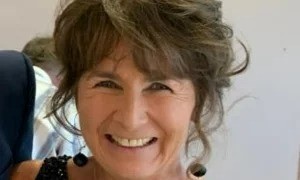
When Dr Patricia Sheahan was named Kerry Person of the Year in 2022, there was an outpouring of support and gratitude from the relatives of those she had cared for in her role as a palliative care consultant at University Hospital Kerry, who spoke of how she had gone above and beyond the call of duty to give them some comfort in their darkest days. Patricia has made it her life’s work to give people the dignity and compassion they deserve in their lives and deaths, leading the way in delivering one of the best palliative care services in the country.
That desire to help others was nurtured in her hometown of Listowel in Co Kerry, where growing up she saw at first-hand the contribution her parents and family made to their community. Her father was a vet, and she recalls going on farm visits with him and how he would make a point of staying on to chat with people who he knew had called him out because they were lonely. Her mother was also a big influence, running the veterinary practice and raising a family before going on to train as a social worker and counsellor, later becoming the youngest lady captain of Ballybunion Golf Club.
The second of four girls, Patricia was schooled by the Presentation Sisters in Listowel, and was spurred on to study medicine when her father underwent heart surgery in the year she sat her Leaving Certificate. He was also a director of Listowel Race Company and reflecting the interests of her ‘horse-mad’ family, Patricia considered becoming a racecourse doctor when she graduated from her studies in UCD. However, shortly after she qualified, her grandmother was diagnosed with cancer; Patricia returned to help care for her and she died at home. This and the wish to give others a similar experience cemented her interest in pursuing palliative care medicine.
After a stint in St Luke’s Hospital in Dublin, she went on to work in top hospitals in London, including St Joseph’s Hospice, St John and St Ellzabeth Hospital and the Chelsea and Westminster. The latter was a particularly formative experience for her, as she was there in the 1990s when the AIDS crisis was at its height and the hospital was at the forefront of caring for people with HIV. She was involved in the design of a new palliative care unit there, and recalls the stigma faced by many patients who came from Ireland and abroad to seek treatment at the hospital. She also witnessed the arrival of revolutionary triple therapy treatment which allowed people to be well and live with HIV.
Having gained valuable experience in the field, Patricia returned to Ireland, working in Belfast City Hospital, and with the Marie Curie Centre, going on to become the first consultant in palliative medicine in the Ulster Hospital, Dundonald. Her home place came calling in 2001, when she was appointed to her role as a consultant in palliative medicine in what was then Tralee General Hospital, now University Hospital Kerry. Since then, Patricia has been instrumental in developing a fully integrated palliative care service for the people of Kerry, alongside Kerry Hospice Foundation. She has described how she returned to a county with fantastic goodwill and volunteers who were willing to put in the work to improve services for people living with cancer and terminal illness. There have been many challenges in delivering a palliative care service that is a standard bearer in the health service but she has faced them with determination and resolve, recognising the importance of bringing everyone along on the journey. The invaluable contribution of the community in particular was recognised when the sod for the building of the Kerry Specialist Palliative Care Unit was turned by chairman of the Kerry Hospice fundraisers, Ted Moynihan, in December 2015; he also officially opened the building in September 2017.
Since then, Patricia and her team have created a warm and welcoming refuge that has made an immeasurable difference to patients and families throughout Kerry. The service has a multi-disciplinary team encompassing everything from physiotherapy to catering and chaplaincy. Patients can access various services — medical and pastoral — in the day unit, while the 15-bed inpatient unit provides symptom control, rehabilitation and end-of-life care. There is also a home care team that provides a seven-day service, along with two advanced nurse practitioners that go into nursing homes and community hospitals to upskill staff so frail and elderly patients don’t have to attend the emergency department unnecessarily. There is a palpable sense of common purpose in the delivery of this comprehensive service and Patricia’s relentless energy and enthusiasm propels it all forward. She says her nature is always to be thinking ahead, as there is always room for improvement. Her work continues with the commencement of a new phase of development which will add five more beds to the unit.
An active life helps her cope with the challenges of her job and swimming and horse-riding are among her many interests. Her connection to Kerry and its people underpins much of what she does, and one of her many proud achievements is becoming the first female director of Listowel Race Company. She says her greatest blessing is her family — her four sons and husband who make her life ‘fabulous’ — and she embraces the philosophy that we should live in the moment. “Life can change so fast and none of us are promised tomorrow. But people’s resilience, how they cope with the different challenges that life throws at them, that will always amaze me.”