In This Section
- Home
- About the EDI Office
- News & Events
- News Archive
- Events Archive
- Newsletters
- EDIB Calendar
- Publications
- EDI Training Hub
- UCC Equality, Diversity and Inclusion Framework and Action Plan 2025-2028
- Governance and Oversight Committees
- Public Sector Duty
- Age-Friendly UCC
- Athena Swan
- Race Equality Action Plan
- LGBT+ Action Plan
- Accenture's Women on Walls
- Speak Out
- Gender Identity and Expression
- Funded Projects
- Staff Networks
- ESVH Hub
- University of Sanctuary
- EDI Data
Dr Myra Cullinane: Doctor, Barrister and Senior Dublin District Coroner, who oversaw the Stardust Inquests
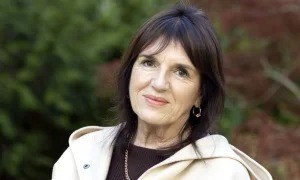
The Stardust inquests, which began on April 25, 2023, were a landmark event for many reasons. They were the result of more than 40 years of campaigning by the families of the 48 people who died in the nightclub fire on February 14, 1981, and became the longest-running hearing of its kind in the history of the State. Before evidence was heard, coroner Dr Myra Cullinane gave relatives an opportunity to personally present a ‘pen portrait’ of those who lost their lives. This was to allow the bereaved paint a picture of their loved ones as individuals, their personality, their hopes and dreams, and in turn allow the jury and the wider public to understand the very human loss the families had experienced. This move ensured the focus of the inquest was not just on establishing the facts of the fire, but on honouring those who died and acknowledging the lasting impact on their families. In a powerful affirmation of the process, the late Marie Kennedy’s sister Michelle said: “Marie has been lost in the smoke and devastation of the Stardust for too long …We are reclaiming her from the darkness and despair and bringing her back into the sunlight where she belongs.”
Dr Cullinane’s assured and empathetic handling of the inquest was praised by many, including solicitor Darragh Macklin, who said the families he represented wanted to express their “sincere gratitude” for “giving them a voice and giving the victims their identity back”. Almost a year after the inquest began, the jury delivered a verdict of unlawful killing in the case of all 48 people who died. There was a standing ovation when Dr Cullinane paid tribute to the jury, saying it had been a “great act of public service”.
This sense of public service is also at the core of Dr Cullinane’s life and career. While the Stardust inquest attracted a great deal of public attention, she says the principles that people saw in action there are applied by all coroners in every inquest. She describes the Coroner’s Service as a service for the living, which helps bereaved families to understand complex material and deal with unanswered questions. For her, no two deaths or no set of circumstances are the same and every time she sits and hears an inquest she acknowledges how important it is for the family involved.
Dr Cullinane previously made history when she became the first female coroner in Cork. As a qualified doctor and barrister, she has the medical and legal training that are seen as important requirements for the job. Born in London, she moved to Dublin at a young age, attending Notre Dame des Missions school in Churchtown. She found the idea of studying medicine interesting and challenging, seeing it as a people-centred career. She completed her medical studies at Trinity College, Dublin, going on to train in paediatrics. During her training she worked at both St Thomas Hospital’ and Great Ormond Street Hospital for Children, where she says dealing with children and their anxious parents may have honed her communications skills and emotional intelligence, qualities which she sought to bring to her role as coroner.
She returned to Dublin while still a hospital doctor, where she considered expanding her professional qualifications. She started a law degree and found that the law was the perfect fit — a different field but still analytical and complementary to medicine. She attended the Kings Inns and was called to the bar in 1994. She moved to Cork in 1996 and when the position of Cork City Coroner was advertised, she saw it as an excellent opportunity to utilise her medical and legal skills. She was appointed in 1999 and remained Cork City Coroner until 2016. It was a demanding and challenging role, in the second busiest Coroner’s district in the country in a metropolitan area with a major tertiary referral hospital, a major maternity hospital and a prison population. As a result she dealt with many varied and sometimes difficult inquests from all over Munster. It was experience which stood her in good stead when she took up her role in the Dublin District Coroner’s Court in 2016.
She sees her role of dealing with the bereaved as an important part of the fabric of society, and cites the words of English statesman and politician William Gladstone as inspiration: “Show me the manner in which a nation cares for its dead and I will measure with mathematical exactness, the tender mercy of its people, their respect for the law of the land and their loyalty to high ideals.”
Dr Cullinane says her work has taught her humility and the importance of showing sensitivity and compassion to families in their dealings with what they may consider the Establishment. Her hope is that a family that comes to the Coroner’s Court has trust in it and goes away with their questions answered and somehow at peace with losing a loved one. “You deal with members of the public in their darkest hour, which is a huge responsibility and an honour.”