In This Section
- Home
- About the EDI Office
- News & Events
- News Archive
- Events Archive
- Newsletters
- EDIB Calendar
- Publications
- EDI Training Hub
- UCC Equality, Diversity and Inclusion Framework and Action Plan 2025-2028
- Governance and Oversight Committees
- Public Sector Duty
- Age-Friendly UCC
- Athena Swan
- Race Equality Action Plan
- LGBT+ Action Plan
- Accenture's Women on Walls
- Speak Out
- Gender Identity and Expression
- Funded Projects
- Staff Networks
- ESVH Hub
- University of Sanctuary
- EDI Data
Brigid Carmody, Co-ordinator of the Cork Traveller Women’s Network
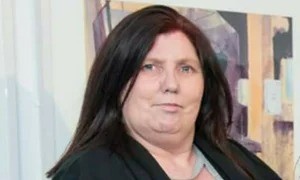
Brigid Carmody saw activism in action from an early age. Her aunt Mary O’Sullivan was a founding member of the Cork Traveller Women’s Network (CTWN) and Brigid began going to meetings as a teenager. She would take part in classes, help with paperwork, or just sit and listen, absorbing the issues that were affecting Traveller women in Cork. Decades later, as co-ordinator of the network, Brigid continues to advocate for her community, giving a voice to Traveller women while creating a greater understanding and appreciation of Traveller culture in Irish society.
Driving Brigid on is a desire to tackle the pervasive discrimination experienced by Travellers, something that blighted her own schooling and which she was determined to address when it came to her own seven children, who would tell her of the stigma they felt for being part of the Traveller community. “It was so they didn't have to feel like they had to hide who they are.” Her legacy continues with her own family. “I love that my own children, from when they were babies, were brought to meetings with me.”
One of the significant projects undertaken by the CTWN was the creation of a barrel-top wagon for the Cork 2005 European Capital of Culture, which is now part of a permanent public display on Traveller culture at Cork Public Museum, the only Traveller-curated exhibition of its kind. The wagon is a symbol of pride for Travellers and a reminder of a time when the community was free to travel. It was a pioneering project, with two women, Brigid and her aunt Mary, the driving forces. As she recalls: “We were managing men that were working on the project, including my husband; I would be arguing with him at the kitchen table about the colour of the front door of the wagon. We were in charge — we had the chequebook, it was our project.” The contribution of women was underlined when Brigid’s daughter Amanda, who was still in primary school, spoke at the launch event, a particularly proud moment for the family.
In her role as co-ordinator of CTWN, Bridget heads a small team of staff who work in partnership with volunteers across the community. The network is based at Triskel Arts Centre, a unique collaboration which enables access to the arts for the Traveller community and also gives a platform to their voices.
The network also provides services to enhance the health and wellbeing of the Traveller community. Accommodation takes up much of Brigid’s time, particularly ongoing issues at the Spring Lane site in Cork. The network also manages Meelagh Traveller Community Development Project in Mahon, and it has an outreach development worker based on the halting site there.
Bridget has one son and six daughters, including 19-year-old triplets, and lives in a Traveller group housing scheme on Kinsale Road. She attended Turner’s Cross primary school, and her family has long-established links to the area; her sister still lives in their grandfather’s house in Ballyphehane.
As well as her role as an advocate for her community, Brigid and the network have also been to the forefront in recording and celebrating the unique Traveller heritage. “We are losing the traditions and cultures that we are very proud of and want our children to be proud of,” says Brigid.
The network has been active in trying to keep Traveller culture alive through cultural projects such as Missling on the Tobar, which mapped a network of former Traveller campsites in and around Cork city from nomadic times, and collected soil from the areas as a symbolic act of reclamation.
The network also has its eye on future generations, embracing new technology to tell their story, working with Cork City Council on a virtual reality experience celebrating Traveller culture. A VR headset immerses participants in Traveller lives, including a performance from 17-year-old singer Rosie McCarthy and Martin and Richie McCarthy discussing horse-keeping on the northside of the city.
In March 2017, Brigid was in the Dáil when the Government formally recognised Travellers as an ethnic group and the then Taoiseach Enda Kenny said: “Our Traveller Community is an integral part of our society for over [a millennium], with their own distinct identity - a people within our people”.
At the time, it was seen as a historic step towards equality and inclusion but much work remains to be done on both fronts, says Brigid. While there is more awareness of discrimination and efforts are being made to tackle it, disinformation about Travellers continues to spread, exacerbated by social media. She is a firm believer in dialogue as a means of tackling such issues. The network delivers Traveller Culture Awareness Training which Brigid says has been valuable in challenging negative stereotypes, although she cautions against such initiatives becoming box-ticking exercises.
In her work, she says it can feel like there is always a battle, but along with the many challenges and frustrations, there are the small achievements that mean a great deal, such as getting a call from someone in the community thanking her for her help. “I love my job and the women I work with, especially the volunteers who are always at the end of the phone. We have worked damn hard to get the Cork Traveller Women's Network to where it is now. And that would be one of my achievements — that we are a respected Traveller-led organisation.”