

News
Launch of the TARA Project Phase 2 and 3 Report
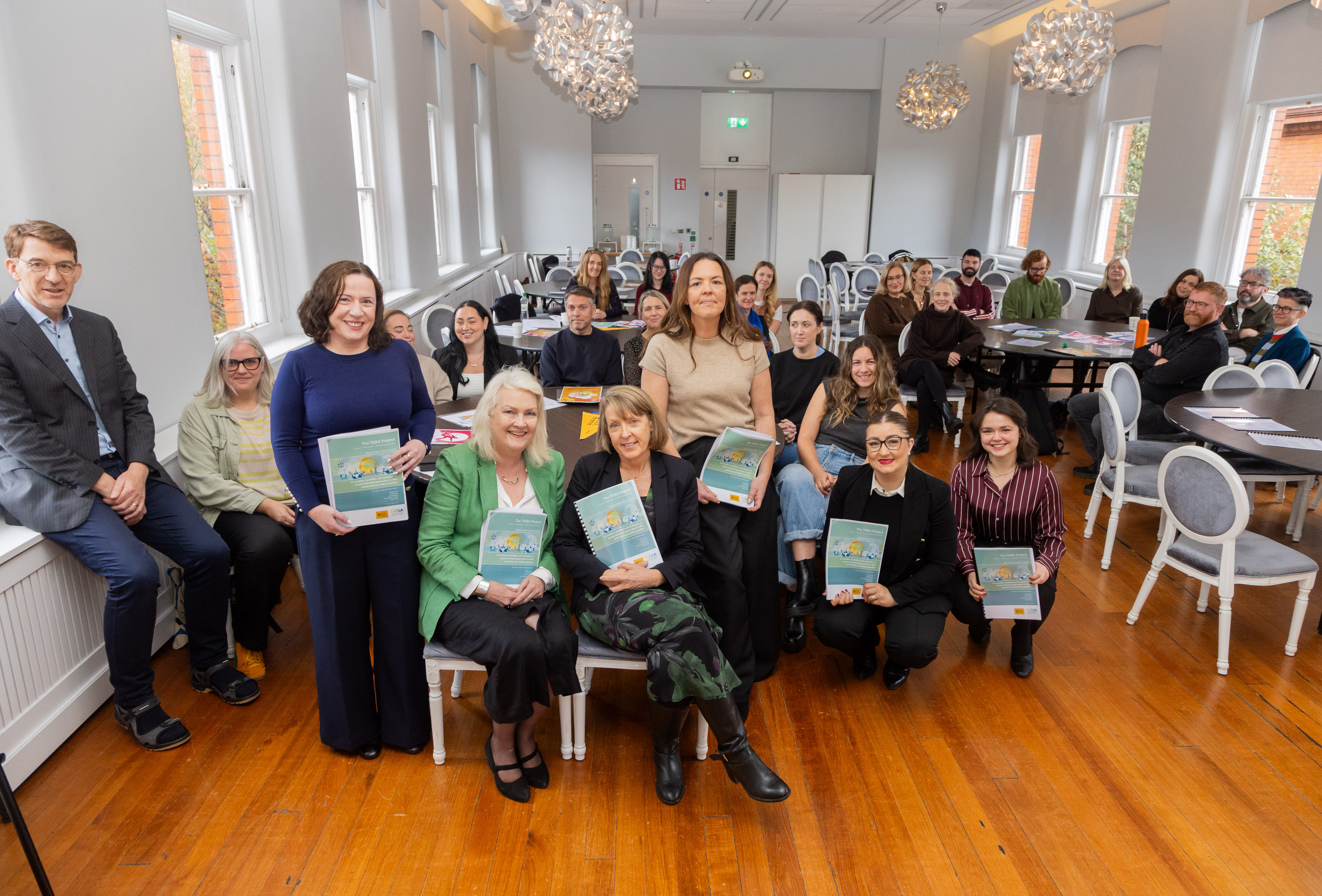
The TARA Project Research Report (Phases 2 and 3), Co-creation, feasibility and evaluation of trauma-informed approaches in child protection and welfare, was launched in Dublin on 23 October 2026. The full report is available to read at: TARA Project Phase 2 and 3 Report.
The event celebrated four years of research partnership between Tusla, Child and Family Agency, and University College Cork (UCC), highlighting the development and evaluation of practical approaches to support trauma-informed practice in child protection and welfare services.
The TARA (Trauma, Attachment and Resilience into Action) Project was delivered between 2022 and 2026. Its overarching aim was to support the integration of trauma-informed practices within child protection and welfare services across the former Dublin South Central Integrated Service Area of Tusla, now represented by the Dublin South City Network and the Kildare North Dublin West Network.
Project Phases
- Phase 1: Workforce Capacity Building (2022-2023) focused on workforce training and development through a UCC postgraduate programme in trauma-informed practice, supporting a shared understanding and approach, and produced champions.
- Phase 2: Co-Creation and Feasibility (2024-2025) focused on collaboratively developing and testing trauma-informed approaches. Four practice clusters were established, involving 31 participants from child protection and welfare services. The clusters produced six high-quality, workforce-endorsed practice approaches, which are publicly available at Tara Project Practice Outputs.
- Phase 3: Evaluation and Learning (2025-2026) examined the implementation and perceived impact of the TARA Project over its four-year duration, exploring how trauma-informed approaches influenced practice, service development, and organisational culture.
Phases 2 and 3 comprised three interconnected studies: a qualitative study exploring the co-creation process, a feasibility study examining the feasibility and acceptability of the approaches among frontline practitioners, and a process evaluation exploring stakeholder experiences of the project and its impact on practice.
Key findings
- Practitioner Engagement and Co-Production: practitioner-led innovation can generate practical, contextually relevant resources that support trauma-informed, relational, and child-centred practice.
- Development of a Trauma-Informed Culture: the project contributed to a significant shift towards a more trauma-informed culture within the research site.
- Workforce Capacity Building: evidence-based trauma training strengthened knowledge and supported the transition of learning into practice.
- Impact of the Co-Created Approaches: practical, accessible approaches were more readily embedded into practice, but implementation success also depended on organisational supports including protected time and leadership support.
- Importance of Relationships and Collaboration: Trusted relationships, collaborative working, reflective supervision, and psychological safety were identified as important in supporting trauma-informed practice.
- Organisational Challenges and Barriers: High workloads, staffing pressures, competing priorities, and organisational reform acted as barriers to implementation and momentum.
- Sustainability and System-Level Change: Sustaining trauma-informed practice requires consistent organisational support and a coordinated, sector-wide approach.