News
Grand Challenges
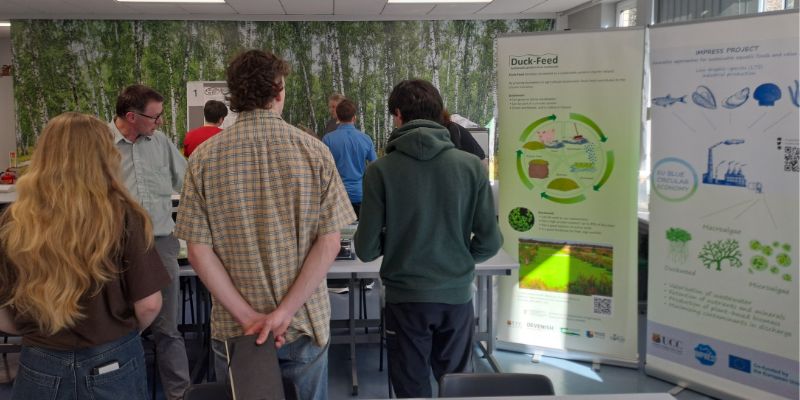
As the global push for sustainable practices accelerates, University College Cork (UCC) successfully hosted an immersive educational event on March 19, 2026. Designed to introduce the next generation of scientists to the future of sustainability, the interactive workshop brought together approximately 115 first-year students from the biological and chemical sciences programmes.
Part of the “Grand Challenges in Biological, Earth and Environmental Sciences” module, the event focused on transitioning scientific theory into real-world environmental solutions. Working in collaborative groups of six to ten, students explored core pillars of modern environmental innovation: The “circular economy” and the critical practice of “waste valorisation”.
A major focal point of the workshop was the innovative valorisation of different agricultural processing wastewaters. Facilitators guided the students through the environmental and economic opportunities associated with transforming what is traditionally viewed as industrial waste into novel, high-value commercial products as well as duckweed biomass as a feed component. By examining these processes, students gained firsthand insight into how industries can close the loop, generate new bio-based materials and reduce environmental impact.
The response from the student cohort was overwhelmingly positive and marked by high levels of critical thinking. Moving beyond the foundational chemistry and biology of the processes, these young scientists probed deeply into the practical, real-world applications of these technologies. They posed pertinent, high-level questions regarding the circular processes demonstrated, the complex regulatory frameworks governing waste transformation, and the rigorous biological safety standards required.
“The positive engagement of students with the circular economy; the perception of opportunities rather than problems, bodes well for the future,” said Professor Marcel Jansen, representing the Duck-Feed and IMPRESS projects at UCC.
This initiative is part of these projects’ efforts to champion educational outreach, which is a vital component of its mission, recognizing that today’s youth are tomorrow’s leaders in sustainable development, environmental policy, and bio-chemical engineering.