News & Events
Meet Professor Michael Sack, New Director of the CRF-UCC
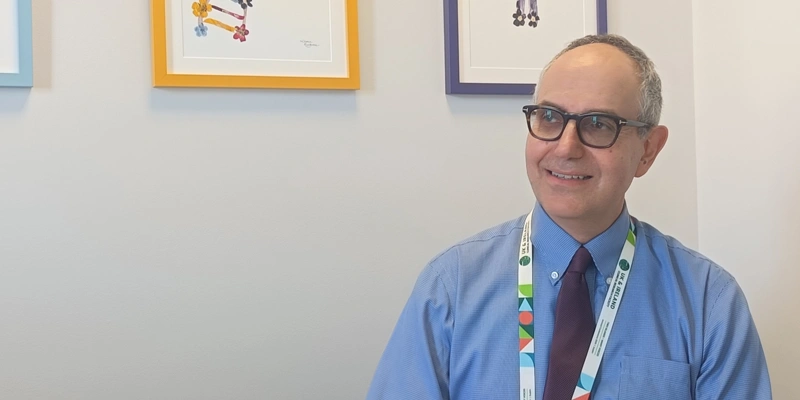
The Clinical Research Facility – University College Cork (CRF-UCC), is delighted to welcome Professor Michael Sack as its new Director. Michael brings almost three decades of clinical, academic and leadership experience spanning no fewer than three continents, as well as a clear vision for the future of the CRF.
We sat down with him to chat about his roots, his career and his ambition for the CRF.
A Journey Across Continents
Michael's path to Cork began in South Africa, where he was born, educated, and completed his medical degree at the University of the Witwatersrand (1983–1988), followed by internship and cardiology training in Johannesburg. In 1991 he moved to the United States, completing his residency at Georgetown University Hospital and a cardiology fellowship at Washington University Medical Centre in St. Louis, where he first developed his research interest in the role of metabolism and mitochondrial biology in cardiovascular disease.
Academic appointments followed on two more continents: as Senior Lecturer at University College London and Middlesex Hospital and then as Assistant and Associate Professor of Medicine at the University of Cape Town, where he continued to build his research profile.
From 2003, Michael spent over two decades at the U.S. National Institutes of Health, first as a tenure-track investigator in the Translational Medicine Branch of the National Heart, Lung, and Blood Institute (NHLBI) and from 2012 as Chief of the NHLBI's Division of Cardiology. During his time at the helm of the Cardiology Division, Michael established and led a wide-ranging collaborative network of investigators spanning multiple NIH institutes and clinical disciplines.
Having lived and worked across South Africa, the UK and the US, Michael says his international background has made the move to Ireland an easier adjustment than it might otherwise have been as he's used to learning new systems and finding his footing in new places.
Why Cork, Why Now?
Michael describes his move to Ireland as both a professional and a personal journey. Professionally, he was drawn by the scale and ambition of UCC and Cork University Hospital, as well as the opportunity presented by the Clinical Research Facility itself. Together, these offered a chance to combine broad clinical impact with his research interests in inflammation and chronic disease. He is particularly keen to attract grant funding focused on the role of inflammation in chronic disease and diet, which he sees as central to a vast range of conditions. He is excited by the opportunity to foster further research in the gut microbiome, building on the work of APC Microbiome at UCC, a recognised world leader in the field.
His decision was also shaped by broader concerns about the political and scientific climate in the United States. Those concerns first crystallised around climate change denial, an issue close to home given his wife's work in ecology. The more he read and learned, he says, the stronger the pull towards a change.
Michael is also an avid reader and has been getting to grips with his new home through the work of Irish writers and historians. He cites several favourites, from Niall Williams' This Is Happiness to Fintan O’Toole’s We Don't Know Ourselves, exploring topics ranging from Irish history and the role of the Church to the broader story of where the country has come from and where it may be headed. He has also been struck by the parallels between Ireland and South Africa, particularly in relation to the North of Ireland. For further insight into the island’s complex past, he points to Philip Stephens’ These Divided Isles which examines the long and often troubled history of Ireland and its relationship with the United Kingdom.
International Lessons
One of the things Michael is most excited about is bringing lessons learned from the NIH system to Ireland and exploring how successful approaches can be adapted for the Irish context. He notes that a deep familiarity with the NIH enabled research and funding processes to move quickly. Part of his ambition now is to help build that same institutional fluency at UCC.
Comparing the two systems, Michael has observed that clinicians and academics in Ireland often have less protected time for research than their counterparts elsewhere. While this creates a unique challenge, shaped by both resource constraints and culture, he believes Ireland's biomedical research base is exceptionally strong. He sees significant opportunities to strengthen collaboration between disciplines, institutions and healthcare settings.
A Vision for the CRF
Michael is candid about both the opportunities and challenges ahead. The CRF, he notes, already has all the core components of a strong clinical research infrastructure. However, its people are stretched thin, and building capacity in a sustainable way is a priority. As he sees it, there is a risk in not investing in growth. Without expanding the facility’s ability to take on more studies, it becomes harder to develop the resources and infrastructure needed to support research over the long term. The demand is there, the challenge now is ensuring the capacity exists to meet it.
The role, he says, is as much about stakeholder management as it is about research management. A key part of the job is engaging with a large and diverse group of investigators and navigating the wider UCC ecosystem, so the University can move forward collaboratively rather than in silos.
Looking ahead, Michael is working with the team on a new strategic direction for the CRF. Reflecting on research systems internationally, he points to the UK model, where the Clinical Research Facility, Trials Unit and Institute typically operate as distinct entities. He believes there are opportunities to address some of the structural gaps that can emerge within Ireland's more integrated approach. His priorities for the CRF include:
- Facilitating expertise to improve success rates in grant applications.
- Supporting career development for researchers and clinicians.
- Expanding physical infrastructure to enable more studies to run at UCC and its partner HSE hospitals.
- Reducing barriers to set-up for clinical studies.
- Balancing academic and commercial research, which he sees as complementary rather than competing priorities.
Outside the Office
Michael is married with two grown children. An enthusiastic hiker, he is already exploring Ireland on foot and looking into local walking and hiking clubs. While he is keen to make the most of the country's beautiful landscape, finding the time can sometimes be a challenge.
And finally, the essential Cork stout-based question: Guinness, Murphy's, or Beamish? Michael laughs, noting that he has already been told the "correct" answer is the local favourite, Beamish. However, as someone with a more savoury palate, he is making the controversial choice to stick with Guinness.
Welcome to Cork, Michael. The CRF-UCC team looks forward to writing the next chapter of the CRF’s story together.