
Centre for Health & Diet Research
Established in 2008 with HRB funding, the Centre for Health & Diet Research (CHDR) was a collaborative research entity coordinated by University College Cork (UCC), focusing on public health nutrition, obesity, and diabetes prevention.
It provides high-quality evidence to guide Irish public health policy through research clusters involving partners like. The CHDR remains active in University College Cork and is the leading Centre Irish transdisciplinary public health nutrition and nutrition policy research.
Spanning two decades, it translates foundational public health nutrition evidence into practice through local, national, and European networks. Impacting obesity strategies, fiscal measures, and urban governance, it addresses evolving population diet-related health needs with system-level advocacy. Since 2008, the CHDR has evolved from generating evidence to leading food policy research and advocacy, recognising that individual behaviour change alone is insufficient. Its work focuses on upstream, structural determinants of diet, including policy, retail, and local food systems.
Over nearly two decades, CHDR has driven a transition in Ireland from descriptive nutrition epidemiology towards systemic policy engagement. By generating national dietary evidence, quantifying the economic costs of obesity, benchmarking policy and industry performance, and supporting regional governance innovation, CHDR has helped reshape Ireland’s food environment.
Through sustained engagement with policymakers and the production of independent, policy-relevant evidence, CHDR has strengthened accountability and embedded evidence-based decision-making within national systems. Its consistent citation in health and fiscal policy documents reflects institutional leadership and the successful integration of academic research into state action addressing the upstream determinants of population health.
| Objectives |
|---|
The primary objective is to generate high-quality evidence that informs public health policy and closes gaps in nutrition and food policy. Under Professor Ivan Perry’s leadership, CHDR built a robust evidence base on lifecourse obesity and dietary patterns, informing key national initiatives including the 2010 Cardiovascular Disease Strategy, the 2016–2025 National Obesity Policy, the 2016 Salt and Health: Review of the Scientific Evidence and Recommendations for Public Policy in Ireland and the 2018 Sugar-Sweetened Drinks Tax.
CHDR has tracked changing nutrition trends and worked with government and key stakeholders highlighting the structural drivers of inequality, shifting the focus from individual behaviour change to systemic reform.
| Key Actions |
|---|
Since 2008, research from the Centre for Health and Diet Research (CHDR) at University College Cork has informed national public health nutrition policy, fiscal decision-making, and governance. This work has translated epidemiological evidence into policy interventions and accountability mechanisms shaping Ireland’s food environment. A key contribution was leading the nutrition component of SLAN 2007, Ireland’s largest health and lifestyle survey, which provided the evidence base for revising the Irish Food Pyramid and strengthening national dietary guidance.
Subsequent research using the Mitchelstown Cohort Study identified dietary drivers of improved population blood pressure, highlighting the role of salt reduction. These findings supported policy advocacy for food reformulation, culminating in CHDR’s lead role in developing the 2021–2025 Roadmap for Food Reformulation in Ireland, strengthening national and European approaches to salt reduction.
The 2012 report The Cost of Overweight and Obesity on the Island of Ireland (https://www.safefood.net/professional/research/research-projects/the-cost-of-overweight-and-obesity-on-the-island-o) estimated that in 2009 the combined direct and indirect costs reached €1.13 billion in Ireland and €510 million in Northern Ireland. By quantifying this burden, the report reframed obesity as an economic issue, strengthening the case for upstream policy action.
| National and European Benchmarking |
|---|
A distinctive CHDR contribution has been the development of accountability mechanisms to track government and industry performance. The Food Environment Policy Index (Food-EPI) Ireland (2020) benchmarked national policies against international best practice, identifying key gaps and priorities. This work was strengthened through contributions to the JPI DEDIPAC (https://www.healthydietforhealthylife.eu/project/dedipac) and JPI PEN (https://www.jpi-pen.eu/) networks, enabling cross-country collaboration and positioning Ireland within European food policy debates. A second Food-EPI iteration is now underway.
CHDR has shaped major policy areas:
- Cardiovascular Disease: With costs of up to €1.7bn annually, CHDR research informed the 2010 CVD Strategy. More recently, Ivan Perry led an Irish Heart Foundation position paper on primary prevention, advancing national policy. (Irish Heart Primary Prevention of Cardiovascular Disease Report Launched - Irish Heart)
- Salt Reduction: Research on salt in processed foods and related policy modelling contributed to reduced population salt intake, improving blood pressure levels and lowering the burden of cardiovascular disease.
| Key Developments |
|---|
- Identifying Policy Gaps:
National benchmarking studies on obesity prevalence and dietary intake shaped public and political discourse and informed the National Obesity Policy and Action Plan. - Policy Influence:
Food-EPI Ireland strengthened cross-sectoral alignment and was cited in the Report of the Commission on Taxation and Welfare, informing fiscal planning on health-harming products. Earlier economic analyses—The Cost of Overweight and Obesity on the Island of Ireland (2012) and Lifetime Costs of Childhood Obesity (2017)—reinforced the economic case for prevention and were presented at an EU Council of Health Ministers meeting. - Evaluation and Accountability:
Conducted the mid-term review of the National Obesity Policy and developed a monitoring scorecard for the Department of Health, advancing structured policy accountability. - International and Regional Scaling:
Engagement with European initiatives (e.g. JPI DEDIPAC, JPI PEN, Joint Action BestReMaP, Joint Action PreventNCD) embedding Irish data in harmonised frameworks, strengthening comparability and policy relevance. - Baseline Evidence:
The Cork Children’s Lifestyle Study (CCLaS) provided key data on sugar-sweetened beverage consumption, supporting the introduction of the 2018 Sugar-Sweetened Drinks Tax. - Regional Scaling:
FEAST and FOODPATH findings informed the Cork Healthy and Sustainable Food Policy, offering a replicable model for urban food governance.

| Current Active Projects |
|---|
| Food-Frames: https://www.food-frames.eu/ ERA4Health FOODPATH: https://www.ucc.ie/en/foodpath/ourresearch/ Horizon Europe FEAST: www.feast2030.eu JA PreventNCD: https://www.preventncd.eu/ |


The FOOD-FRAMES consortium brings internationally researchers with multidisciplinary expertise together to assess Europe’s physical and digital Food Information Environment from exposure-response analyses and stakeholder perceptions, to legal and policy frameworks.
Visit https://www.food-frames.eu/.
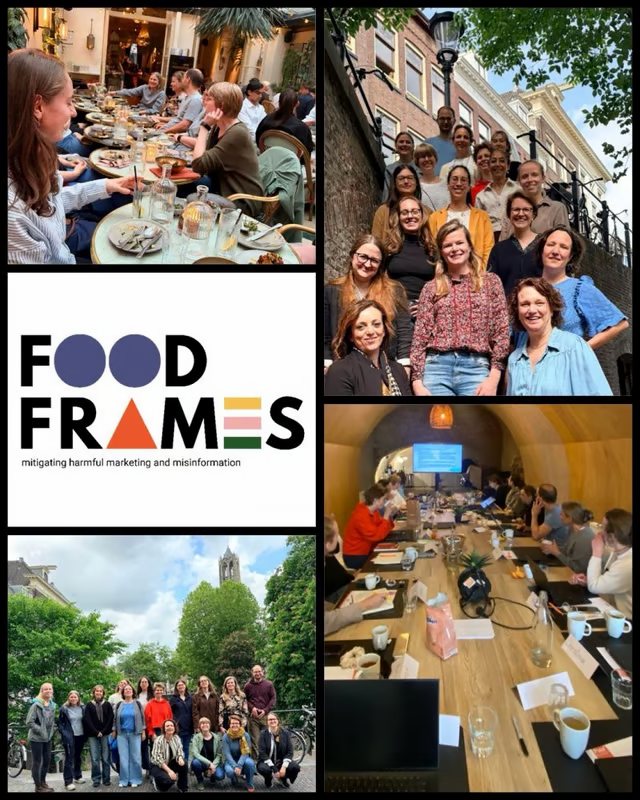
The consortium consists of 10 partners (including 8 European universities). Prof Janas Harrington, University College Cork takes the lead on Work Package 3 – System-dynamics and co-creating solutions.
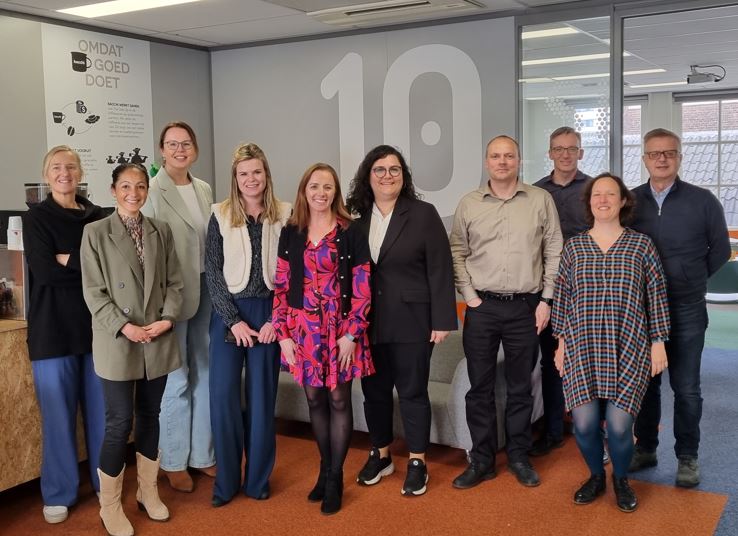
FOODPATH is a consortium of researchers from universities and research institutes in Belgium, Ireland, Italy, the Netherlands, Poland, and Türkiye.
Visit https://www.ucc.ie/en/foodpath/ to find out more.
Researchers have different backgrounds and expertise, but share a common interest in understanding why some communities and groups have access to healthy and sustainable diets, while others don’t.
UCC is coordinating the FOODPATH Consortium, managing all milestones and deliverables and is lead on Workpackage 3.
The team includes Dr Janas Harrington, Margaret Steel and Shannen Hussey.

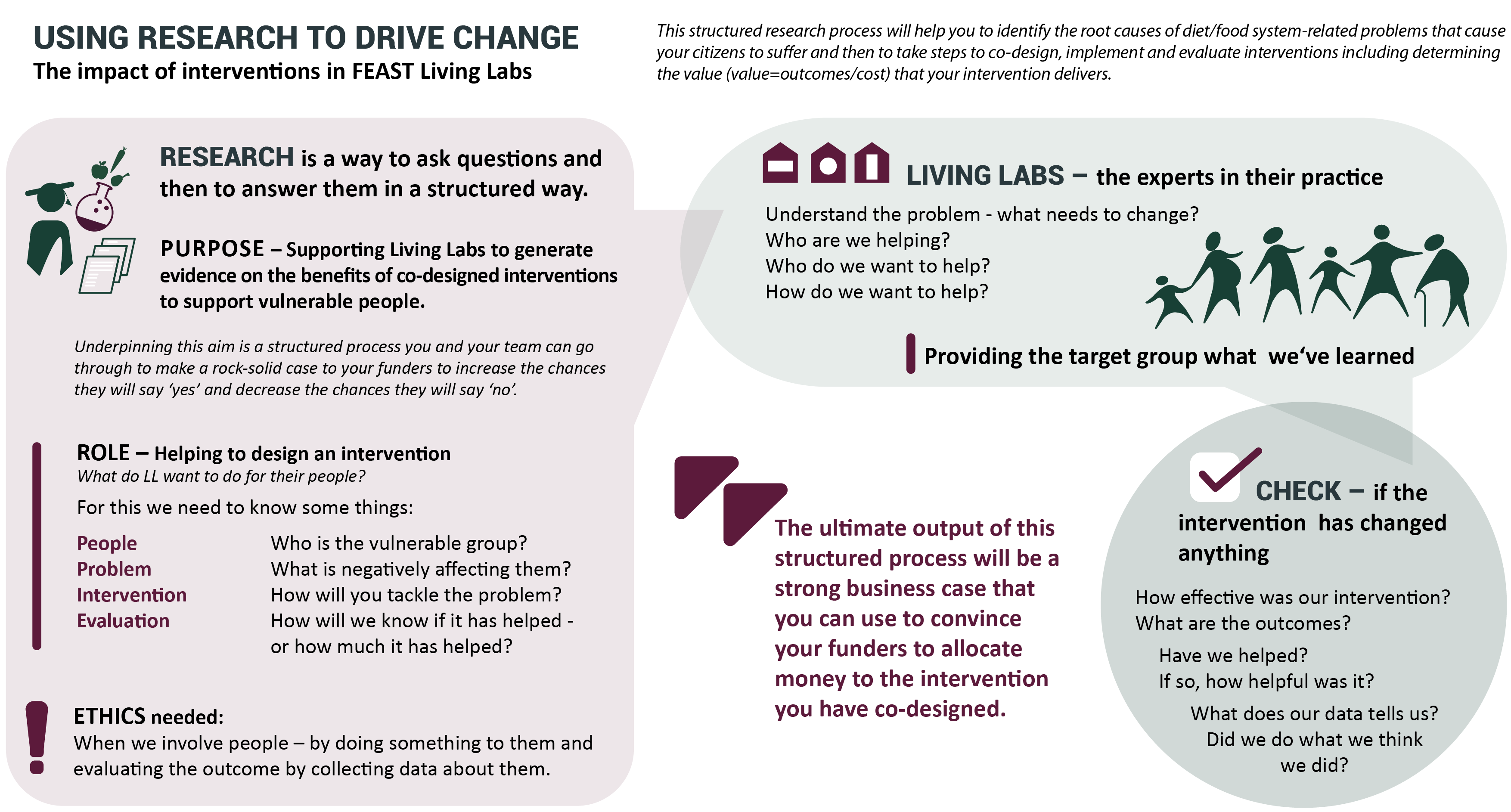
A Horizon Europe funded project, FEAST aims to see every person in Europe eating a healthier and more sustainable diet. The consortium aims to achieve this goal by advancing the state of the art in research and innovation by bringing together different disciplines across the food system to co-create novel, practical and scalable community-based, technology-based and policy-based solutions.

FEAST is a large consortium of 35 partners, where nearly 200 people are involved directly or indirectly to share best practices, resolve challenges, and embrace success in the European food system.
Visit https://feast2030.eu/ to find out more.
Here at UCC, PI Janas Harrington and her team are working on FEAST Work Package 3 mapping and monitoring commercial and policy impact on the food environment here in Ireland.
FEAST operates 12 Living Labs (LL) in 11 European countries, collaborating closely with local stakeholders such as schools, kindergartens, senior residencies, and municipalities. The efforts of LLs enhance local food settings, spanning 3 million individuals through municipalities and an added 14 million individuals through associated large city living labs.
 Subscribe to our Newsletter here to get updates on our events, publications and more.
Cork City is playing an important role in the project. We are currently mapping food policy stakeholders in Cork, in consultation with local government health representatives. The stakeholders will then help us to map food-related policies in the city. Our stakeholder and policy maps will form a template that other research and community groups can adapt and apply in their cities.






_______________________________________________________________
School of Public Health
Scoil na Sláinte Poiblí
Contact us
4th Floor, Western Gateway Building, Western Road,