
In This Section
- Home
- About
- News
- Research Projects
- Great Saltee Island Seabird Conservation
- Estimating and mitigating the impact of bird damage to crops in Ireland
- The ecology of the Red Grouse in Ireland
- The conservation ecology of a declining population of hen harriers
- The spatial and population ecology of White-tailed Eagles since their reintroduction to Ireland
- Sustainability measures in cereal production
- Using spatial ecology to develop a sustainable habitat management strategy for red-billed chough in Ireland
- The distribution and behaviour of the European Storm-petrel at sea
- People
- Gallery
- How to Find Us
Project Overview
Over the past 3 and a half years a research group from the School of Biological, Earth and Environmental Sciences (BEES), UCC, led by Luke Harman, has been working in collaboration with the Game and Wildlife Conservation Trust (GWCT) UK on a satellite tagging project to provide valuable information on the migratory behaviour of Eurasian Woodcock (Scolopax rusticola) which over-winter in the Republic of Ireland.
The vast majority of Woodcock breed in Northern Europe. However, as winter sets in large numbers of birds migrate south and west, over-wintering in milder areas of Europe such as the UK and Ireland.
As part of the on-going UK project run by the Game and Wildlife Conservation Trust (GWCT), headed up by Dr Andrew Hoodless, the BEES research group was set-up to satellite tag birds wintering in Ireland.
All the birds’ migration routes can be followed on the GWCT Woodcock Watch website.
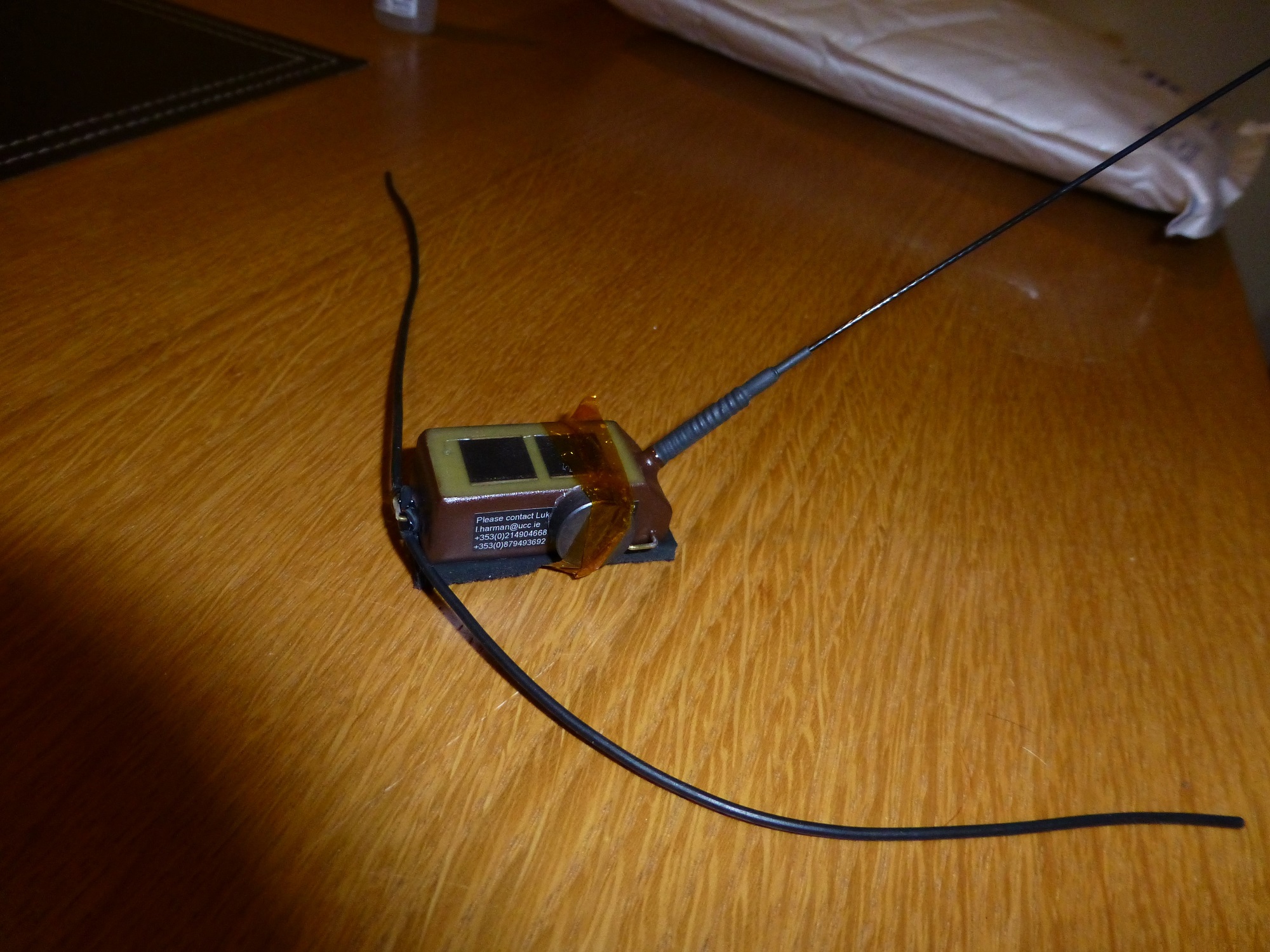
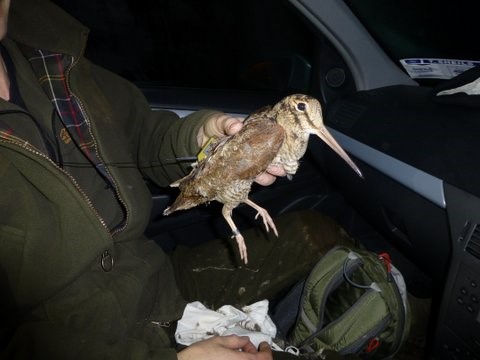
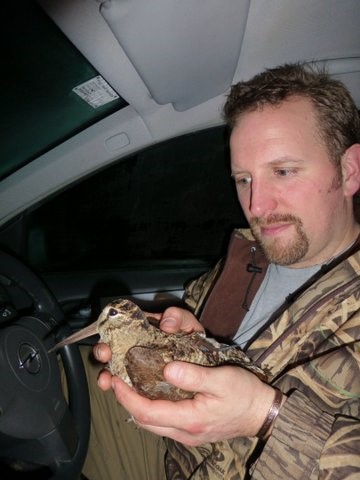
Satellite tagging and tracking of wildlife is not a new phenomenon however; it is a relatively new procedure for smaller species, such as the woodcock, due to the size/weight of the tags available. All tags used in this project were 9.5g in weight (the lightest satellite tag in full production in the world) and were supplied to us by Microwave Telemetry Inc. The birds were caught using a method known as “dazzling”. This involves locating the woodcock at night as they are feeding on open fields/pastures. Once located, the aim is to dazzle the birds in the beam of the spotlight and catch them using a long handled landing net. Once caught, the birds are measured, aged and assessed for condition prior to the tags being attached.
The Woodcock is a commercially important quarry species that is hunted throughout Europe. With the vast majority of birds being migratory, conservation on a European scale is a very important area. This research would not have been possible without the funding we received from a numbers of sponsors from the shooting community (listed below).
To date 7 out of a total of approximately 55 woodcock fitted with satellite transmitters have been tagged in Ireland. These birds all returned to their breeding sites in the spring making significant migrations to Latvia, Norway, Sweden and even Russia.
For more information on Woodcock please visit the Woodcock Watch website or contact us on the details below.
Woodcock Gallery





BEES Woodcock Research Group
- Luke Harman
- Professor John Quinn
- Barry O'Mahoney
- Professor John O'Halloran
Contact us
- Address: School of Biological, Earth and Environmental Sciences (BEES) | University College Cork | North Mall Campus | Ireland
- Tel: +353 (0)21 490 4668
- Email: l.harman@ucc.ie
Sponsors
- Federation of County Cork Gun Clubs
- National Association of Regional Game Councils
- Mayo Regional Game Council
- Kerry Regional Game Council
- Waterford Regional Game Council
- Monaghan Regional Game Council
- Carlow Regional Game Council
UCC Ornithology Research Group
Contact us
School of Biological, Earth and Environmental Sciences, UCC North Mall Campus, North Mall, Cork City,