
In This Section
- Home
- About
- News
- Research Projects
- Great Saltee Island Seabird Conservation
- Estimating and mitigating the impact of bird damage to crops in Ireland
- The ecology of the Red Grouse in Ireland
- The conservation ecology of a declining population of hen harriers
- The spatial and population ecology of White-tailed Eagles since their reintroduction to Ireland
- Sustainability measures in cereal production
- Using spatial ecology to develop a sustainable habitat management strategy for red-billed chough in Ireland
- The distribution and behaviour of the European Storm-petrel at sea
- People
- Gallery
- How to Find Us

Project Overview
The Red Grouse Lagopus scotica is the only species of bird endemic to Ireland and Great Britain. As one of the four members of the ptarmigan species group (genus Lagopus), it is highly adapted to cold, exposed environments and would have been one of the first animals to recolonise these islands after the retreat of the ice sheet around 13,000 years ago. The red grouse is now restricted as a non-migratory resident of open bogs, heath and upland habitats, where it feeds on coarse vegetation and nests on the ground. Unlike the other ptarmigan species which are found in Arctic and high-altitude environments across the northern hemisphere, the red grouse does not turn white in the winter - an adaptation for living in a comparatively warmer, snow-free climate.
In Ireland, the Red Grouse is genetically and physically different to those in Great Britain, further identifying it as a precious and unique member of the Irish faunal assemblage. Unfortunately, it is in steep decline and has been placed on the Irish Red List of Birds of Conservation Concern.
For the most part, this decline is due to habitat loss and fragmentation thanks to recent changes in how peatlands and upland environments have been managed, such as expansion of forestry and intense agriculture, peat extraction and increased livestock pressure. Increasing predation risk and human disturbance are further associated with these changes in land use and are likely to be compounding factors in the decline of the red grouse. However, while this species is well-studied on the managed moors of Great Britain, little is currently known about the ecology of Irish red grouse and how they react to these pressures in the landscape.
The current project
In collaboration with the National Parks and Wildlife Service (NPWS), we aim to better understand the year-round ecology of red grouse across different Irish landscapes. Using GPS tracking technology on individual birds and drones with thermal imaging capability, we are focusing on:
- Landscape-scale population modelling: Using a drone to survey wide tracts of habitat, we aim to understand the drivers of grouse distribution and abundance across different landscapes.
- Individual habitat preferences within territories: Initial evidence unexpectedly suggests that some red grouse actively choose to use emergent forest and edge habitats despite increased danger from predators, suggesting that forestry may serve as an ecological trap for this species.
- Factors affecting breeding success: Food availability, disturbance, predators, disease and weather all affect the breeding success of red grouse. By monitoring nesting females through the breeding season, we aim to assess which are the most important pressures on productivity in different types of landscape used by grouse.
We hope that the results of this research will be able to inform policy and decisions around land use and management that will favour the conservation of red grouse in Ireland.
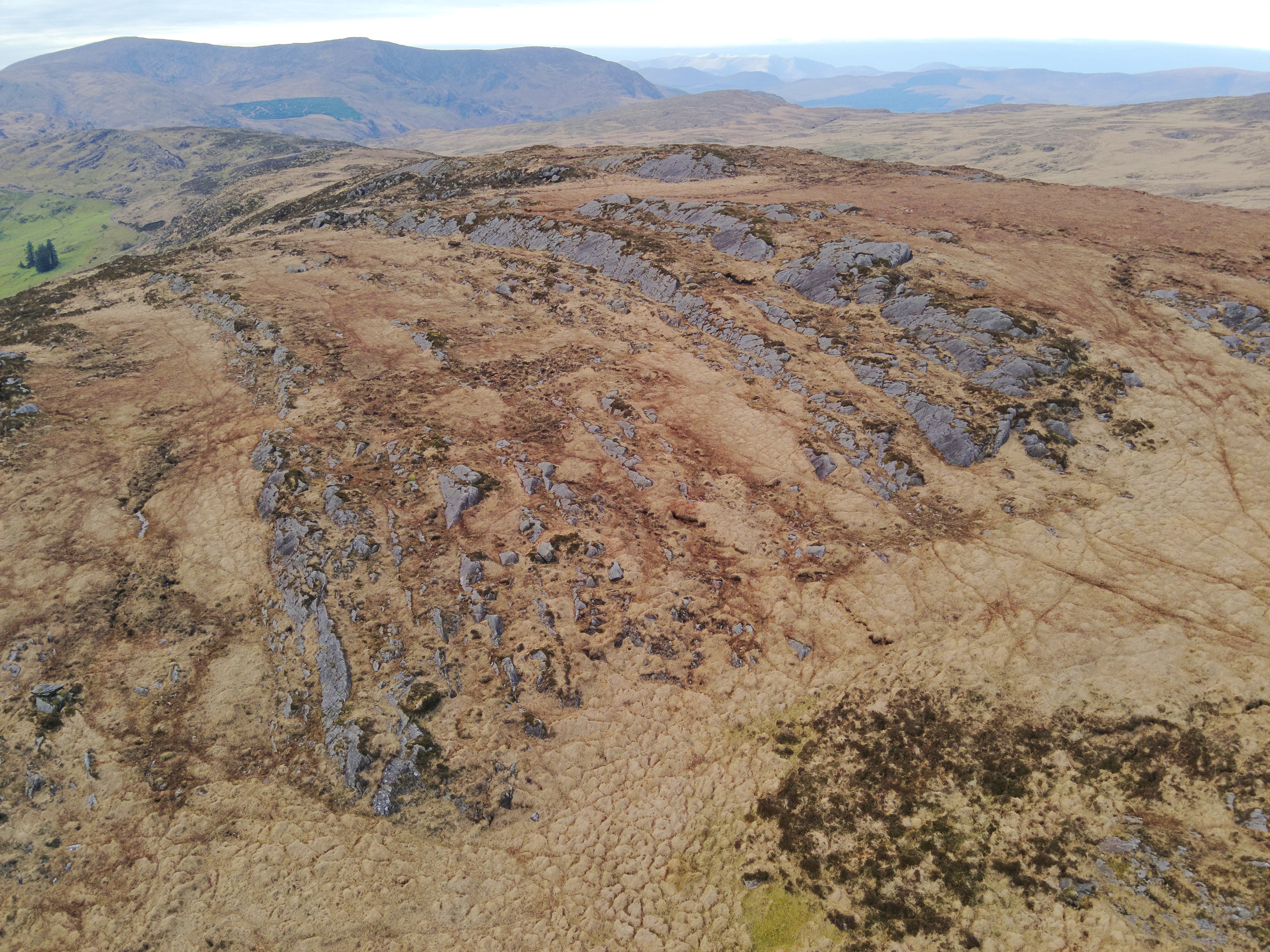
Fig 1. Upland landscape in County Kerry, where Red Grouse can still be found in patches of suitable vegetation
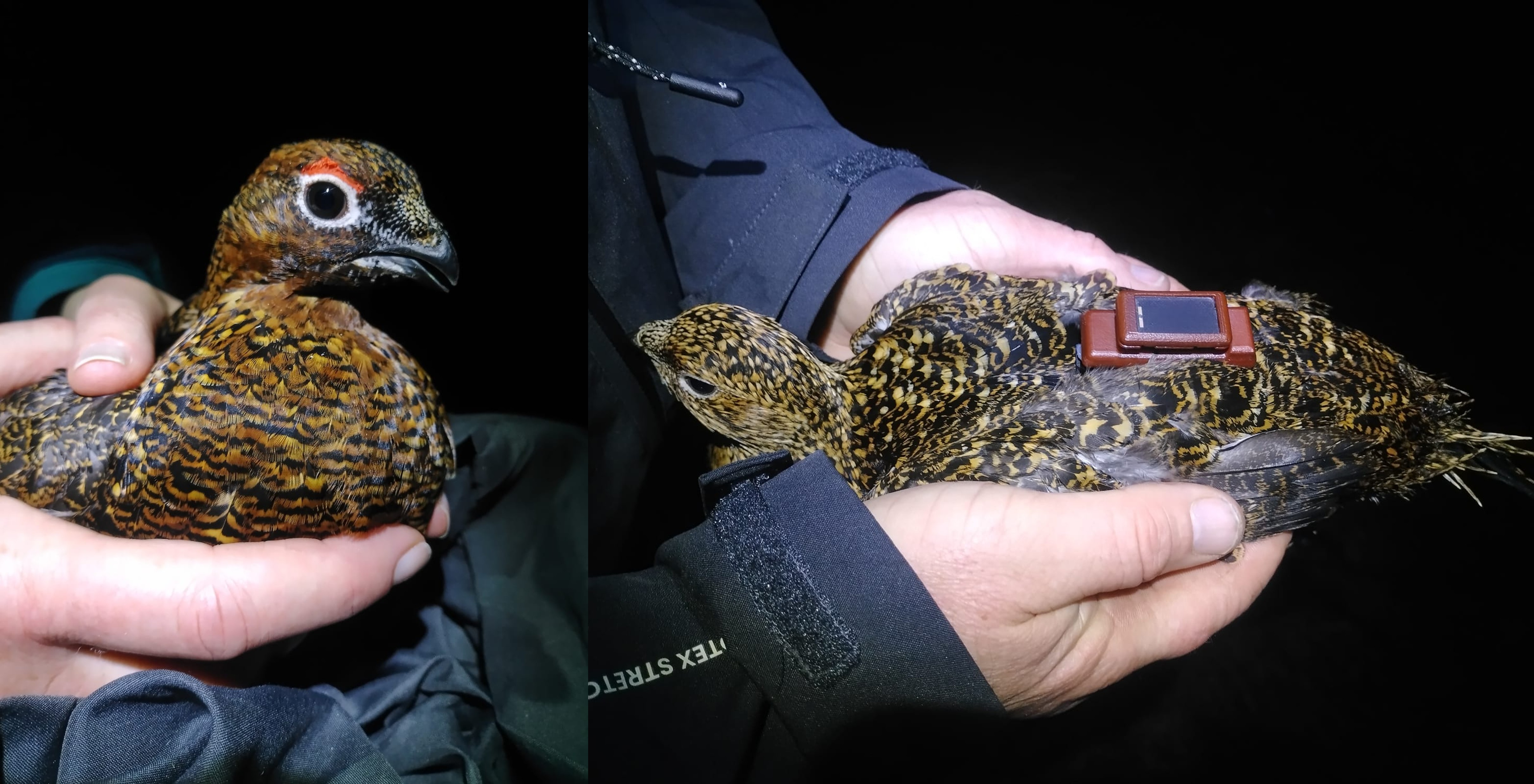
Fig 2. A female Red Grouse captured to attach a GPS tracking device, under licence. Detailed measurements and a DNA sample are also taken before release.
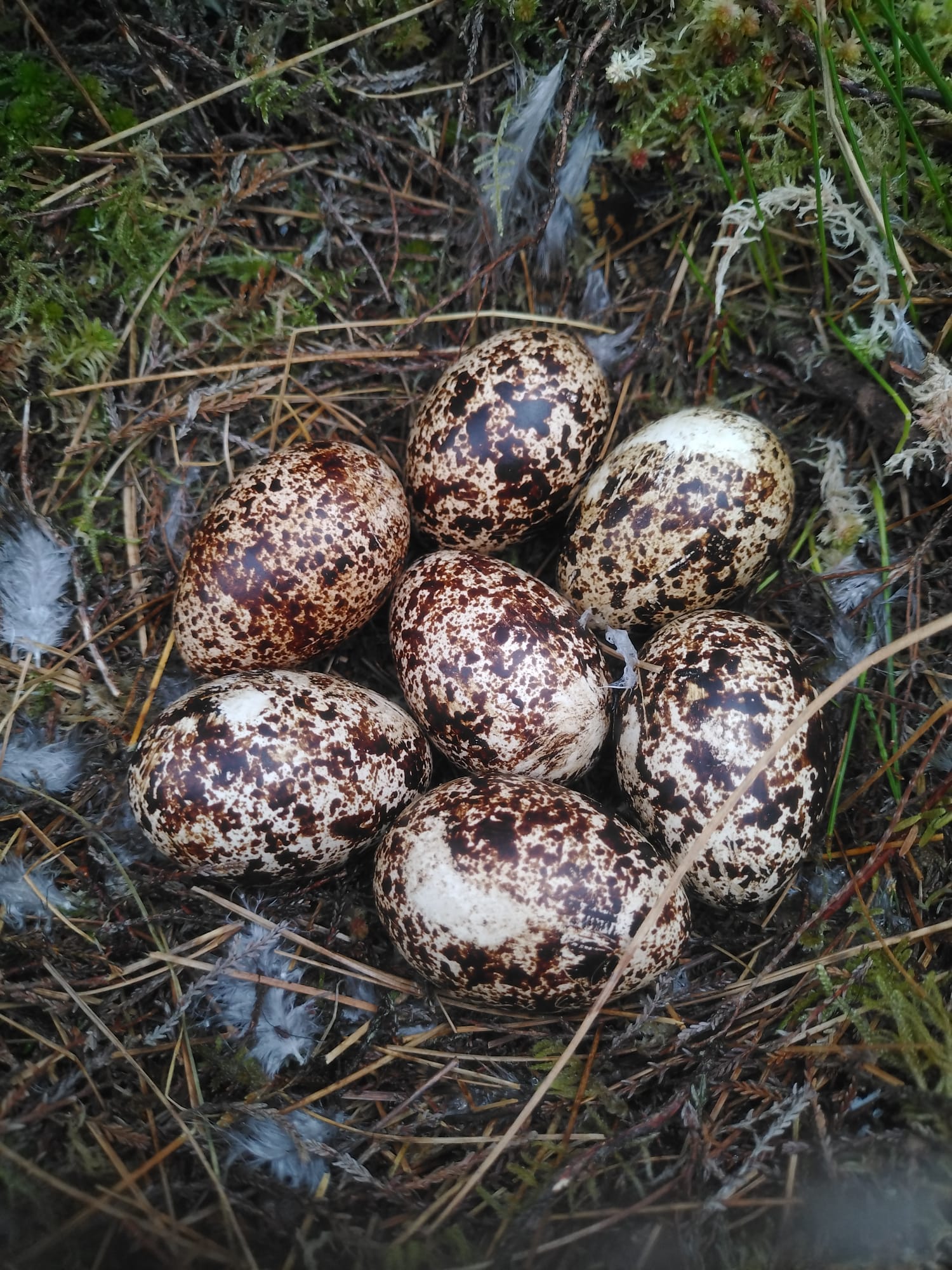
Fig 3. A Red Grouse nest, the eggs laid in a shallow depression amongst long heather. The female incubates them for 22 days before hatching. They are very vulnerable to predators at this stage.

Fig 4. Images of Red Grouse taken using a thermal-imaging drone. Above, a view from the thermal camera showing five grouse in a group which are warmer than the surrounding habitat. Below, images taken using the drone’s zoom camera showing that it is possible to tell the sex and age of the birds.
Project Team
Dr James O'Neill, UCC
Dr Paul Holloway, UCC
Dr Sinead Cummins, NPWS
Prof. John Quinn, UCC
Follow the project on Facebook for more information
Supported By
UCC Ornithology Research Group
Contact us
School of Biological, Earth and Environmental Sciences, UCC North Mall Campus, North Mall, Cork City,