In This Section
- Home
- About
- News
- Research Projects
- Great Saltee Island Seabird Conservation
- Estimating and mitigating the impact of bird damage to crops in Ireland
- The ecology of the Red Grouse in Ireland
- The conservation ecology of a declining population of hen harriers
- The spatial and population ecology of White-tailed Eagles since their reintroduction to Ireland
- Sustainability measures in cereal production
- Using spatial ecology to develop a sustainable habitat management strategy for red-billed chough in Ireland
- The distribution and behaviour of the European Storm-petrel at sea
- People
- Gallery
- How to Find Us
Project Overview
Seabird populations are declining at a rate faster than those of any other marine taxonomic group, with 30% of seabird species currently threatened by unsustainable population declines. The south and west coasts of Ireland support important populations of far-ranging species including European storm petrel, northern fulmar, and Manx shearwater that are likely to overlap with significant oil and gas activities located off the south and west coasts. Seabirds are more visibly affected by oil spills than any other animal as they are commonly washed up on beaches oiled. Our lack of knowledge on the distribution and behaviour of seabirds leaves a critical gap in our understanding of potential impacts, particularly from oil spills, and inhibits our ability to make effective conservation management decisions.
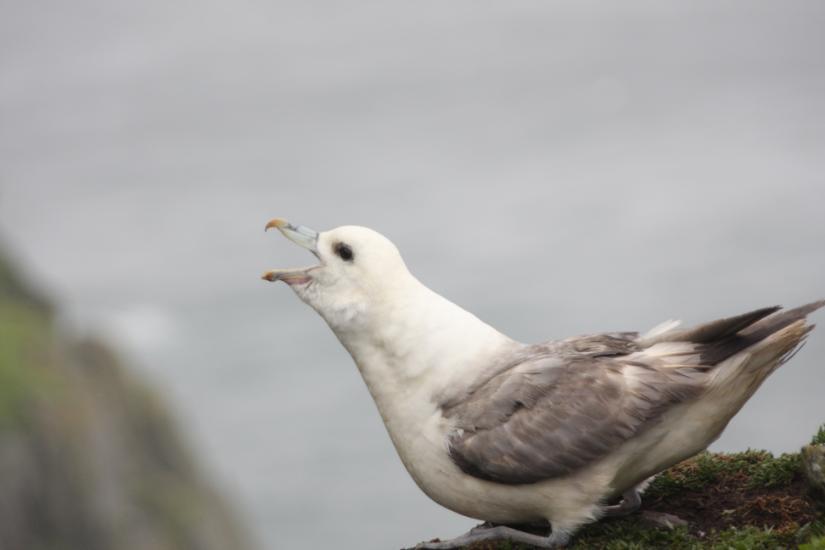
This project will combine seabird tracking studies with behavioural information from biologgers, dietary information, and stress hormones to better understand and mitigate risk from oil spills. Novel remote-sensing datasets will be explored to discover more biologically meaningful environmental cues to predict seabird distribution. The project will specifically collect tracking data from far-ranging seabirds to assess space use, overlap, and risk from offshore human activities as well as establish the physiological and nutritional drivers of seabird foraging through dietary and stress-level data. All of this information will feed into a model to predict the effects of an offshore oil-spill on seabird populations.
People
- Dr Mark Jessopp
- Jamie Darby
- Professor David Cabot
- Professor John Quinn
Supported by
UCC Ornithology Research Group
Contact us
School of Biological, Earth and Environmental Sciences, UCC North Mall Campus, North Mall, Cork City,