Announcements
Eco-Humanities Research Group - Announcements
Spring and Summer 2026 Eco-Humanities Research Group Lecture Series Programme
Thursday 7th May 2026: 4.00-5.15pm: In person lecture
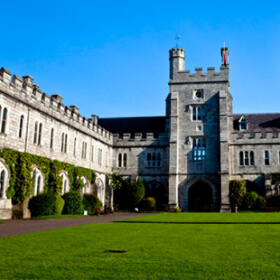
Venue: CACSSS Seminar Room, ORB G27 (O’Rahilly Building Ground Floor, Room G27), UCC main campus.
Gert Hofmann (University College Cork)
Prophaneti theos. Hölderlin’s trans-cognitive poetic of nature.
In the context of his reflections on aesthetic theory around 1800 Hölderlin suggests that humanity, despite all their artistic and cognitive ascent, need to respect the “spirit of nature”, “for as much as they have accomplished, [they] cannot create living beings.” For Hölderlin life is the primordial matter of nature and human existence. The human intellect can embark on life’s trajectory. It can benefit from life as the driving force of all organic metamorphoses of nature, but it cannot take possession of life for its own self-centred purposes.
Hölderlin’s reflections on the relationship between nature and art unfold as the core structure in his critique of the contemporary philosophical discourse – known as the discourse of German enlightenment and idealism – namely of Schiller’s theory of artistic “play”. Hölderlin depends on Immanuel Kant’s transcendental Critique of Reason, which divides the world into two ontological spheres: that of being, or nature, and that of volition, or morality and human moral action. An ontological abyss gapes, according to Kant, between the world of human praxis and art, and the world of natural being. It was the philosophical ambition of idealist thought to synthesize this Kantian antagonism between natural being and volitional human action. Hölderlin, however, aimed at establishing a third intellectual force supplementary to both. It was meant to attribute new significance to the aesthetic mind, thus trying to establish a third domain of ontological truth, one that would enable human awareness of life, supplementing the two Kantian domains of being and praxis, and reconciling humanity with nature in a new approach of poetic awareness.
In our presentation we will trace poetic perceptions of nature in Hölderlin’s unfolding discourse on aesthetic theory. They defy the submission of natural life under human intellectual potencies as it prevails in contemporary discourses of Kant’s enlightenment and Schiller’s idealism.
Gert Hofmann teaches German Literature in UCC’s German Department. He previously held faculty positions as Assistant and Full Professor at Hankuk University of Foreign Studies, Seoul and Leibniz University, Hanover. He was invited as a guest scholar to the University of Pennsylvania, University of Washington, and Université de Montréal. His research focus is on (eco)critical theory and the border areas of literature and philosophy. He just completed his third monograph entitled Poetik des Leibes (Poetics of the Body).