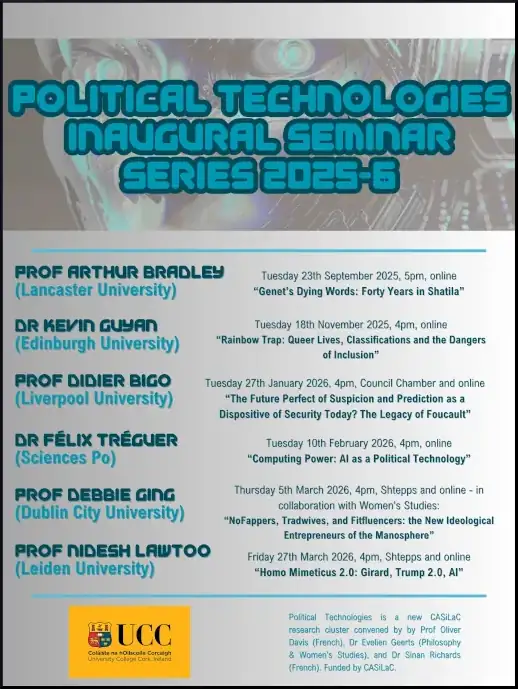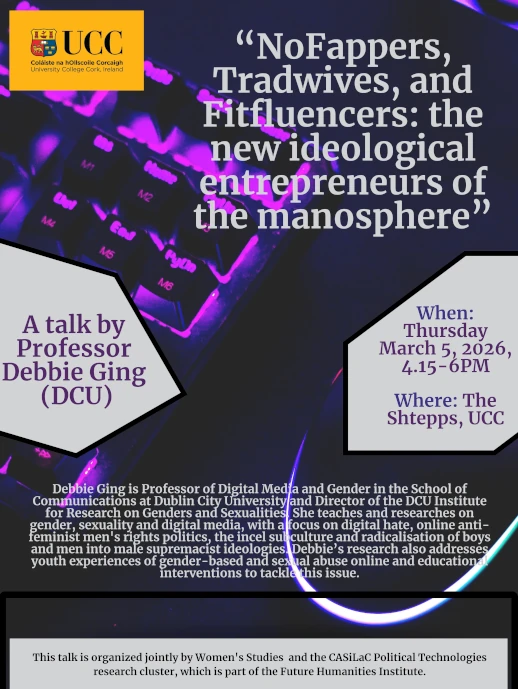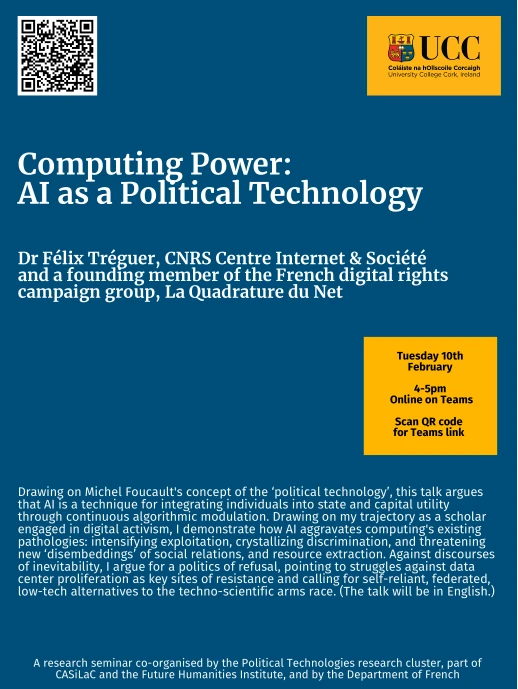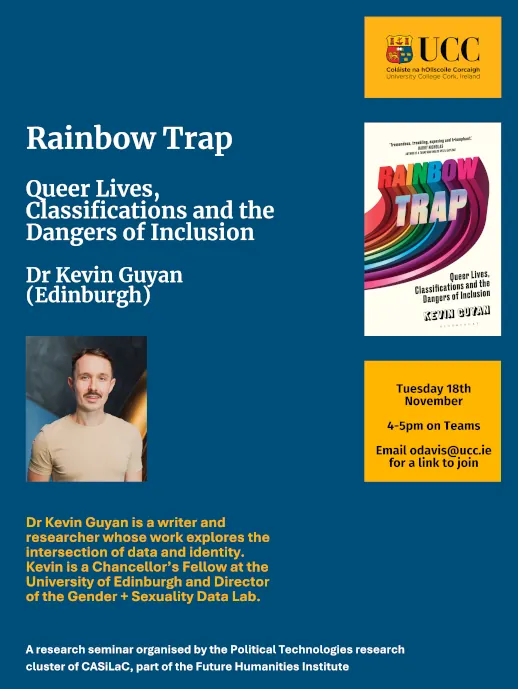

Political Technologies

This research cluster aims to study and apply radical theories of politics to generate new understanding of significant social, cultural and technical objects. We draw inspiration from the work of philosopher and historian Michel Foucault, who coined the malleable term ‘political technology’ to describe a variety of social and cultural phenomena ranging from prison design to the practice of confession. Our objective is to foster understanding of critical and activist work on the following types of political technology in particular, within and across different national, cultural and linguistic areas:
- emancipatory political theory and practice (in particular around ‘race’/ethnicity, gender, sexuality and social class);
- sociogenesis and decolonial practice, in particular psychosocial questions of decolonisation or ‘disenclosure’ (Mbembe);
- ‘somatechnics’ and practices of embodiment;
- techniques of the self and ‘anthropotechnics’ (Sloterdijk), including biomedical technologies;
- bureaucracy, administrative rationality and the passion for order;
- conspiracy theory and misinformation/disinformation;
- digital technologies of surveillance and governance.
Our understanding of politics is broad: we believe it extends far beyond political parties, systems and electoral cycles and that many of the most significant political technologies of the Modern and contemporary eras have been developed and taken effect transnationally.
To join the cluster or for more information about our activities please email Oliver Davis at odavis@ucc.ie
Upcoming events
 This one-day research workshop will explore new critical perspectives on conspiracy theory and mis/disinformation discourse. The ongoing boom in applied academic research to diagnose and debunk conspiracy theories and mis/disinformation is driven by understandable anxieties about the dangers such material can pose. Nevertheless, like ‘terrorism’ – as Critical Security Studies has shown – the label ‘conspiracy theory’ proves in practice to be disturbingly malleable and is now also routinely used to discredit dissenting or unpalatable opinion, contrary to the spirit of critical enquiry and in ways which threaten democratic values. Like ‘misinformation’ and ‘disinformation’, the label ‘conspiracy theory’ positions designated opinions beyond the sphere of legitimate democratic debate, tagging them in readiness for digital destruction and marking their bearers for segregated exclusion.
The epidemiological paradigm, which can frame not only mis/disinformation and conspiracy theory but also legitimate dissent, as an ‘infodemic’, may itself be a danger to democracy. By constructing human subjects as vulnerable vessels prone to ideological contagion, this paradigm involves a form of pastoral power whereby competent authorities are tasked with guiding the public to the ‘correct’ conclusions. The assumption is that given the 'correct' information, the 'correct' conclusions will be drawn. This workshop seeks to investigate how well-intentioned defence against falsehoods can inadvertently – or deliberately – be used to shrink the space for legitimate debate, discrediting dissenting or unpalatable opinions by positioning them beyond the pale of rational discussion.
The workshop, organised by Dr Sinan Richards (French, UCC) on behalf of the Political Technologies cluster of CASiLaC, has been generously supported by UCC Futures - Collective Social Futures, the Department of French and the Department of Sociology and Criminology. CACSSS Seminar Room, Friday 11th September, 9.30am-4pm. All are welcome. For more information contact SRichards@ucc.ie.
Recent events