

The TARA Practice Model
The TARA Practice Model
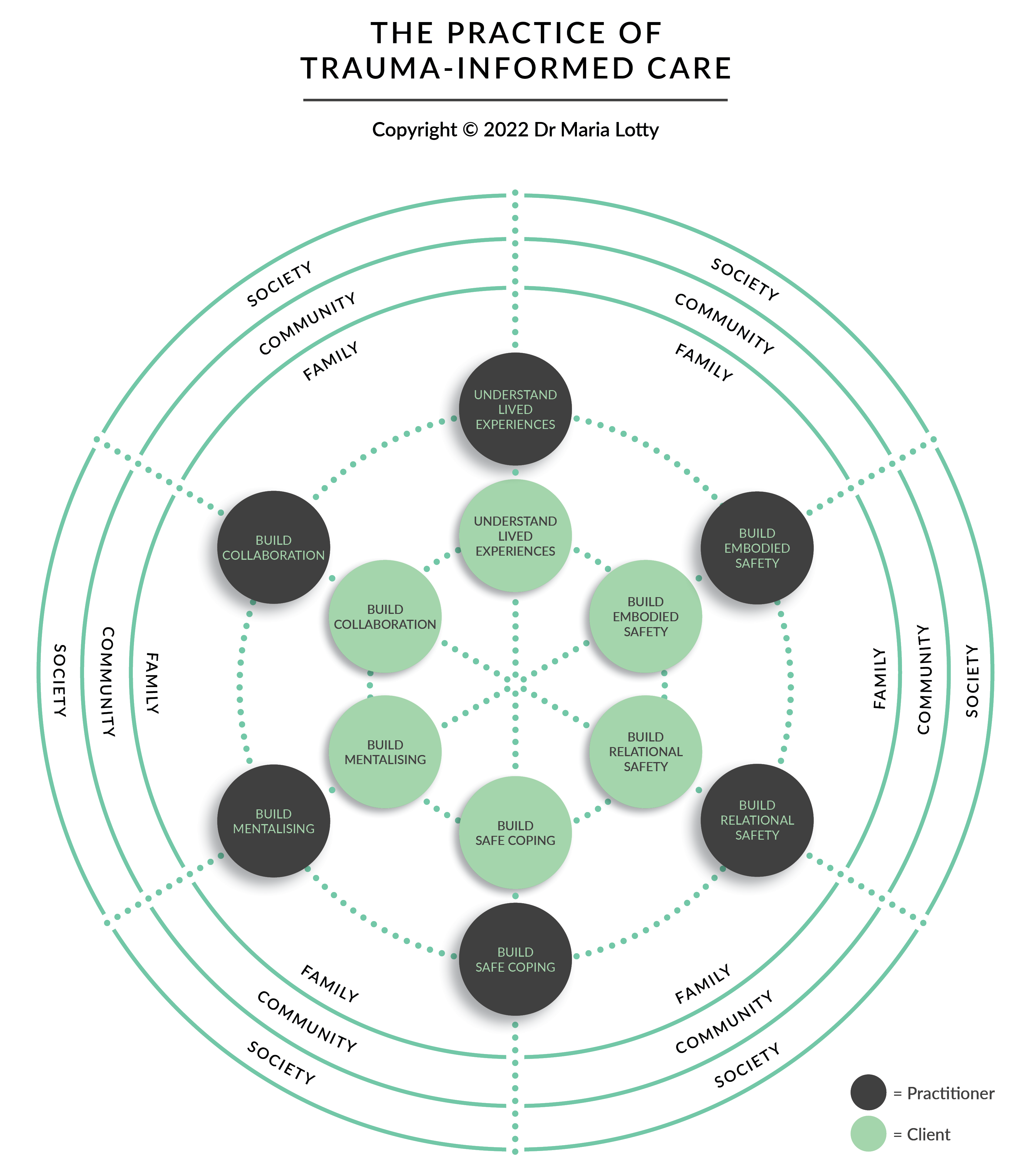
TARA stands for Trauma, Attachment and Resilience into Action.
It is a practice model that helps front‑line workers in child‑serving services bring trauma‑informed approaches into their everyday work.
The TARA (Trauma, Attachment, Resilience into Action) practice model is informed by doctoral research (Lotty, 2019) and by a growing community of practice that has completed a university‑based, graduate‑level programme in trauma‑informed care, theory and practice in Ireland (University College Cork, 2023a; 2023b). The model draws on key bodies of knowledge, including person‑centred care (McCormack & McCance, 2017), trauma‑recovery principles (Hobfoll et al., 2007), and SAMHSA’s (2023) trauma‑informed care principles—safety, choice, trustworthiness, collaboration, empowerment and cultural sensitivity—along with SAMHSA’s core assumptions. These assumptions emphasise understanding the effects of trauma and pathways to recovery, recognising trauma signs and symptoms, integrating trauma knowledge into policies and everyday practices, and actively working to avoid re‑traumatisation.
The TARA model shows how these fundamental principles can be embedded and enacted in day‑to‑day practice. It does so by clearly outlining six core dimensions of practice, representing the key knowledge and skills required for trauma‑informed work. These dimensions integrate learning from three major areas of research: contemporary trauma theory, attachment theory, and theories of resilience. TARA recognises that front‑line practitioners across disciplines hold a unique position in supporting therapeutic change. Through consistent, predictable, and relationally safe interactions, practitioners can become the anchor point for recovery, providing stability and support for children and families.
A central feature of TARA is its recognition of parallel processes. The model acknowledges that trauma work affects both practitioners and service users. Exposure to trauma narratives and awareness of one’s own trauma history can influence practice, relationships, and service delivery in ways that may echo the trauma experience. TARA therefore highlights the need for practitioner awareness, reflective capacity, and support structures that sustain safe and effective practice.
Overall, the TARA model defines trauma‑informed practices as the everyday interactions, interventions and processes that practitioners carry out within their professional roles. These practices reflect the principles of person‑centred care and trauma‑recovery approaches, ensuring that trauma‑informed values are translated into concrete, practical actions that promote safety, healing and resilience for children and families
TARA describes six key areas of practice that show how the values and principles of trauma‑informed care can be put into action through practical, concrete skills.
The model has one overarching principle and six practice dimensions.
The Overarching Principle
The main principle of TARA is that when practitioners integrate trauma‑informed skills into the work they already do, they are better able to engage with people who have experienced trauma. This means supporting recovery and growth through partnership, empowerment, and a sense of shared journey between the practitioner and the person they support.
The Six Dimensions of TARA
- Understand Lived and Living Experiences
This means developing a trauma‑informed mindset—being aware of how past and ongoing trauma can affect a person’s body, emotions, behaviour, relationships, and thinking. Practitioners also reflect on how trauma impacts them in their work.
- Build Embodied Safety
Trauma affects the body. This dimension focuses on skills that help people feel safer in their physical and sensory experiences (for example grounding, breathing, or noticing bodily cues).
- Build Relational Safety
Trauma impacts relationships and trust. This dimension involves skills that help practitioners build safe, respectful, and predictable relationships with the people they support.
- Build Safe Coping
Trauma influences emotions and behaviour. Practitioners help people develop healthier emotional and behavioural coping strategies that support safety rather than risk.
- Build Mentalising
Trauma can make it harder to understand our own thoughts and feelings and to make sense of others’ intentions. This dimension focuses on skills that help both practitioners and service users understand mental states—their own and others’.
- Build Collaboration
Recovery is strengthened when everyone involved works together. This dimension emphasises the importance of collaborative practice so that support is consistent, coordinated, and focused on shared goals.