
Glossary of Terms
Tara Project Explained

The TARA Project is a research partnership between Dublin South Central (DSC), TUSLA, Child and Family Agency and University College Cork.
The overarching aim of this partnership is to integrate trauma-informed practices (TIPs) in the DSC Area, Tusla, to support responding to the complex needs of, and improve outcomes for, the children and families who come into contact with the service.
The first phase has focused on staff training and development through a UCC-based programme to support staff in developing a shared understanding and approach, and to produce champions. Phase 2 focuses on how to embed TIPs into existing processes and practices in DSC in collaboration with the champions and assesses the impact on practice and clients.
The TARA Practice Model
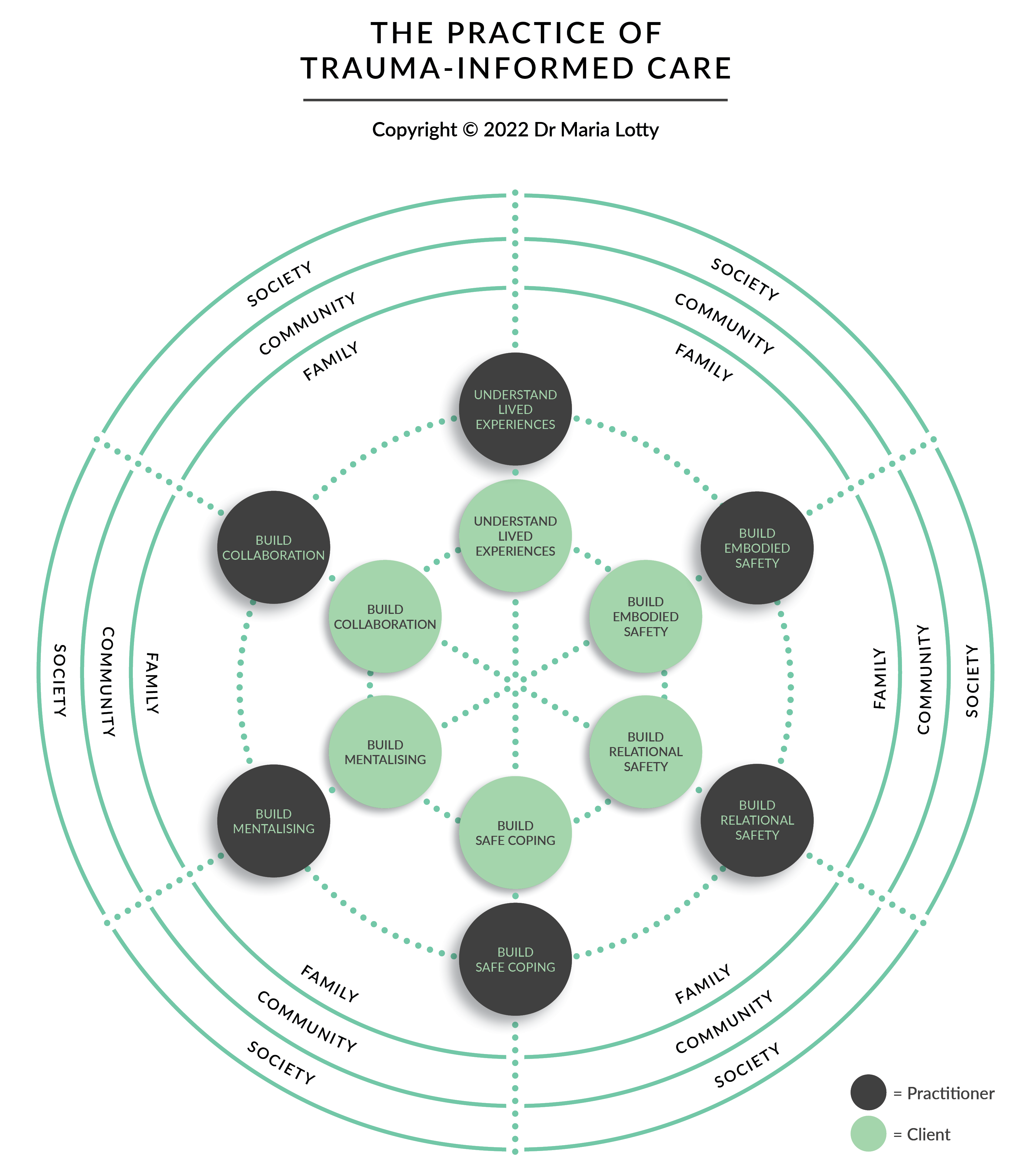 The TARA (Trauma, Attachment, Resilience into Action) practice model was informed by PhD research (Lotty, 2019) and a growing community of practice that have undertaken a university based graduate level programme for trauma-informed care, theory and practice in Ireland (University College Cork, 2023a;2023b). The model draws on person centered care (McCormack and McCance, 2017), trauma recovery principles (Hobfoll et al., 2007) and SAMHSA’s (2023) trauma informed care principles: safety, choice, trustworthiness, collaboration, empowerment and cultural sensitivity as well as SAMHSA’s core assumptions. These relate to understanding the effects of trauma and pathways to recovery, recognising the signs and symptoms of trauma, responding through integrating knowledge about trauma into policies, procedures and practices, and actively resisting re-traumatisation.
The TARA practice model represents how to embed and realize these fundamental principles into tangible concrete practices. It does through by articulating clearly six core dimensions of practice (knowledge and skills) that draw together the learnings from three key areas of research – contemporary trauma theory, attachment theory and theories of resilience. The TARA model recognises that front-line practitioners from a range of disciplines are in a unique position to become the anchor for therapeutic change, providing foundational support through experiences of relational safety and stability. As TARA focuses both on practitioner experience as well as service users, it acknowledges the parallel processes that operate when working with trauma, and how exposure to trauma narratives as well as awareness of one’s own trauma history may influence practice and service delivery in ways that mirror the trauma experience.
The TARA model defines trauma-informed practices as the day-to-day initiatives, interventions and practices that are carried out within the core processes of working with children and families within the specific professionals’ role that reflect principles of person-centered care and trauma recovery principles.
Click on the model thumbnail above to see a full sized image of the model.
What is Trauma?
 The TARA Project has adopted SAMHSA (2023) definition of Trauma as resulting from an event, series of events, or a set of circumstances that an individual experiences as physically or emotionally harmful or threatening, which may have lasting adverse effects on the individual's functioning and mental, physical, social, emotional, or spiritual wellbeing. Trauma is associated with widespread health challenges across demographic groups and can have far-reaching implications across individuals, families, and communities.
The TARA Project expanded SAMHSA (2023) 's ‘3 Es of trauma’ - Event/s or circumstances that are experienced as harmful or threatening that may have lasting adverse Effects on the individuals’ wellbeing, also to include Environment, recognising that events and experiences occur in multi systemic, cultural, relational contexts that interlink and overlap within trauma experience.
What is Trauma-informed Care?
 TARA has adopted SAMHSA's (2023) definition for Trauma-informed Care (hereafter TIC) as "a program, organisation, or system that is trauma-informed srealises the widespread impact of trauma and understands potential paths for recovery; srecognises the signs and symptoms of trauma in clients, families, staff, and others involved with the system; and responds by fully integrating knowledge about trauma into policies, procedures, and practices, and seeks to actively resist re-traumatisation." (SAMHSA, 2023, p. 2). TIC is guided by values/ principles of safety (physical and emotional), trustworthiness, choice, collaboration, and empowerment as proposed by Harris and Fallot in 2001.
What is Trauma-informed Practice?
 TARA defines Trauma-informed Practice (hereafter TIP) as a "holistic therapeutic practice approach that reflects a mindset and skillset that promotes empowerment and growth for both the service user with lived and /or living experience of trauma and for the practitioner working with trauma" (Lotty, 2023,p. 9).
- TIP involves an integration of existing practice wisdom that already exists within aligned professional practices and programmes
- TIP therefore supports best practice with children and families
What are Trauma-informed Practices?
 TARA defines trauma-informed practices as the day-to-day initiatives, interventions and practices that are carried out within the core processes of working with children and families within the specific professionals' role that reflect principles of person-centred care and trauma recovery principles. For example, in case discussions, report preparation, analysis and assessment, supervision, and team meetings.