
James Barry
Dr. James Barry (1789–1865): Pioneering Surgeon and the 1826 Caesarean Section Milestone
Dr. J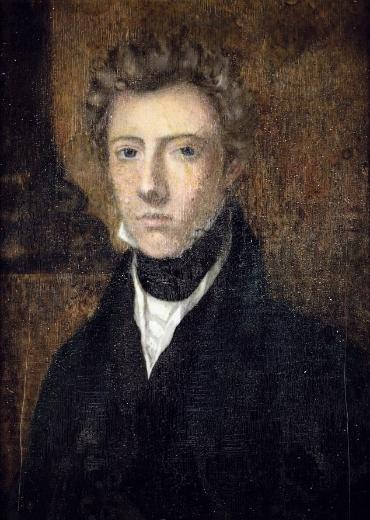 ames Barry was a 19th-century military surgeon whose extraordinary career spanned Ireland, Scotland, and South Africa. Born in Cork, Ireland, around 1789 as Margaret Anne Bulkley, Barry assumed a male identity in order to attend medical school at the University of Edinburgh – one of the few routes for a person assigned female at birth to become a doctor at that time. He qualified as an M.D. in 1812 and joined the British Army as a surgeon in 1813, embarking on a remarkable medical career across the British Empire. Barry’s life and work are now being reexamined on the 200th anniversary of a major milestone: in 1826, in Cape Town, he performed the first successful Caesarean section in the British Empire in which both mother and child survived. This overview highlights Barry’s life, contributions to medicine, and the historical and contemporary significance of that pioneering surgical achievement.
Early Life and Medical Training in Ireland and Scotland
Barry’s early life set the stage for his unconventional career. He was originally from Cork, Ireland, born into a family of modest means. In an era when women were barred from formal medical education, the young Margaret Bulkley reinvented herself as “James Barry” with the support of enlightened mentors and relatives. In 1809, Barry (as a man) enrolled at the University of Edinburgh Medical School, one of Europe’s premier medical institutions. There he proved a diligent and talented student, studying a wide range of subjects including anatomy, surgery, botany, and midwifery. Notably, Barry wrote a doctoral thesis on femoral hernias with a special focus on women – warning of the dangers hernias posed in pregnancy and childbirth. This early emphasis on obstetrics and women’s health foreshadowed the contributions he would later make in those fields. After earning his M.D. in Edinburgh at age 22, Barry obtained a surgical license in London and commissioned as an army medical officer. By 1813 he was serving as a Hospital Assistant in the British Army, poised to apply his skills on a global stage.
Surgical Career Across the Empire: Reforms and Medical Achievements
Once in the Army, Dr. James Barry’s postings took him around the world – from South Africa to the West Indies, the Mediterranean, and Canada – and he rose through the ranks to become Inspector General of Hospitals (the second-highest medical post in the British Army) by 1857. In Cape Town, South Africa, where he served as colonial Medical Inspector for about a decade, Barry distinguished himself both as a skilled clinician and a reformer. He earned a reputation for fearless dedication to improving public health and hospital conditions. Barry spoke out strongly against unsanitary practices in military barracks, prisons, and asylums, lobbying for cleaner water supplies and better hygiene long before these ideas were mainstream. He oversaw the installation of a fresh water system for Cape Town to prevent waterborne disease and cracked down on quack practitioners. Barry was also an early advocate for humane treatment of marginalized groups: he provided medical care for individuals regardless of race or status, treating wealthy colonists, enslaved people and their families, leprosy patients, and the poor with equal compassion. His progressive approach extended to preventive medicine – for instance, he promoted smallpox vaccination in the Cape Colony two decades before it was widely adopted in England.
Clinically, Dr. Barry was ahead of his time in several domains. He had a keen interest in obstetrics and gynecology at a time when many doctors shunned “female” health issues. He researched and introduced a novel plant-based treatment for syphilis and gonorrhea derived from local Cape flora (the Arctopus plant) as an alternative to mercury-based remedies. He also published work on inguinal and crural hernias (particularly as they affect women) and warned about the ill effects of constrictive clothing like corsets on women’s bodies. Barry’s proactive efforts in hygiene and diet significantly improved outcomes for soldiers and civilians under his care. In recognition of his accomplishments, he was promoted multiple times; by his late career he attained the rank of Inspector General of Military Hospitals, charged with overseeing army medical services across the Empire.
The 1826 Caesarean Section in Cape Town: A Historic First
Barry’s most famous medical achievement – and the focus of the bicentennial commemoration – was a groundbreaking Caesarean section he performed in Cape Town on 26 July 1826. In this era, attempting a Caesarean section on a living woman was exceedingly rare and dangerous: no effective anesthesia or antiseptics existed, and nearly all mothers historically died from infection or hemorrhage when such operations were attempted. Yet Barry defied the odds. His patient, Wilhelmina Munnik, was in obstructed labor and likely facing death without intervention. Dr. Barry operated successfully to deliver a healthy baby boy – reportedly the first time in the British Empire that a mother and infant both survived a C-section. Contemporary accounts noted Barry’s extraordinary composure and care: he stayed at the mother’s bedside the entire day after the delivery.
In gratitude, the newborn was christened “James Barry Munnik” after the surgeon. This remarkable case became an early proof-of-concept that Caesarean delivery could sometimes save both lives, long before surgical advances made it routine. Barry had only ever seen two C-sections performed (both fatal) and may have practiced the procedure solely on cadavers. His success has been attributed to meticulous planning and perhaps an innovative approach – he attempted the operation with the intent of preserving both mother and child, indicating a premeditated strategy. Barry performed the delivery without suturing the uterine incision, reflecting the surgical wisdom of the time. Despite the crude methods by modern standards, both Mrs. Munnik and her son survived, an outcome almost unheard of in that era. Barry’s 1826 Caesarean was considered an extremely rare and high-risk feat at the time, and it would be many decades before such operations became safer and more widespread.
This triumph in Cape Town stands as Barry’s signature contribution to medicine. It has been cited as the first recorded successful Caesarean in Africa by a European surgeon and possibly the first in the entire English-speaking world with a living mother and child. The feat predated the emergence of uterine sutures and antiseptic technique, which would only become standard in the mid- to late-19th century. Dr. Barry’s bold intervention thus prefigured later advancements in obstetric surgery. A plaque in Cape Town and numerous medical history accounts now commemorate Barry’s 1826 Caesarean as a watershed moment.
Later Years, Secret Identity, and Posthumous Legacy
After his service in South Africa, Barry continued to serve with distinction in Mauritius, Jamaica, Malta, Corfu, and Canada for a total of 46 years. Colleagues knew him as a skilled but irascible figure: he had a fiery temper and did not hesitate to berate officials. Florence Nightingale, who clashed with him over hospital sanitation, once described him as “the most hardened creature.” Yet Barry was also remembered for his humane bedside manner and advocacy for the vulnerable. In 1859, due to ill health, Barry retired from the army and returned to England. He died in London on 25 July 1865.
Only upon Barry’s death did the sensational truth of his identity emerge. The woman who laid out his body, Sophia Bishop, discovered that Barry’s anatomy was female and noted stretch marks suggesting Barry had borne a child in youth. This revelation scandalized Victorian society. Barry had lived as a man for 56 years, 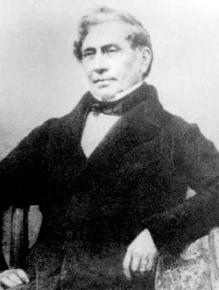 never once publicly revealing his birth sex. The Army sealed his records for nearly a century to suppress the story, and he was buried under the name James Barry with no reference to his former identity. Major D. R. McKinnon, who signed the death certificate, famously stated it was “none of [our] business” whether Dr. Barry was male or female. Barry’s last wish had been to be buried without autopsy, a request that was not honored.
The truth leaked quickly into the press, leading to gossip, fictionalized accounts, and a play in the 1860s. Serious historical scholarship only emerged later, with the first major biography published in 1958 after the British government unsealed his papers. Since then, researchers have pieced together Barry’s life from archives, confirming his significance as both a medical pioneer and a figure who challenged gender norms. Barry’s headstone at Kensal Green Cemetery remains modest and makes no mention of his birth name. Modern perspectives vary: some view him as a pioneering woman doctor constrained by her era; others see him as an early transgender or non-binary figure who lived authentically as a man. Regardless of interpretation, Barry is now celebrated for defying the gender restrictions of the 1800s and for his medical contributions.
Bicentennial Reflections: Why Barry’s Story Matters Today
Two centuries after Dr. James Barry’s landmark Caesarean operation, the bicentennial invites reflection on its clinical and social significance. Clinically, Barry’s 1826 success foreshadowed the evolution of the Caesarean section from a desperate last resort to a common lifesaving procedure. Today, more than one in five births worldwide occurs by Caesarean. This represents remarkable medical progress, but also raises questions: global Caesarean rates have surged and are projected to approach 30% by 2030. Health experts caution that while C-sections can be lifesaving, many are performed without medical necessity, exposing women and babies to avoidable risks. Current debates about whether we perform “too many C-sections” echo themes explored in the conference, including balancing safety, autonomy, and respect for maternal choice. Revisiting Barry’s first successful C-section highlights the dramatic improvements in childbirth safety while reminding us that surgical birth should be used judiciously and with patient-centered care in mind.
Equally important are the social themes in Barry’s life. Barry’s need to conceal his sex to practice medicine underscores the severe gender barriers of the early 19th century. His story prompts reflection on progress in gender equity in medicine – from an era when women had to disguise themselves as men to today, when women enter the profession in large numbers. Discussions of gender identity and inclusion today also resonate with Barry’s experience as someone who lived his life in a gender different from that assigned at birth. It is fitting that the conference includes topics such as “Gender, Language, and Representation in Medicine” and the future of transgender pregnancy, bridging Barry’s historical narrative with modern debates on identity and inclusion.
In summary, Dr. James Barry’s life and accomplishments provide rich material for both medical historians and clinicians. He was a brilliant surgeon and reformer whose 1826 Caesarean dramatically improved prospects for mother and infant survival. He also championed hygiene, nutrition, and humane treatment, far ahead of his time. That these achievements were accomplished by someone who had to hide their sex assigned at birth is a poignant reminder of the barriers of the era. Commemorating the 200th anniversary of Barry’s pioneering C-section honors not only a clinical milestone but also themes of innovation, courage, and equity in the history of medicine. Barry’s story remains timely, urging us to acknowledge the progress made while continuing to address the influence of identity and social values on medical practice.
Sources
- Holmes, R. The Secret Life of Dr James Barry: Victorian England’s Most Eminent Surgeon. Bloomsbury, 2020.
- du Preez, H. & Dronfield, J. Dr James Barry: A Woman Ahead of Her Time. Oneworld, 2016.
- Foster, S. “Margaret Ann Bulkley (James Barry) (1789–1865).” Embryo Project Encyclopedia, 2017.
- Pain, S. “The ‘male’ military surgeon who wasn’t.” New Scientist, 6 March 2008.
- Holland, B. “The Extraordinary Secret Life of Dr. James Barry.” History.com, updated 2025.
- Thackray Museum of Medicine. “Dr James Barry: the surgeon defying gender norms.” 2025.
- World Health Organization. “Caesarean section rates continue to rise, amid growing inequalities in access.” WHO, 2021.
- Rogers, R. “Wild Irish Women: Dr. James Barry.” Irish America Magazine, 2018.
- Atlas Obscura. “Why This Groundbreaking British Doctor Was Almost Erased from the History Books,” 2019.
- University of Edinburgh. “James Miranda Barry” (biographical plaque).